




Dark Mahogany Hanging Cupboard
A dark mahogany hanging cupboard brings rich timber grain and compact wall storage to any room.
Dark Mahogany Hanging Cupboard
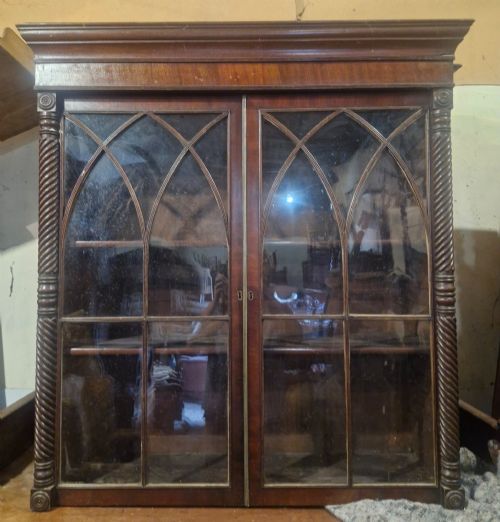
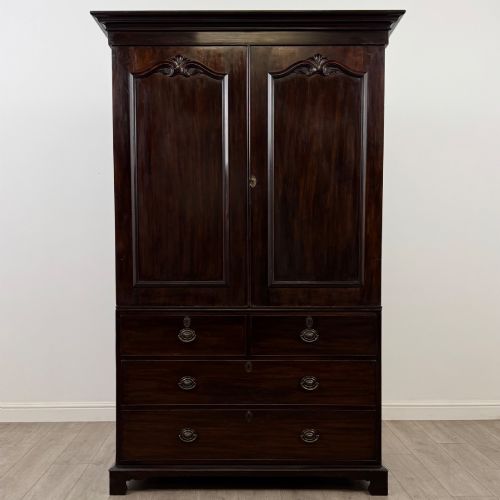
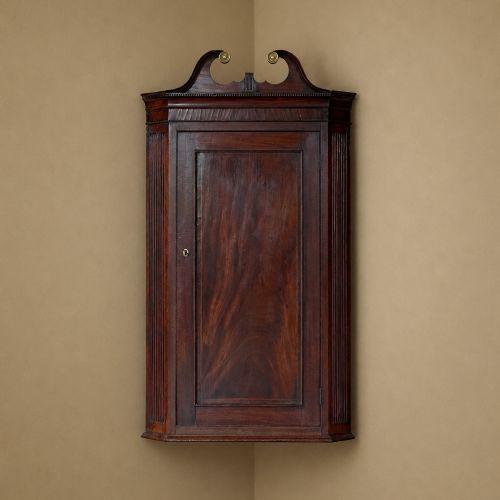
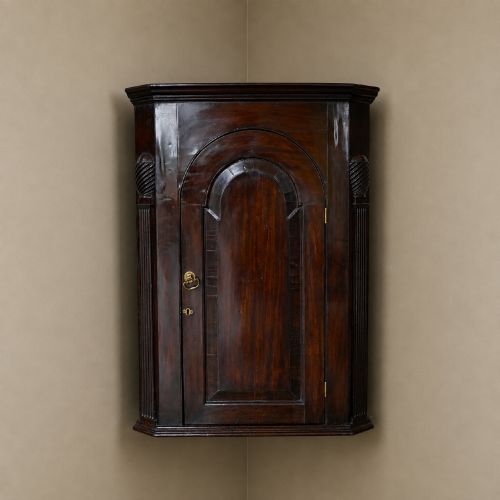
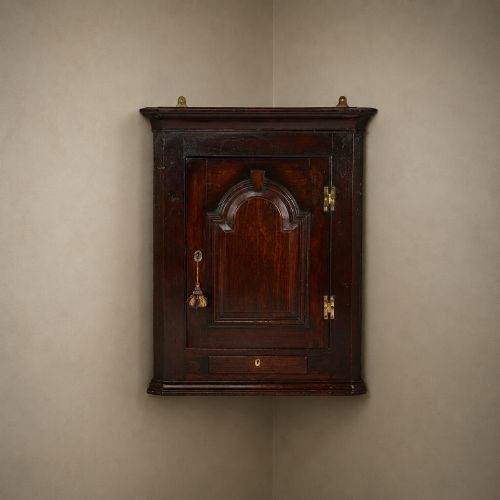
A dark mahogany hanging cupboard provides practical wall storage while displaying the deep reddish-brown tones characteristic of period cabinetmaking. These pieces span the Georgian, Victorian, and Edwardian eras, appearing frequently as corner cabinets, wall cabinets, and occasional wardrobes designed to mount securely or hang from domestic walls.
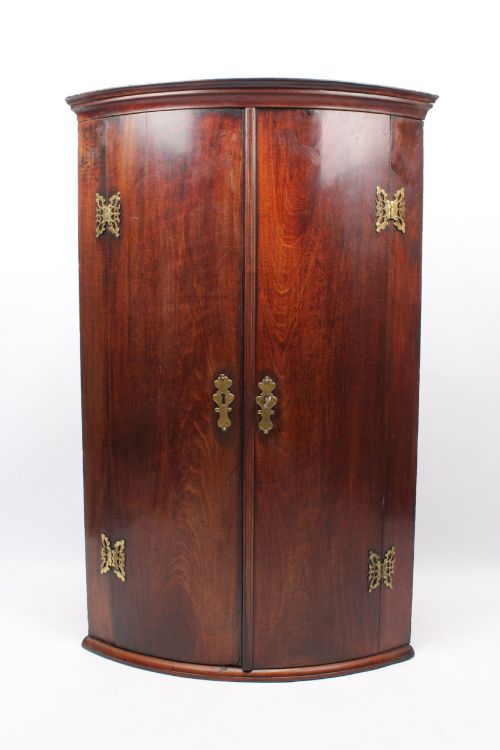
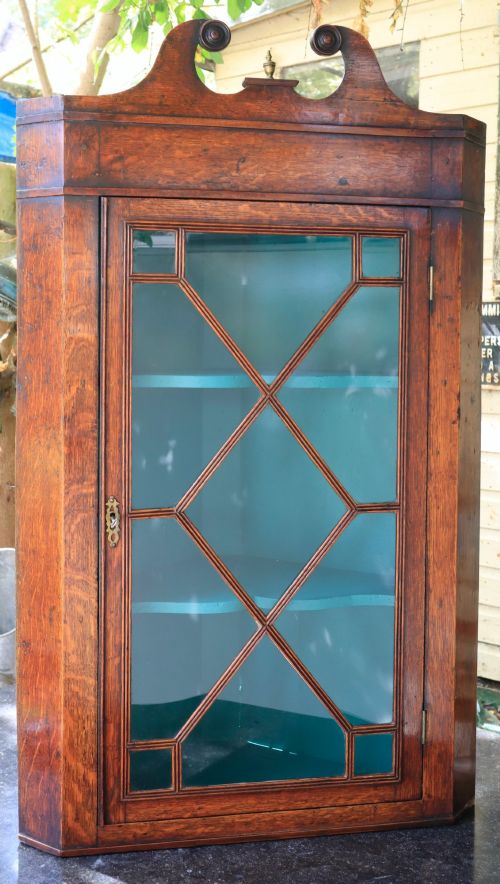
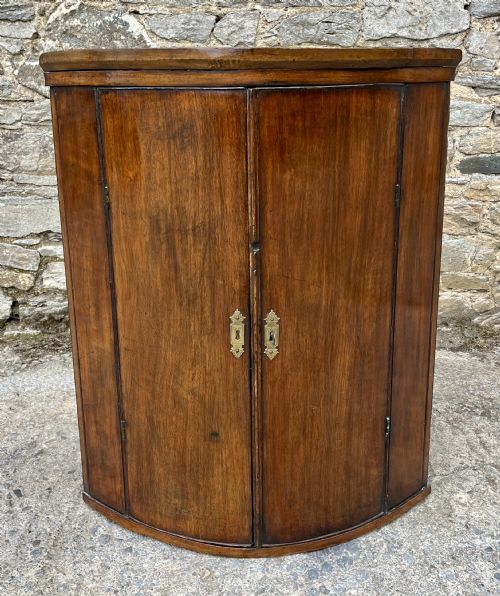
The selection centres heavily on Georgian and George III examples, alongside later Victorian and Edwardian interpretations such as the Georgian Revival. Buyers encounter bow front profiles, glazed display doors, and tambour fronts that reflect the shifting interior fashions across the eighteenth and nineteenth centuries.
Materials and construction methods
Cabinetmakers utilised solid mahogany and figured flame mahogany veneers over secondary timbers such as oak, applying brass hinges, escutcheons, and working locks to secure the doors. Selected pieces feature delicate satinwood inlay and decorative wood stringing that contrast sharply against the dark mahogany ground.
Joinery techniques relied on traditional dovetailed carcases and panelled door construction to accommodate the natural movement of timber over centuries of domestic use. Glazed variants incorporate timber glazing bars dividing individual panes of glass to form display doors for porcelain and glassware.
Dark Mahogany Hanging Cupboard Retail Price Guide 2026
Typical asking prices for dark mahogany hanging cupboard among the pieces listed under this phrase on Sellingantiques today, from the lower quarter to the upper quarter. They describe what is for sale here now, not the wider market.
Current listings demonstrate that the majority of dark mahogany hanging cupboards originate from the Georgian era, frequently taking the form of corner cabinets.
Distinctions in craftsmanship and design
The distinction between standard examples and superior pieces rests on the choice of timber figure, such as highly figured flame mahogany, and the crispness of executed details like inlaid stringing and moulded pediments. Elaborate architectural elements, including broken arch pediments and finely turned brass hardware, elevate the presence of certain Georgian corner cabinets.
Proportion and structural integrity dictate the standing of a wall cabinet within its period. Pieces maintaining their original surface patination, working brass keys, and undamaged secondary oak interiors command greater regard among collectors seeking unaltered historical examples.
The Dark Mahogany Hanging Cupboard Glossary
- Bow front
- A convex, outwardly curved front elevation typical of many Georgian corner cupboards. This curved form softens room angles and maximises internal storage capacity.
- Tambour front
- A series of narrow wooden slats glued to a canvas backing that slides in a track. This flexible closure permits access to tight corner spaces where hinged doors prove impractical.
- Pediment
- The decorative triangular or arched structure surmounting the cornice of a cabinet. Elaborate versions feature broken arches with central finials.
- Escutcheon
- A protective metal plate surrounding a keyhole, usually cast in brass. It prevents the timber surrounding the lock from sustaining wear during daily use.
- Stringing
- Thin inlaid lines of contrasting light wood, such as satinwood, embedded into the dark mahogany surface. It creates geometric borders and frames cabinet doors.
Dark Mahogany Hanging Cupboard: Frequently Asked Questions
What rooms suit a hanging corner cupboard best?
Dining rooms and living spaces provide ideal settings for corner cupboards, utilising unused wall angles while displaying glassware or decorative objects behind glazed doors. Their elevated mounting preserves valuable floor space in compact rooms.
Bedrooms and hallways also accommodate smaller wall-mounted wardrobes and cabinets, offering discreet storage for everyday items. The dark mahogany tones anchor neutral interior palettes effectively.
How do I distinguish a Georgian piece from a later revival?
Georgian cabinets exhibit construction markers such as hand-cut dovetails, older secondary timbers like oak, and surface patination developed through centuries of friction and oxidation. Timber shrinkage patterns and hand-forged iron or early brass fixings help confirm an eighteenth-century origin.
Revival pieces often display more uniform machine-sawn components and standardised nineteenth- or twentieth-century hardware fittings. Examining the internal secondary woods provides clear clues regarding the actual manufacturing period.
How should I care for antique mahogany surfaces?
Maintain the timber by applying traditional beeswax sparingly and buffing with a soft, clean cloth to preserve the natural lustre of the polish. Avoid synthetic aerosol polishes and keep the cabinet away from direct heat sources and strong sunlight to prevent timber splitting.
Checking humidity levels in the room protects the structural stability of veneered surfaces and prevents joint movement. Gentle dusting with a dry microfibre cloth suffices for routine maintenance.