




Dark Mahogany Hall Rack
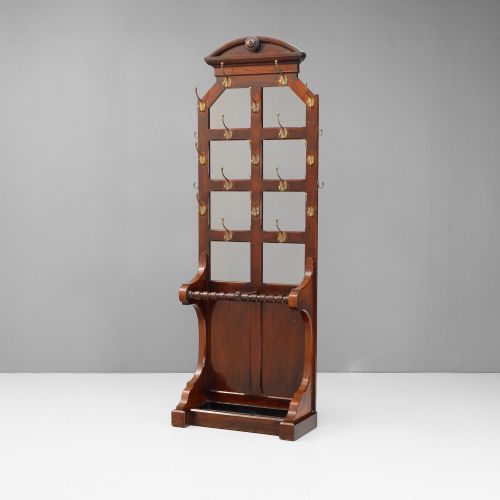
A dark mahogany hall rack organises entranceways with deep wood tones, brass hardware, and practical hanging space for coats, hats, and walking sticks.
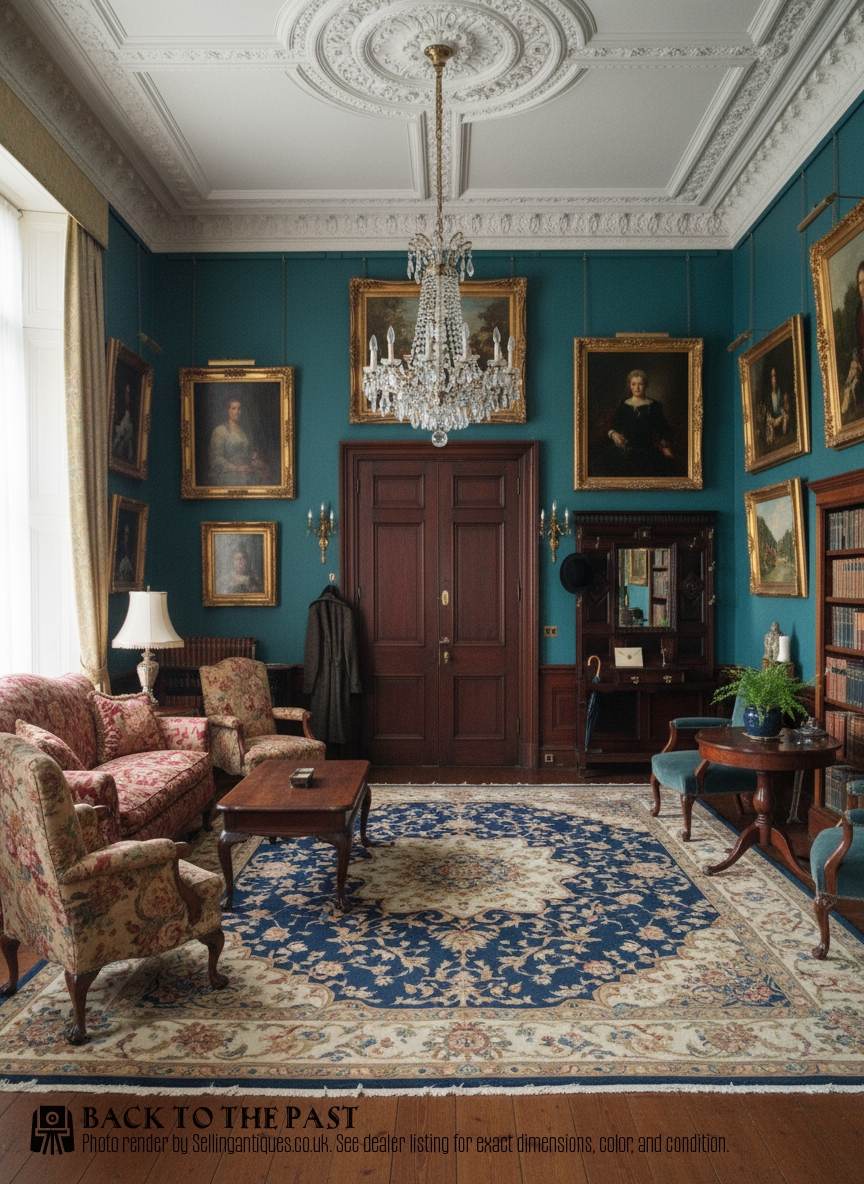
Dark Mahogany Hall Rack
A dark mahogany hall rack serves the entrance of a home, combining storage for outerwear with structural practicality. When searching for a dark mahogany hall rack, buyers encounter a variety of nineteenth-century forms designed for domestic organisation.
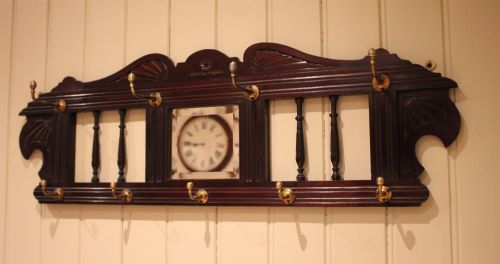
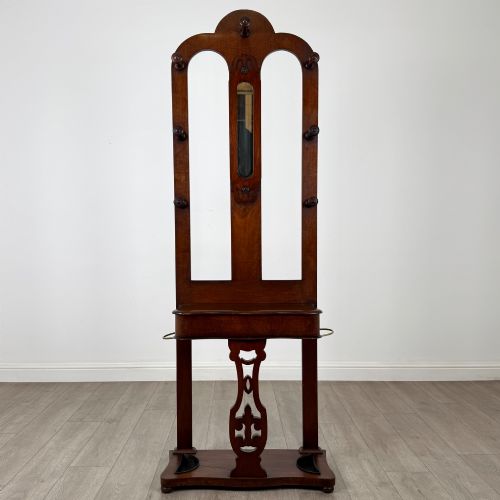
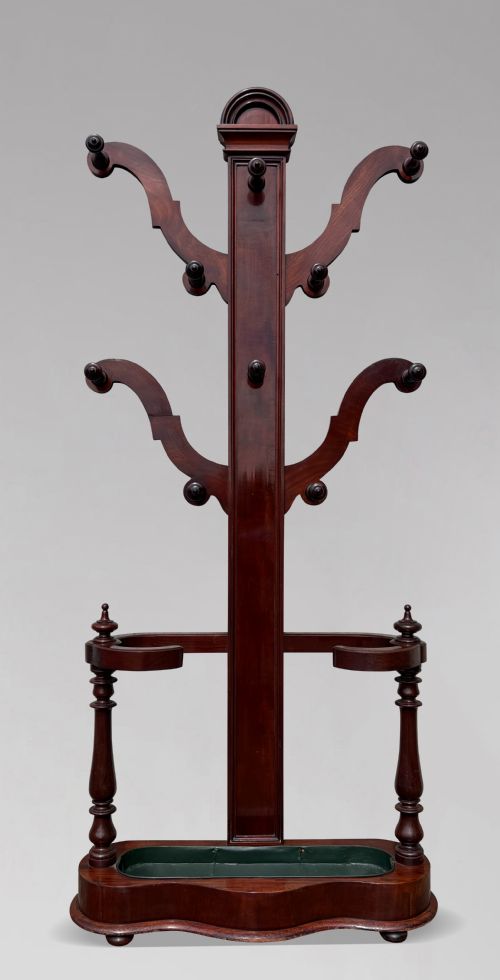
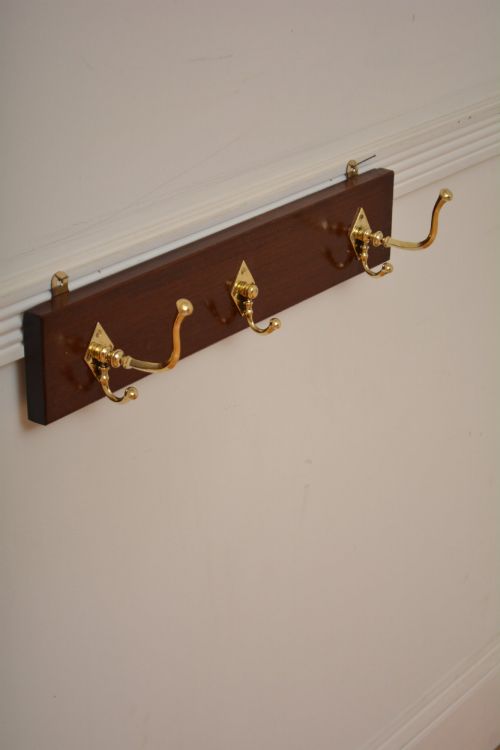
The pieces on this page span several decades, originating primarily from the Victorian and Regency periods alongside Edwardian examples. Common configurations include wall-mounted coat rails, standing hall trees with mirrors, and dedicated stick or umbrella stands.
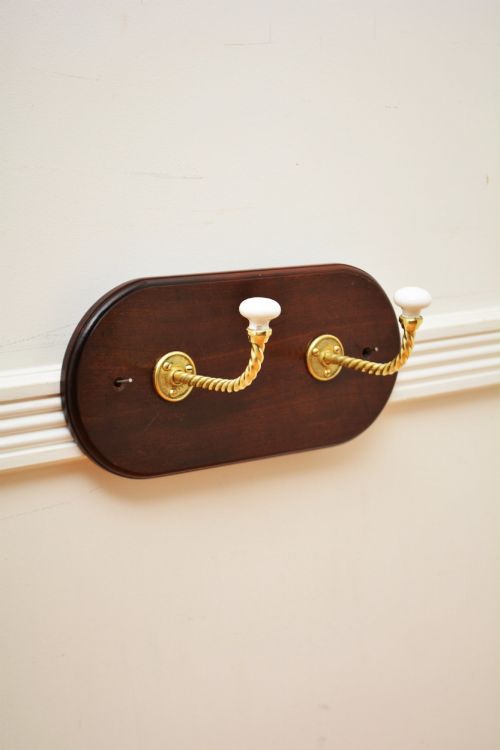
Makers utilised dense timbers alongside brass hooks and occasionally marble shelves or ceramic inserts to create robust furniture for heavy everyday use. Regional country house pieces sit alongside refined urban designs, reflecting the diverse domestic requirements of their original settings.
What varies in quality
Quality in a dark mahogany hall rack rests upon the depth of the timber, the integration of carved details, and the robustness of the structural joints. Pieces featuring bevelled mirror plates, heavy brass hooks, and inset marble shelves represent the more substantial end of the range.
Simpler wall-mounted coat rails rely on the grain of the mahogany and the casting quality of the brass fittings to distinguish their manufacture. Refined proportions and provenance, such as documented country house origin, elevate certain examples above standard domestic utility furniture.
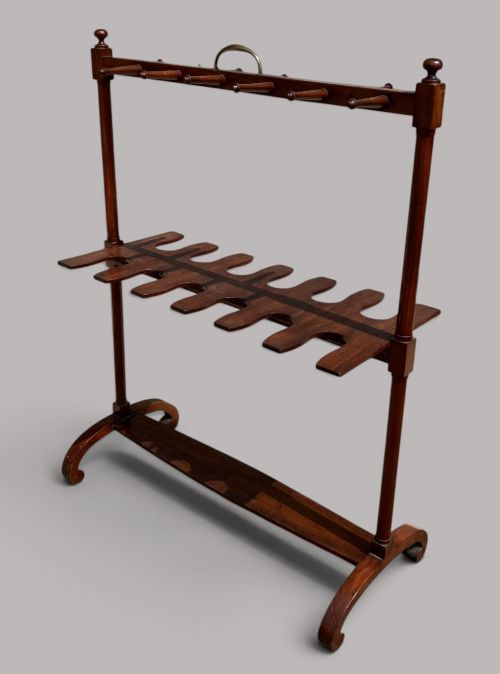
Several pieces include dedicated storage for riding whips alongside standard umbrella wells, reflecting the equestrian habits of nineteenth-century country houses.
Shoolbred
The Dark Mahogany Hall Rack Glossary
- Hall Stand
- A substantial freestanding piece of furniture designed for entrance halls, combining coat hooks, a mirror, and umbrella storage. These items often incorporate marble shelves and glove boxes.
- Bentwood
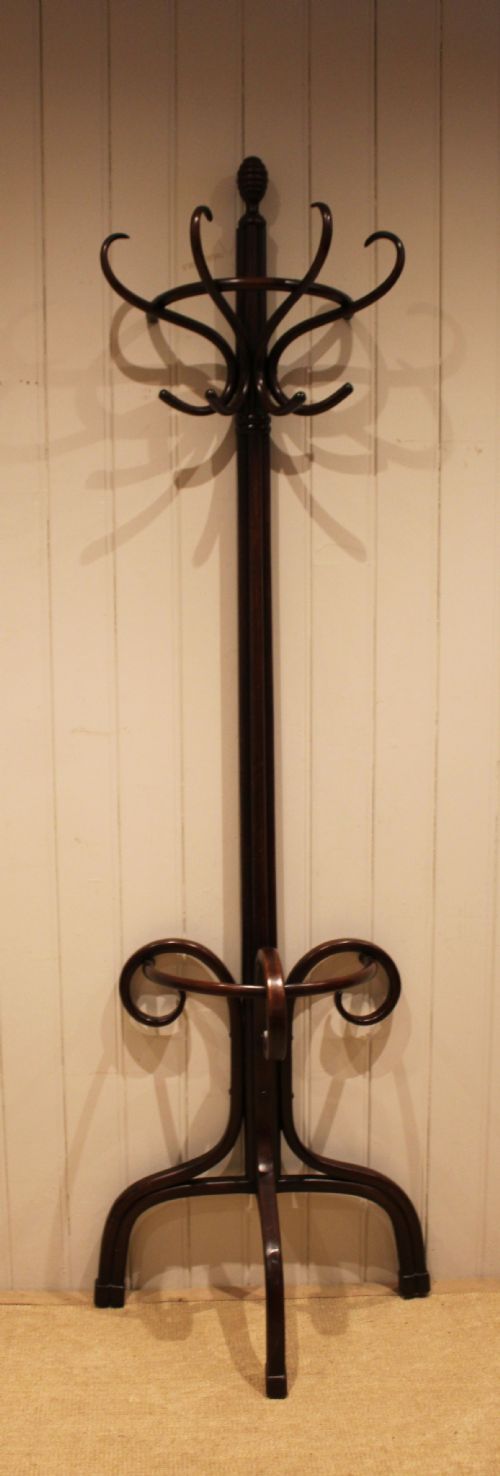
- Wood softened through steaming and bent into curved shapes, frequently utilised in nineteenth-century coat racks and stands. This technique allowed for lighter, organic silhouettes.
- Aesthetic Movement
- A late nineteenth-century design style focusing on visual beauty over narrative function, often visible in brass and mahogany coat racks. It emphasised simplified forms and artistic hardware.
- Bevelled Plate
- A mirror glass with angled edges that catch the light, commonly integrated into the backing boards of Victorian hall trees. This detail adds depth and decorative refinement to the piece.
- Drip Pan
- A metal or ceramic tray positioned at the base of stick and umbrella stands to catch moisture from wet weather gear. They protect the surrounding wooden floorboards from water damage.
Dark Mahogany Hall Rack: Frequently Asked Questions
What is a dark mahogany hall rack used for?
These pieces provide functional storage in entrance halls and reception rooms for outdoor garments, hats, and walking accessories. They keep daily wear organised while introducing rich timber tones to interior spaces.
Larger versions combine mirrors, umbrella wells, and shelving to serve as central cloakroom furniture. Wall-mounted variants offer similar hanging utility where floor space is limited.
How do I date a Victorian hall stand?
Dating relies on stylistic markers, construction methods, and hardware details recorded across nineteenth-century examples. Victorian pieces often display rich mahogany patination alongside heavy brass hooks and carved woodwork.
Earlier examples from the mid-nineteenth century tend toward architectural column designs, while later Victorian and Aesthetic Movement pieces introduce lighter framing and specialised metalwork.
How do I care for antique mahogany furniture?
Maintaining these items involves keeping them away from direct heat sources and rapid temperature fluctuations to prevent timber movement. Regular dusting with a soft, dry cloth preserves the polished surface.
Occasional application of appropriate wax polish nourishes the mahogany and maintains the depth of the wood grain without building up heavy residues.
Where were these pieces originally placed?
Original locations included the entrance halls, boot rooms, and reception corridors of large country houses and urban townhouses. They greeted visitors and provided immediate storage for outer clothing upon entry.
Country house examples often accommodated riding crops, whips, and heavy walking sticks alongside conventional coats and umbrellas.