
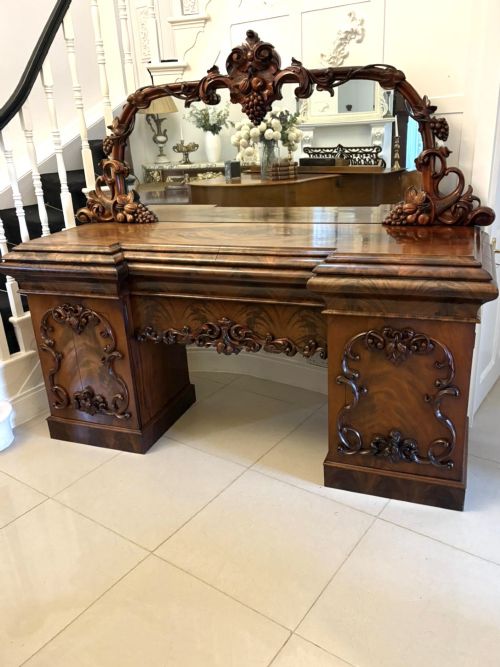
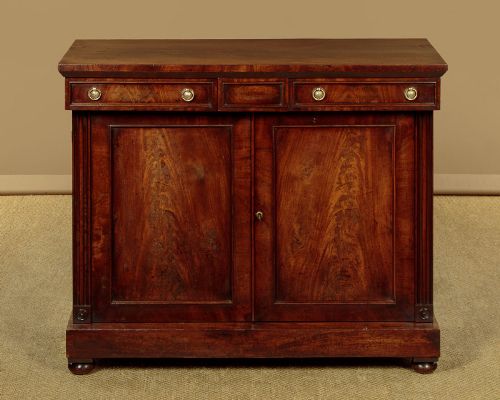
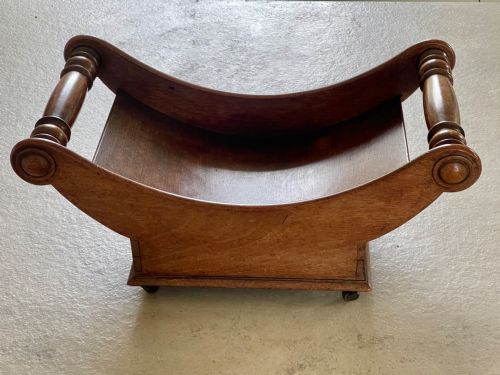
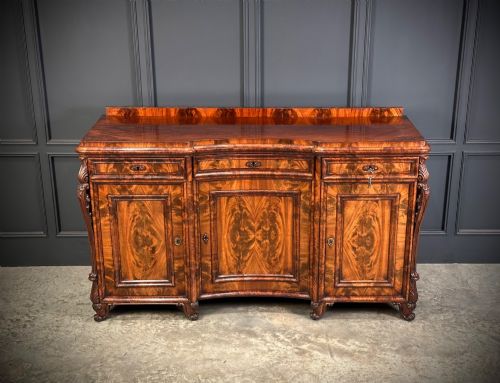
Dark Mahogany Dining Server
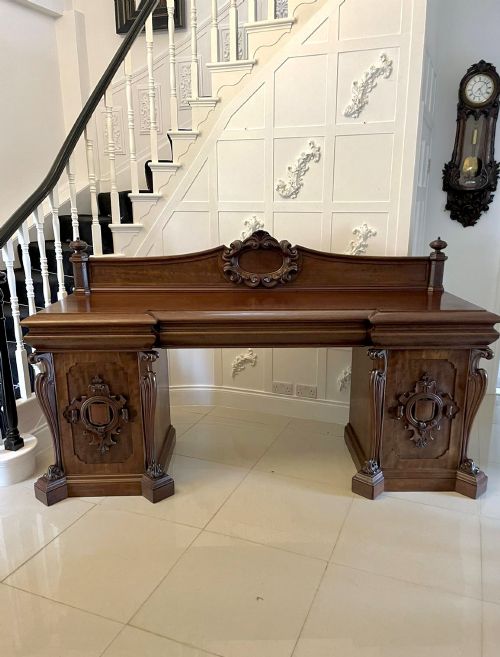
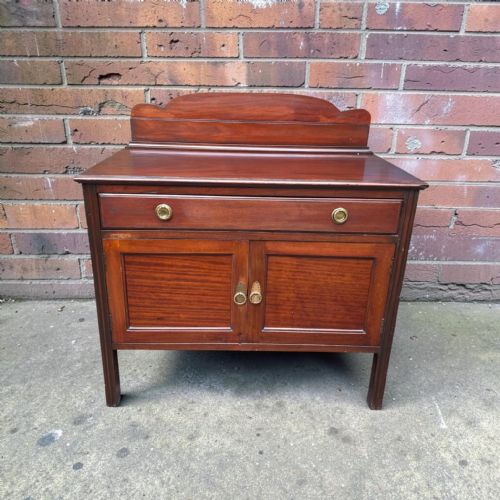
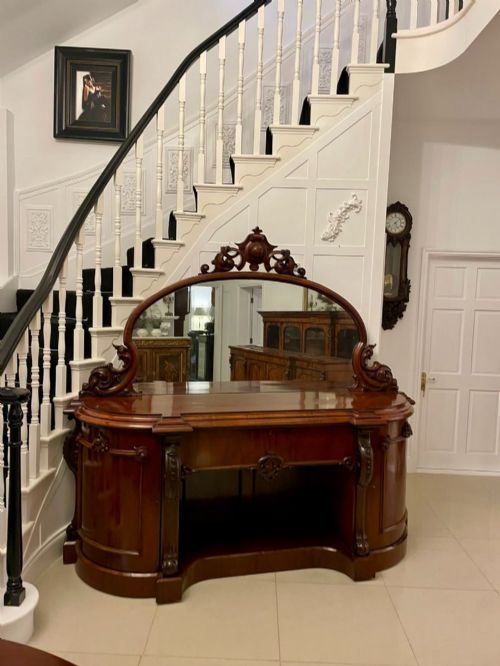
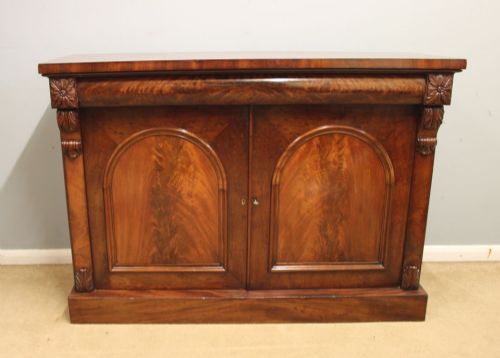
A dark mahogany dining server is a substantial piece of dining room furniture built to hold silver and linen, and these examples bring deep timber grain and classical proportion to a formal room.
Dark Mahogany Dining Server
A dark mahogany dining server encompasses a variety of large serving tables, sideboards, and chiffoniers designed for the dining room. Buyers searching this phrase encounter substantial timber furniture intended for storage and display during formal meals.
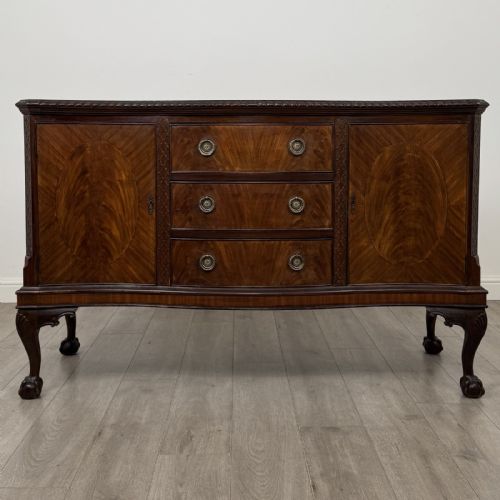
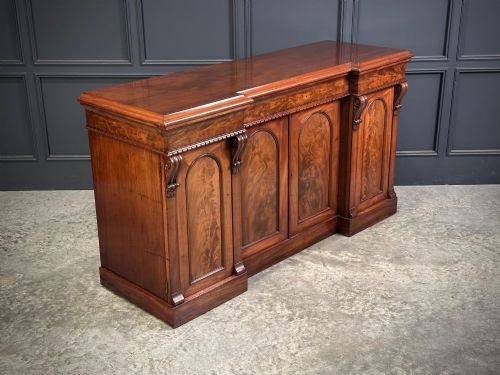
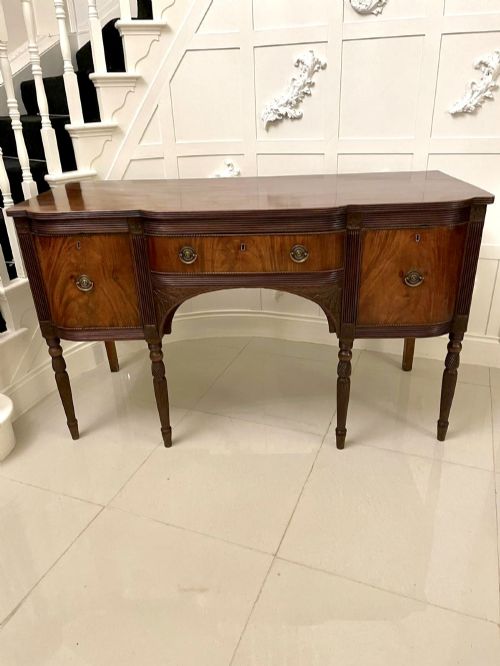
The pieces span multiple eras, with Georgian, Regency, and Victorian examples appearing frequently alongside Edwardian and later revivals. Sideboards with breakfront shapes and bowfront fronts dominate the selection, often featuring deep drawers and cupboards.
Origins range from formal George III workshop pieces to later 19th-century interpretations and early 20th-century revival cabinets. Many retain original brass hardware and deep polished surfaces characteristic of formal British dining spaces.
Timber and Construction
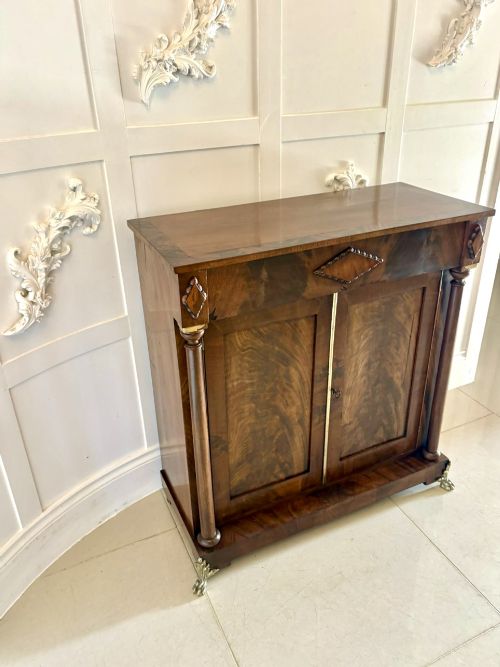
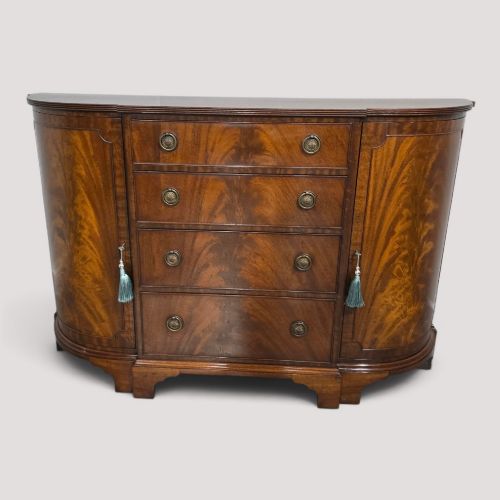
Construction relies heavily on solid mahogany and flame mahogany veneer applied over secondary woods to create dramatic figured surfaces on drawer fronts and doors. Cabinet makers selected timber with rich grain patterns to catch the light in a candlelit dining room.
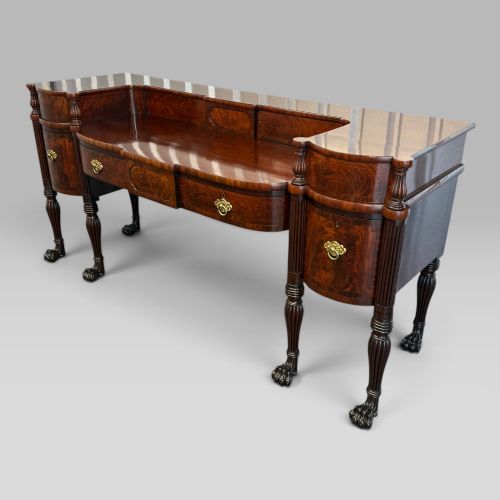
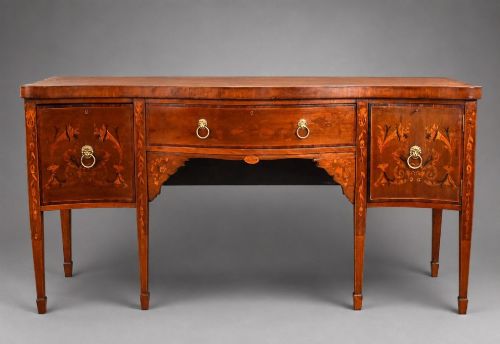
Details such as boxwood and satinwood inlay provide sharp linear contrast against the dark body of the wood. Brass fittings, including lion paw feet, handles, and gallery rails, anchor the heavy timber structure with metallic detail.
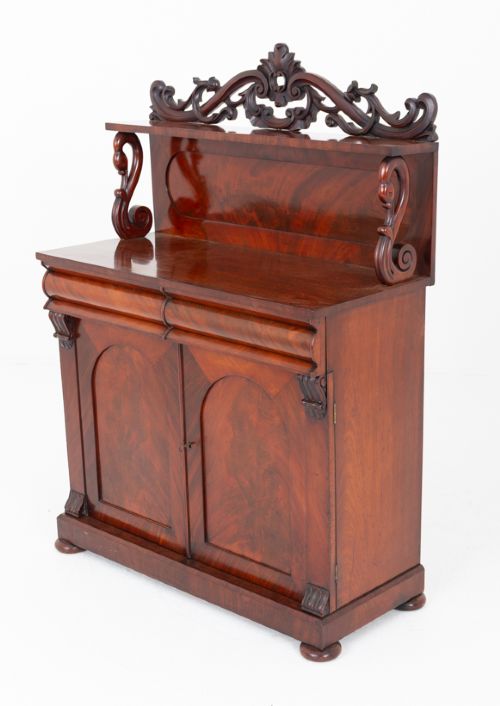
Joinery methods include hand-cut dovetails for drawer construction and sturdy framing for large breakfront carcasses. Carved elements such as scrolls and paw feet appear on heavier Victorian and William IV examples.
Several examples incorporate carved lion paw feet, letting fierce beasts quietly bear the weight of your Sunday joint.
Judging the Standard of Workmanship
Quality rests upon the selection of the mahogany veneer and the crispness of the secondary wood inlay. Superior examples display symmetrical flame patterns across the entire front elevation without mismatched grain orientation.
The structural integrity of the carcase and the smooth action of deep drawers indicate the competence of the original maker. Finer pieces maintain original brass handles and locks rather than later replacements.
Proportion and restraint separate high-status formal furniture from simpler utilitarian cupboards. Well-balanced serpentine and breakfront profiles require precise carpentry to achieve clean horizontal and vertical lines.
Gillows·M. D. Miller & Sons
The Dark Mahogany Dining Server Glossary
- Breakfront
- A cabinet design where the central section projects forward from the flanking outer sections. This arrangement creates visual depth and allows for varied internal storage.
- Flame mahogany
- Timber cut from the fork of the mahogany tree to reveal a rippled, flickering grain pattern. Cabinet makers reserved these striking veneers for prominent drawer fronts and doors.
- Serpentine
- A furniture front curved in a continuous wave, swelling outward in the centre and receding at the ends. This sophisticated shape demands high skill from the timber cutter.
- Chiffonier
- A low sideboard or cabinet featuring shelves or a mirror superstructure, popular during the Regency and Victorian periods. It served as a secondary serving surface in the dining room.
- Boxwood inlay
- Narrow strips of pale boxwood inserted into grooves cut into the dark mahogany surface. This technique creates geometric borders and contrasting decorative lines.
Dark Mahogany Dining Server: Frequently Asked Questions
How do I use a serving table?
A serving table acts as an auxiliary surface during meals, holding platters, serving dishes, and wine coolers outside the main dining space. The deep surface provides ample room for presentation while the drawers store table linen and cutlery.
In modern rooms, these pieces function well as side tables in large hallways or as media consoles beneath a mirror or painting.
How do I tell Georgian from Victorian?
Georgian pieces generally favour clean classical proportions, subtle veneers, and restrained inlay work inspired by classical architecture. The lines remain crisp and timber selection emphasises natural grain over heavy carving.
Victorian examples tend to be larger, incorporating heavy carved details, mirrored backs, and bolder mouldings such as lion paw feet. The timber finish is often darker and more intensely polished.
What is flame mahogany?
Flame mahogany is a decorative veneer sliced from the junction where a branch meets the main trunk of the tree. This specific cut produces a distinctive wavy pattern that resembles flickering flames across the wood.
Craftsmen matched these veneers symmetrically across cabinet doors and drawer fronts to create striking visual movement.