

Dark Mahogany Collector Drawers
Dark mahogany collector drawers bring together rich timber and methodical storage, giving you a tangible piece of history designed to hold small treasures.
Dark Mahogany Collector Drawers
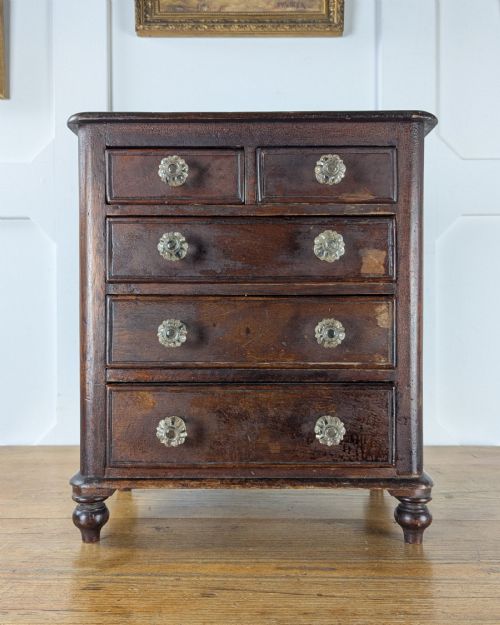
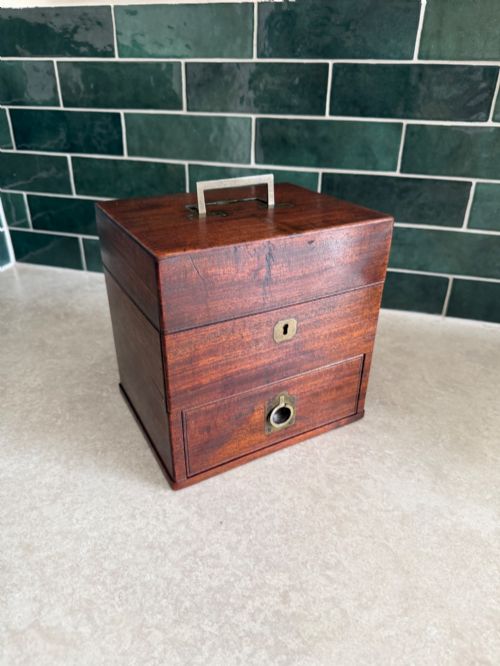
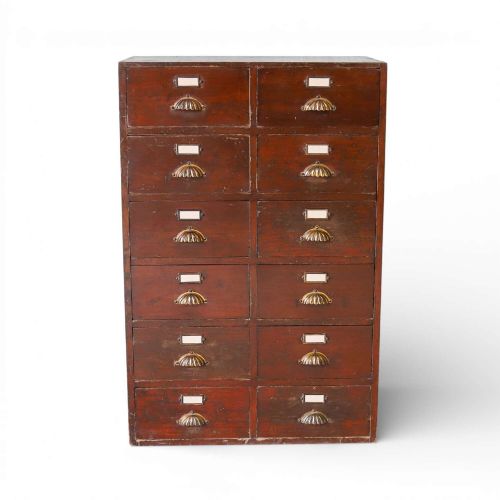
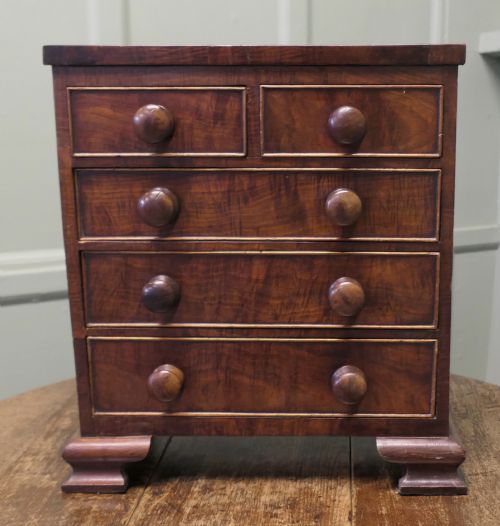
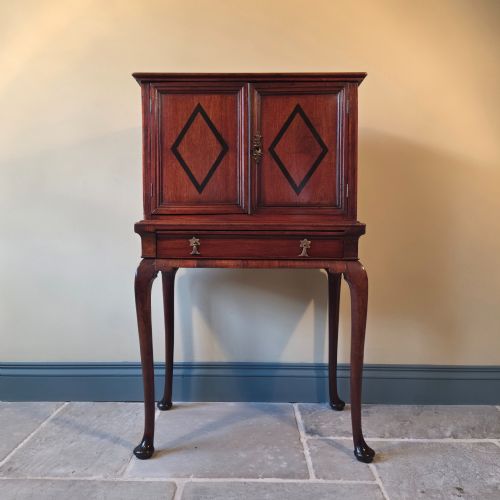
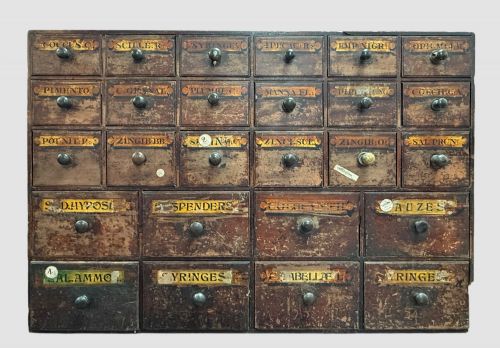
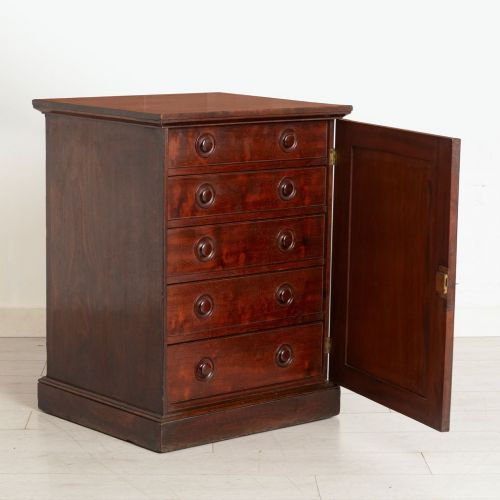
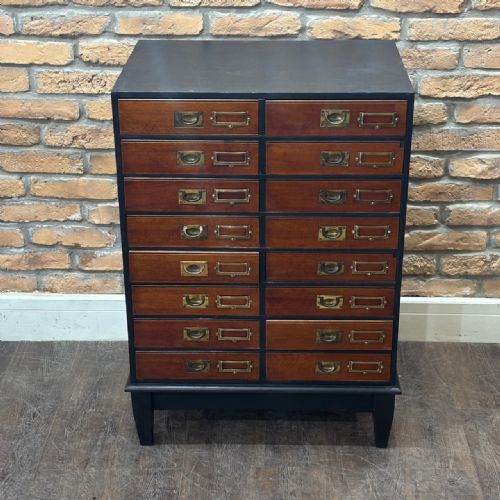
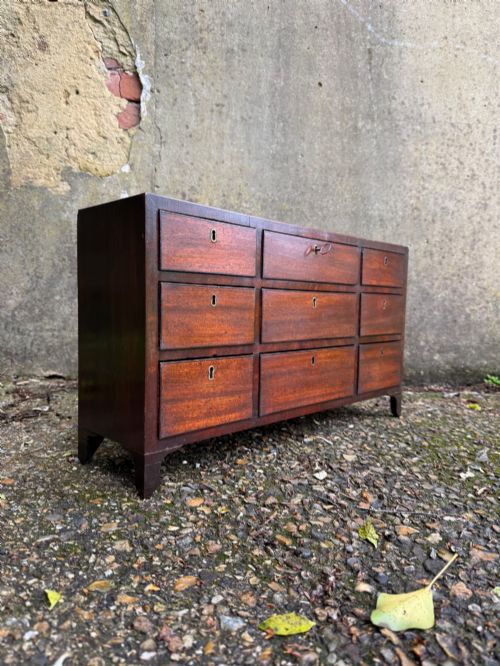
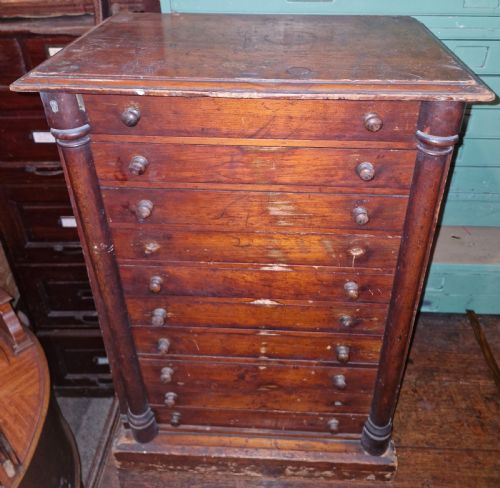
Dark mahogany collector drawers encompass specialised storage pieces such as specimen cabinets, apothecary chests, and miniature chests of drawers originating from Georgian, Victorian, and Edwardian periods. These compact units range from multi-drawer filing banks and watchmaker chests to large cabinets housing dozens of small drawers designed for specific items.
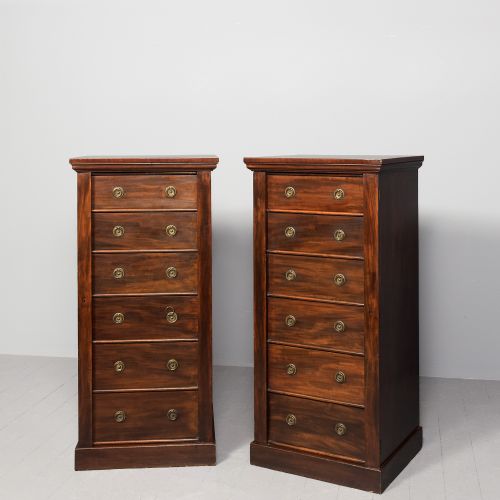
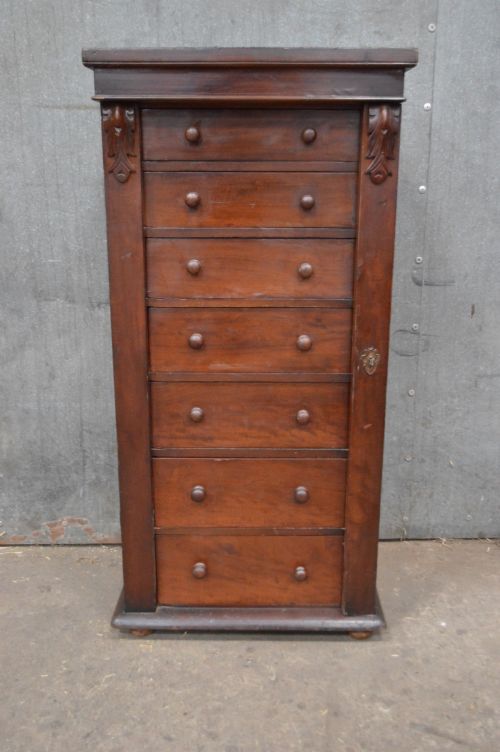
You will frequently meet Victorian and 19th-century examples on this page, alongside Georgian pieces and occasional 20th-century banks of drawers. The selection spans tabletop apprentice chests, tall Wellington chests, and substantial multi-drawer storage cabinets built from dark timber.
Materials and Construction
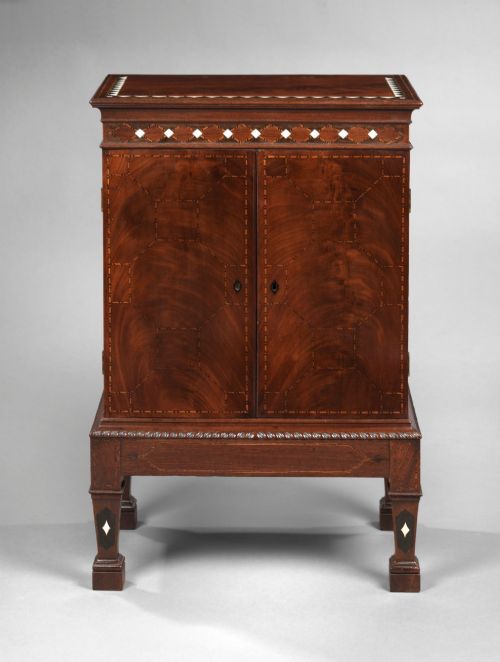
Construction relies heavily on solid mahogany and flame mahogany veneer, often paired with secondary woods like oak, walnut, pine, and rosewood. Cabinet makers utilised these timbers to build sturdy frames capable of supporting numerous small internal compartments.
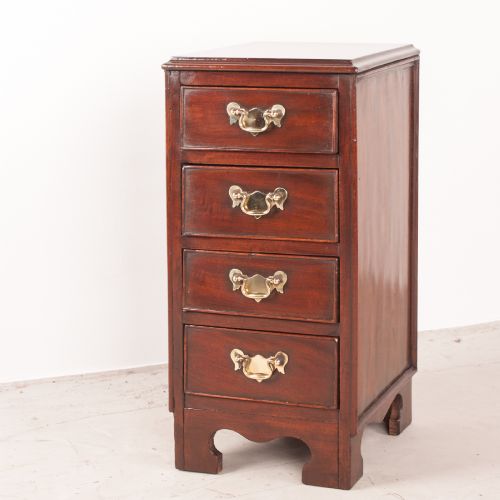
Fittings and hardware consist of brass drop handles, shell pulls, label holders, and occasionally glass fronts to display contents. Joinery techniques from the 18th, 19th, and early 20th centuries ensure the tight tolerances required for numerous smoothly operating small drawers.
Listings feature woods including mahogany, flame mahogany veneer, oak, walnut, pine, and rosewood across Georgian, Victorian, and Edwardian periods.
Craftsmanship and Scale
Quality rests in the precision of the drawer construction and the selection of timber figures, such as flame mahogany veneer, rather than sheer size. Superior examples show meticulous attention to internal drawer lining, seamless joints, and original brass hardware or label holders.
The scale of the piece and the complexity of its drawer arrangement dictate distinction, ranging from simple five-drawer specimen cases to monumental thirty-drawer cabinets by known makers. Original fittings, glass doors, and untouched patination elevate certain examples above standard utility storage.
Brady of Edmonton·Charles William Schofield
The Dark Mahogany Collector Drawers Glossary
- Mahogany
- A durable tropical hardwood prized for its deep reddish-brown colour and stable grain. It forms the primary structural material for these cabinets.
- Wellington chest
- A tall, slender chest of drawers secured by a hinged locking stile on one side. This locking mechanism bars access to all drawers simultaneously.
- Apprentice piece
- A small-scale item created by a tradesperson to demonstrate mastery of joinery techniques. These miniature chests mirror full-sized furniture in every detail.
- Specimen cabinet
- A specialised storage unit containing numerous shallow drawers. Naturalists and collectors utilised these to house items like microscope slides or insects.
- Cartonnier
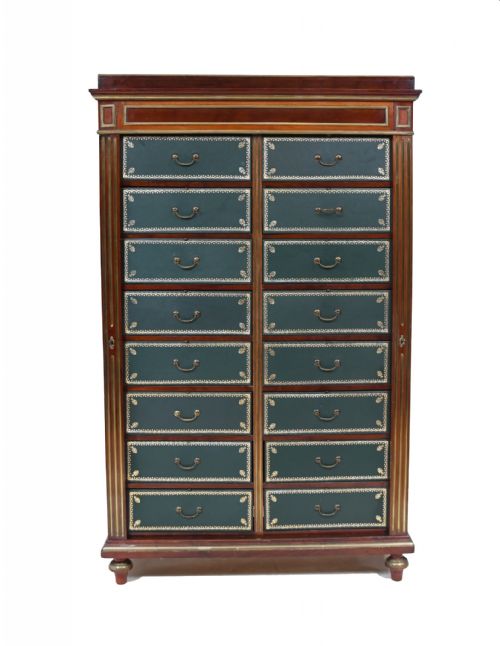
- A French cabinet fitted with multiple horizontal compartments or drawers for storing papers and documents. These pieces often feature mahogany construction.
Dark Mahogany Collector Drawers: Frequently Asked Questions
What were dark mahogany collector drawers originally used for?
These cabinets served scientists, naturalists, and tradespeople who needed to organise delicate or numerous items securely. Drawers held specimen slides, watch parts, apothecary supplies, and small geological or botanical collections.
Over time, collectors adapted them for domestic storage, using the numerous shallow compartments to sort everyday items, jewellery, or personal papers.
How do I distinguish a Georgian piece from a Victorian one?
Georgian pieces generally display restrained classical proportions, subtle cockbeading around drawer edges, and simpler hardware styles. Cabinet makers of that era favored dense, dark solid timber with minimal applied ornament.
Victorian examples often introduce more robust locking stiles, such as those found on Wellington chests, or utilise flame mahogany veneers. Drawer pulls on Victorian pieces frequently incorporate brass label holders and stamped shell motifs.
Are these cabinets suitable for modern home interiors?
Their compact footprints and dark timber tones allow them to sit comfortably in studies, living rooms, or hallways. The multitude of small drawers provides practical organisation for modern desk supplies, keys, or collections.
Placing them away from direct sunlight and sudden temperature changes protects the mahogany finish and ensures the wooden drawer runners operate smoothly.
What is the difference between an apprentice piece and a specimen cabinet?
An apprentice piece is a miniature version of a full-sized chest of drawers, built to showcase a woodworker's skill to a guild. These typically feature standard-depth drawers configured to mimic large bedroom furniture.
Specimen cabinets, conversely, are purpose-built storage units containing many shallow drawers designed specifically to hold flat items, small objects, or scientific collections.