





Dark Grey Chest Drawers
Dark grey chest drawers bring depth and grounded weight to a room, offering practical storage through painted timber and marble-topped commodes.
Dark Grey Chest Drawers
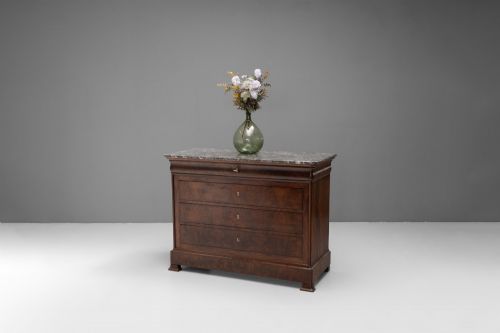
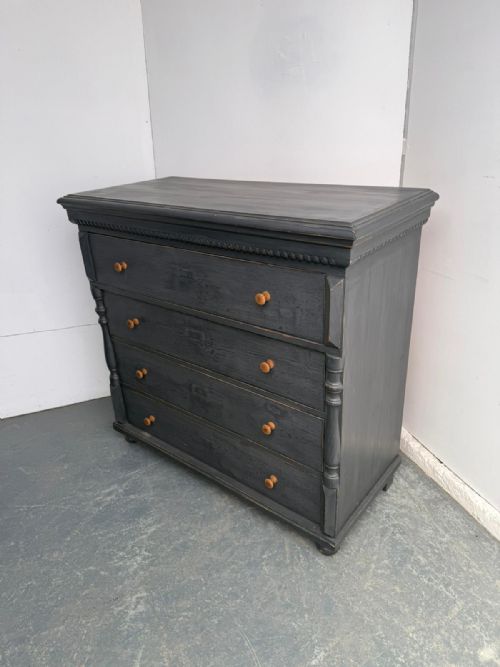
Dark grey chest drawers encompass painted and polished timber storage pieces designed to anchor a bedroom or living space. When searching for dark grey chest drawers, you encounter vernacular painted pine and mahogany pieces alongside grander Continental commodes.
The selection ranges from Victorian painted pine examples to eighteenth-century French walnut and flame mahogany pieces. Many feature contrasting marble tops that add a cool, hard surface above the timber carcase.
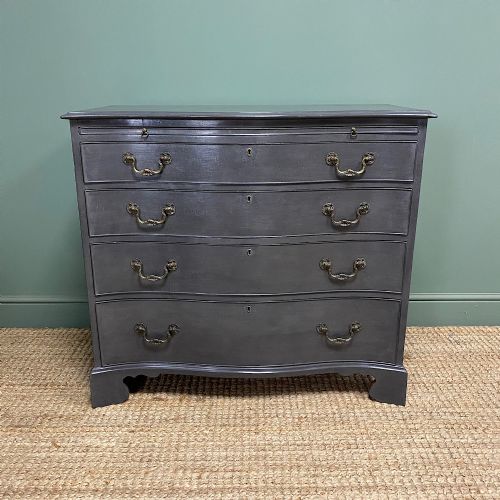
Drawers vary in configuration from four to five tiers, often accompanied by brass hardware. These pieces bridge the gap between utilitarian storage and formal decorative furniture.
How they were made
Construction relies upon solid timbers such as mahogany, oak, pine, and walnut, often shaped into serpentine or straight-fronted carcases. Timber selection dictated whether the piece received a fine French polish or a thick coat of paint.
Surface treatments include traditional hand-mixed paint layers and figured flame mahogany veneers. Heavy marble slabs sit atop many of the Continental commodes, requiring robust carcase construction to bear the stone weight.
Dark Grey Chest Drawers Retail Price Guide 2026
Typical asking prices for dark grey chest drawers among the pieces listed under this phrase on Sellingantiques today, from the lower quarter to the upper quarter. They describe what is for sale here now, not the wider market.
Several pieces combine heavy stone with deep grey paint, proving that even utilitarian bedroom storage once dressed for dinner.
What varies in quality
Quality reveals itself in the handling of timber and the crispness of carved details on oak and walnut carcases. Superior pieces display thoughtful proportions and well-figured grain beneath the polish or paint.
Hardware integration and drawer movement separate fine workshop production from simpler vernacular work. The thickness and matching of marble tops also mark the difference between standard and high-end commissions.
The Dark Grey Chest Drawers Glossary
- Commode
- A low chest of drawers or cabinet, often fitted with a marble top and associated with French design. This term frequently appears alongside traditional chest of drawers designations.
- Flame mahogany
- A decorative wood veneer showing a distinctive flickering flame pattern derived from the fork of the mahogany tree. It brings intense visual movement to nineteenth-century drawer fronts.
- Serpentine
- A curved furniture front that undulates outward in the centre and inward at the sides. This shape demands high carpentry skill to execute cleanly.
- Biedermeier
- A Central European style emphasising utilitarian comfort and clean lines without excessive ornamentation. Pieces from this tradition utilise rich wood grains to create visual interest.
Dark Grey Chest Drawers: Frequently Asked Questions
How do I style a dark grey chest of drawers?
Dark grey tones provide a strong visual anchor that pairs well with neutral walls and metallic accents. Place lamps or ceramics on top to break up the surface.
Allow the painted or polished finish to dictate the room's mood by keeping surrounding decor simple and unfussy.
Are marble tops original to these chests?
Marble tops are frequently original on Continental commodes and mid-nineteenth-century pieces. They provided a durable, stain-resistant surface for washing and grooming in the bedroom.
Check how the stone sits within the wooden framing to understand its relationship to the carcase.
What is the difference between a commode and a chest of drawers?
A commode typically refers to a low, ornate French or Continental chest of drawers, often featuring a marble top. Standard chests of drawers tend to be taller British vernacular pieces.
Both serve the primary function of bedside or chamber storage while offering distinct regional styling.
How do I care for painted wooden drawers?
Dust painted surfaces regularly with a soft, dry cloth to prevent dirt accumulation. Avoid harsh chemical cleaners that can strip or dull traditional paint layers.
Wax or polish unpainted timber sections sparingly according to the specific wood type and finish.