

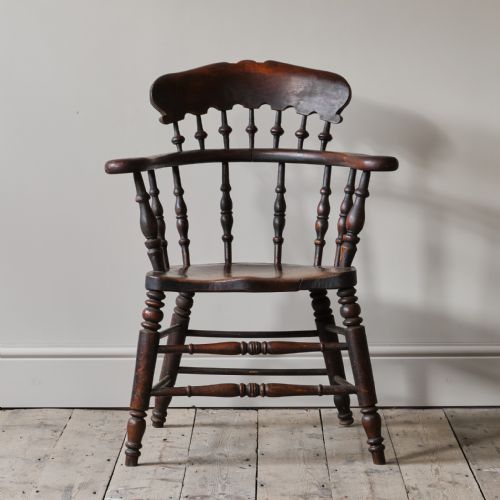


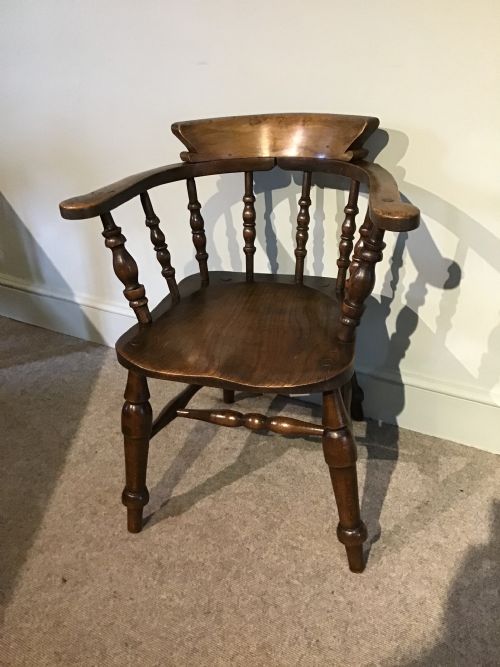


Dark Elm Tub Chair
A dark elm tub chair brings honest nineteenth-century utility and deep grain character directly into a modern study or sitting room.
Dark Elm Tub Chair
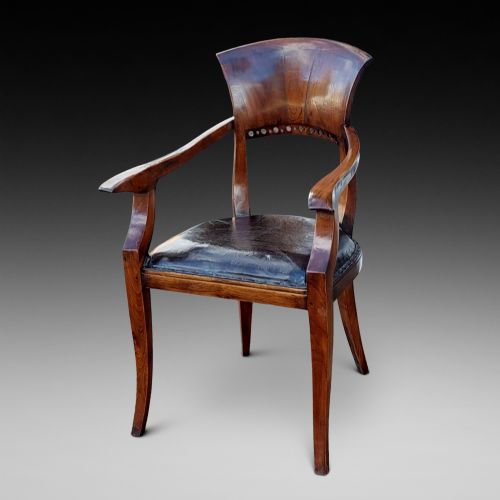
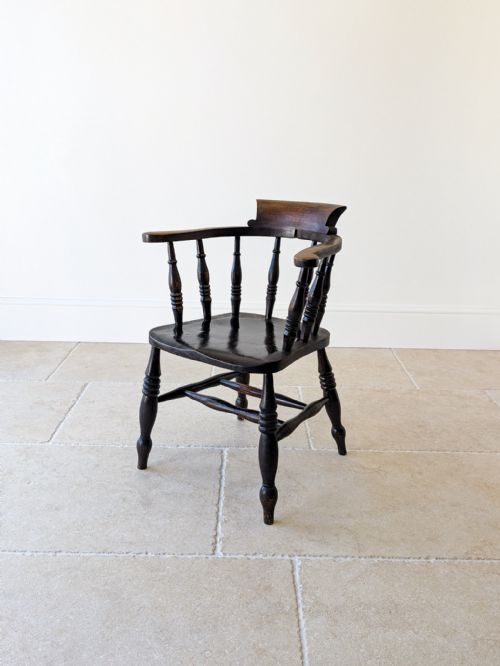
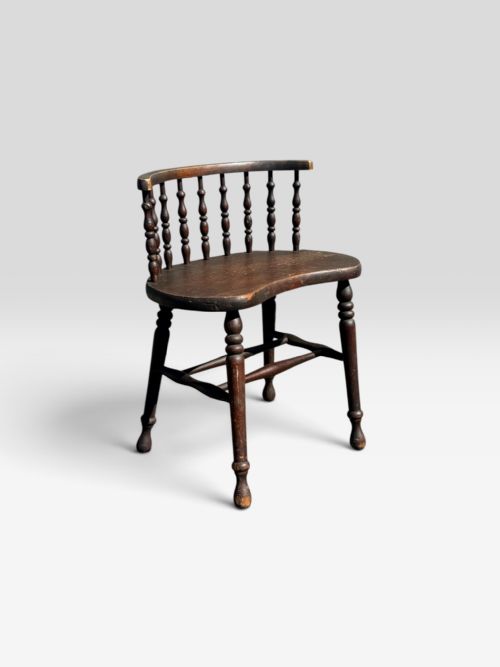
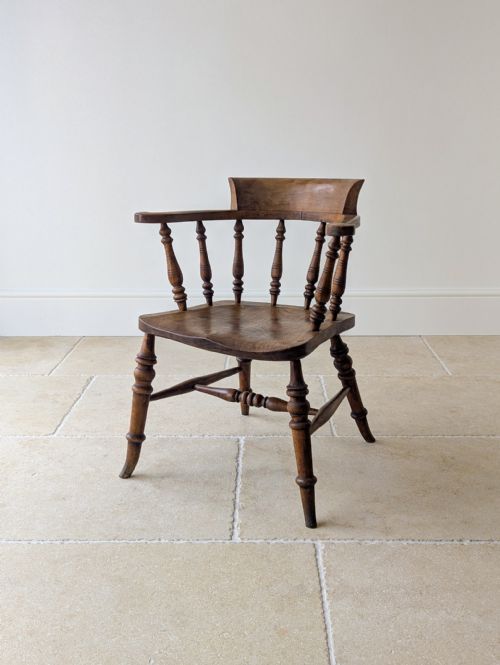
A dark elm tub chair embodies the sturdy forms of nineteenth-century English country vernacular seating, combining deep wood tones with curved backrests. When searching for a dark elm tub chair, buyers encounter pieces frequently described as Captain's chairs, Smokers Bows, or Windsor armchairs, spanning the Victorian and Edwardian eras.
The material evidence shows these armchairs, desk chairs, and children's seating resting upon mixed timber constructions rather than single woods alone. Elm forms the primary seat boards, while beech, ash, and alder shape the spindles, arms, and bows.
Victorian country workshop traditions dominate the inventory, offering robust seating designed for daily use in offices, parlours, and smoking rooms. The low, sweeping arm rails create the characteristic enclosed tub shape that defines these functional antique seats.
How they were made
Maker-joiners built these chairs using solid elm for the saddle-shaped seats, chosen for its resistance to splitting under heavy daily wear. Steam-bending techniques shaped the thick ash, beech, or alder into continuous bows and low arm rails.
Traditional Windsor construction methods secured turned spindles and legs directly into bored holes in the thick elm seat base. Wedges and glue joints locked the structural components firmly in place without relying on modern metal fixings.
Dark Elm Tub Chair Retail Price Guide 2026
Typical asking prices for dark elm tub chair among the pieces listed under this phrase on Sellingantiques today, from the lower quarter to the upper quarter. They describe what is for sale here now, not the wider market.
Current listings feature nineteenth-century and Edwardian pieces constructed from elm, beech, ash, and alder.
What varies in quality
The depth of colour and figuring in the elm seat plank distinguishes a finer country chair from a plain utility piece. Rich grain patterns emerge from older timber selections that have absorbed decades of wax polishing.
Proportion and spindle turning quality separate standard vernacular production from more accomplished village workshop craftsmanship. Tighter steam-bent bows and well-balanced arm scrolls show greater care during initial construction.
The Dark Elm Tub Chair Glossary
- Smokers Bow
- A low-backed Windsor armchair with a continuous curved arm rail and turned spindles, popular in Victorian public houses and domestic smoking rooms.
- Captain's Chair
- A sturdy desk armchair featuring a rounded wooden back and low arms designed to fit neatly beneath a writing table.
- Vernacular
- Objects made by local craftsmen using regional materials to serve a practical purpose, rather than following strict high-style London fashions.
- Windsor
- A chair built with a solid wooden seat into which the legs, back spindles, and bow are separately inserted.
Dark Elm Tub Chair: Frequently Asked Questions
What is a smokers bow chair?
A smokers bow is a sturdy vernacular armchair with a low, curved back rail supported by turned wooden spindles. These chairs were widely used in nineteenth-century offices, libraries, and pubs.
They offer robust seating with a comfortable enclosed shape that forms the basis of many dark elm tub chair listings.
How do I date a Victorian elm chair?
Dating relies on timber selection, tool marks visible underneath the seat, and the turning style of the legs and spindles. Nineteenth-century examples often display hand-turned components and deep patination on the elm.
Comparing the construction methods to dated pieces from the 1870s to 1900 helps narrow the period of origin.
Are these chairs comfortable for daily use?
Yes, the saddle seats carved from solid elm are shaped to distribute weight evenly for extended sitting at desks or tables. The low curved arms provide natural support without restricting movement.
Their sturdy timber frames make them durable enough for regular everyday use in contemporary homes.
Why are multiple timbers used in one chair?
Country makers selected different woods for their specific physical properties to ensure maximum strength throughout the chair. Elm provided a tough, non-split seat, while ash, beech, or alder offered the flexibility needed for steam-bent bows.