


Brown Elm Arm Chair
A brown elm arm chair brings tactile warmth and vernacular character to a room, offering sturdy construction alongside the deep, figured grain of traditional country seating.
Brown Elm Arm Chair
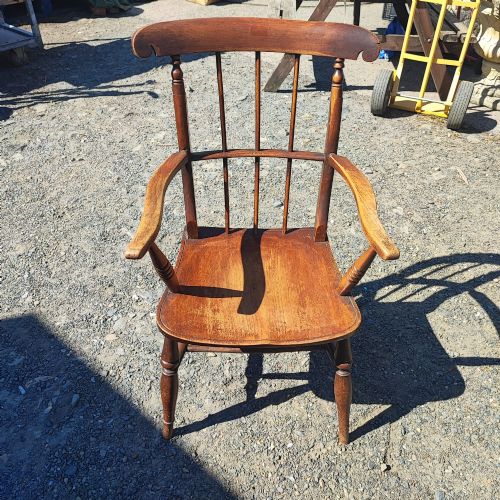
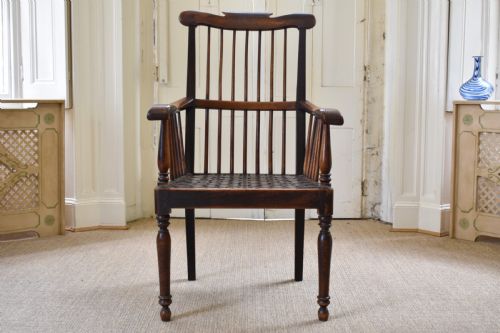
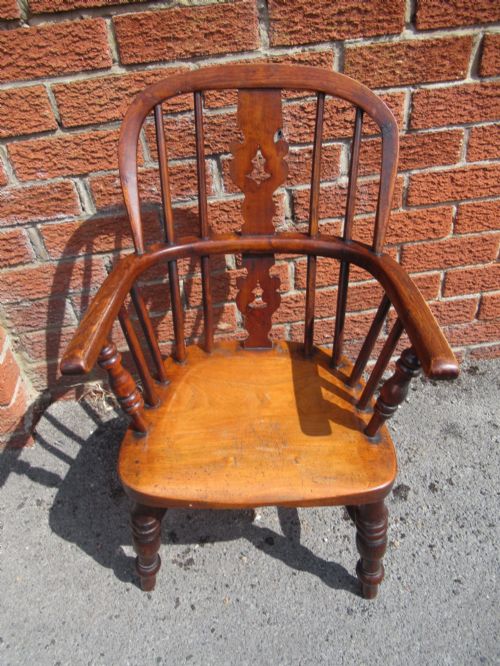
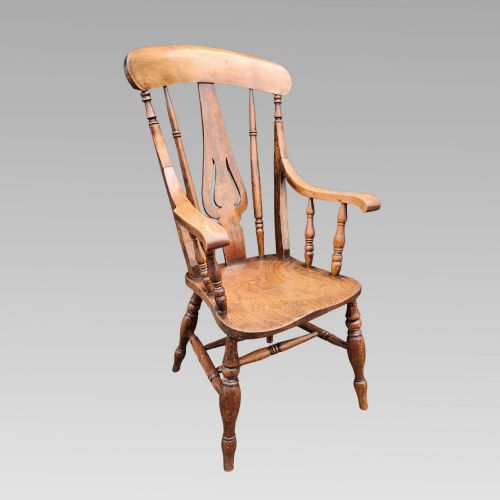
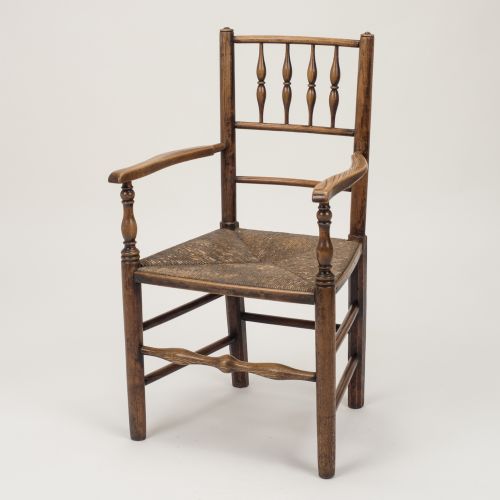
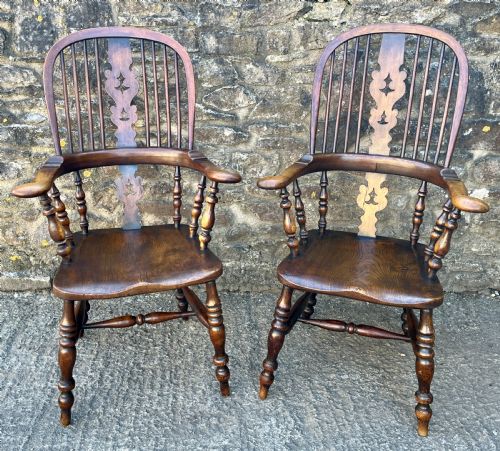
A brown elm arm chair is a staple of vernacular furniture, spanning periods from the eighteenth century through to the Edwardian era. These pieces include Windsor forms, smokers bows, ladderbacks, and spindle-back farmhouse chairs originating from regional British traditions as well as Chinese export workshops.
The version most commonly met on this page is the English country armchair or Windsor, often pairing an elm seat with ash, yew, or beech components. They range from compact childs rocking chairs to generous broad arm captains chairs designed for fireside and kitchen use.
How they were made
Makers utilised solid timber combinations, turning to tough elm for comfortable, dished seats while employing ash, beech, or yew for spindles, legs, and bentwood bows. The natural strength of these woods allowed for slender yet supportive structural elements.
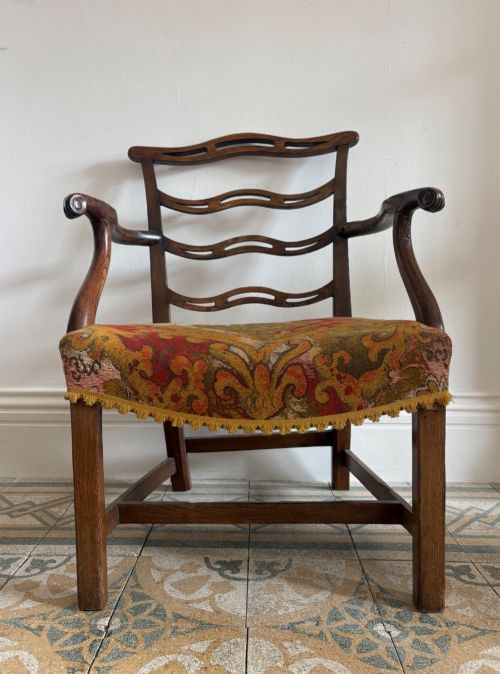
Traditional joinery methods such as wedged through-tenons and steam-bending shaped the characteristic curved backs and arms. Seats were frequently carved or adzed into a saddle shape, while some examples incorporate woven rush or tapestry fabric drop-in seats.
Listings feature elm combined with ash, beech, and yew, spanning eighteenth-century Georgian designs to Edwardian Windsor chairs.
What varies in quality
Quality rests in the selection and figuring of the timber, particularly the depth of grain in the elm seat and the harmonious pairing of contrasting woods like yew and ash. Superior examples display balanced proportions, clean turning on the spindles, and minimal replacement of structural parts.
Construction integrity separates everyday workshop output from finer country house commissions. The tightness of the wedged joints, the retention of original surface patination, and the complexity of the back splat or comb dictate the standing of an individual piece.
The Brown Elm Arm Chair Glossary
- Windsor chair
- A chair built with a solid wooden seat into which the legs and back spindles are directly fitted. This construction method creates a durable, organic form characteristic of country seating.
- Broad arm
- A chair featuring an expanded, flat wooden armrest designed for writing or comfort. These generous arms are frequently found on nineteenth-century smokings and captains chairs.
- Smokers bow
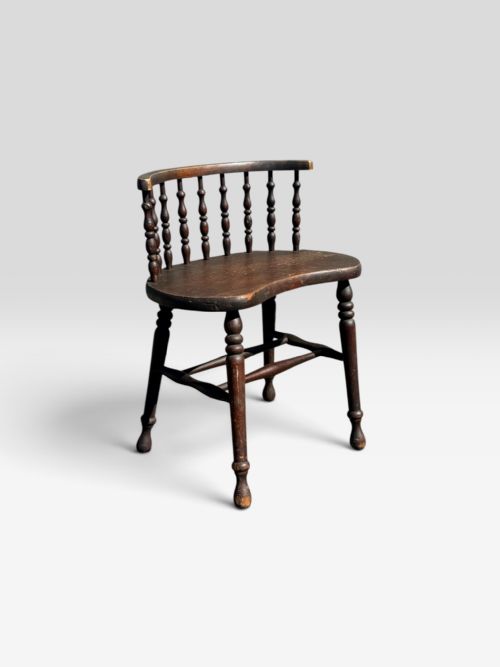
- A low-backed Windsor variant with a continuous curved arm rail supported by turned spindles. It gained popularity in nineteenth-century inns, farmhouses, and domestic parlours.
- Comb back
- A Windsor chair variation where the top rail resembles the spine of a comb, with vertical spindles rising through a horizontal headpiece. This regional style provides robust back support.
- Splat
- The central vertical slat of wood set into the back of a chair. In country seating, these range from simple vase shapes to ladderback slats.
Brown Elm Arm Chair: Frequently Asked Questions
How do I care for elm furniture?
Keep wooden armchairs away from direct heat sources and sudden temperature shifts to prevent timber shrinkage or splitting. Feed the surface periodically with traditional wax polish to maintain the rich brown tone and protect the grain.
Avoid excessive moisture during cleaning by using a soft, dry cloth for regular dusting. Gentle care preserves the historical patination built up over centuries of use.
How do I date an elm armchair?
Dating relies on observing construction techniques, tool marks beneath the seat, and stylistic details such as comb backs or ladderback slats. Georgian and Regency examples often display distinct regional turning patterns compared to later Victorian pieces.
Wear patterns around the footrests and seat edges also indicate age. Comparing the wood species used for the seat versus the spindles helps place the chair within its historical period.
Were these chairs used in dining rooms?
Country armchairs served multiple domestic functions, appearing in kitchens, bedrooms, and fireside settings as well as around dining tables. Many regional examples were built as sturdy utility seating for everyday family life.
Their comfortable dished seats made them suitable for prolonged sitting during meals or fireside tasks. Single carvers often accompanied matching sets of simpler dining chairs.