
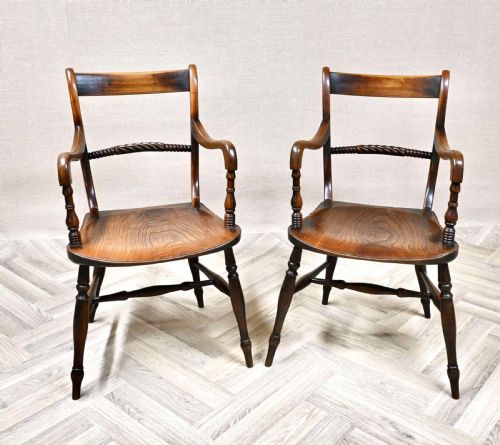
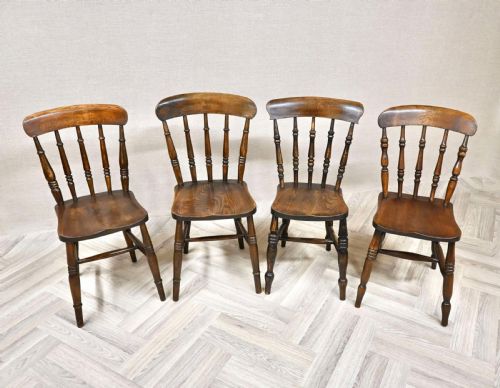
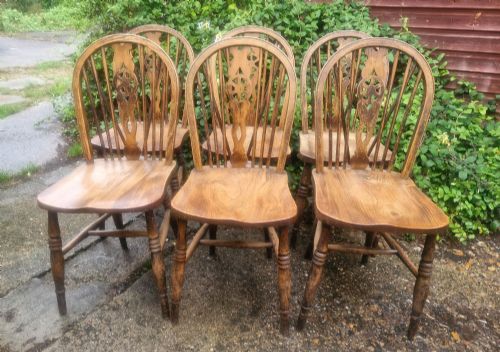
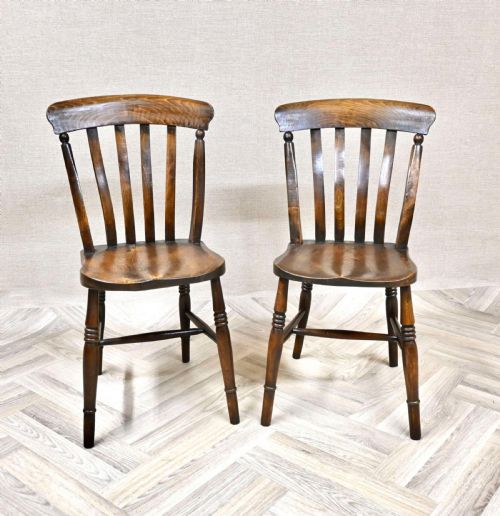
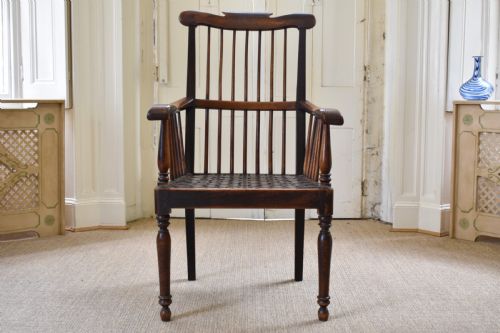
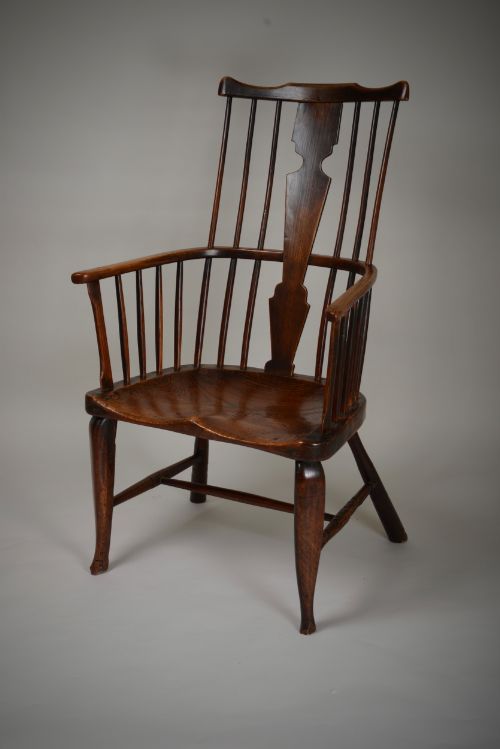
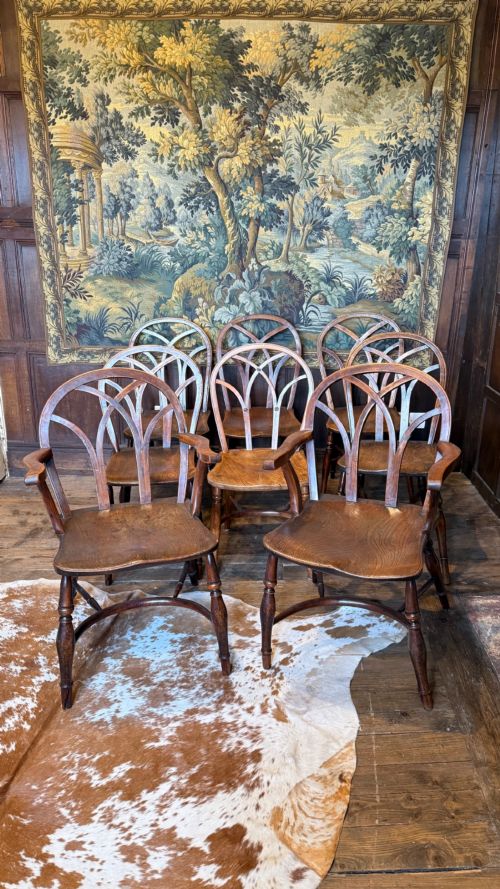
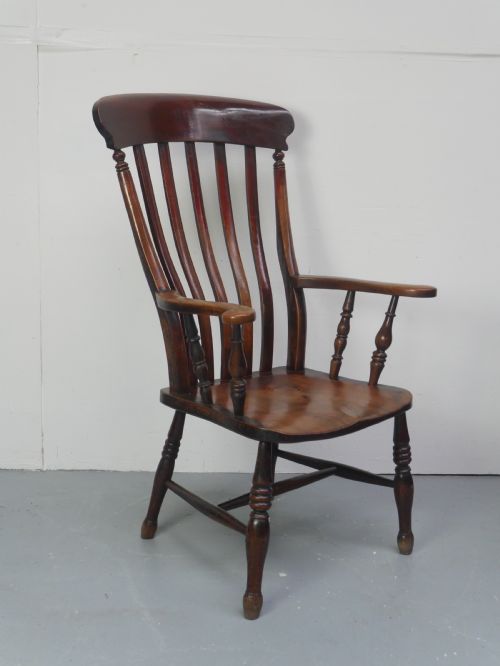
Dark Elm Dining Chairs
Dark elm dining chairs are robust country timber seating, uniting utilitarian vernacular forms with rich figured wood.
Dark Elm Dining Chairs
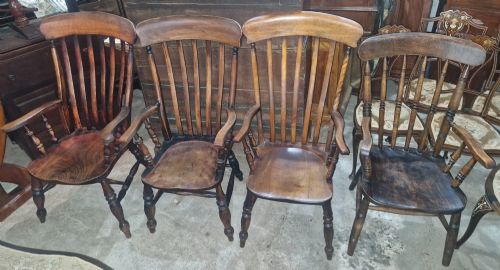
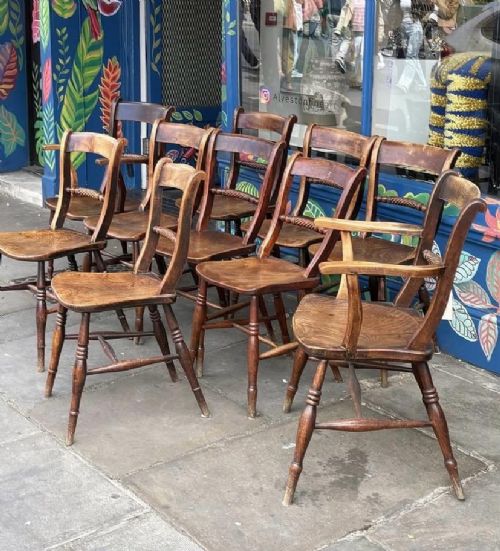
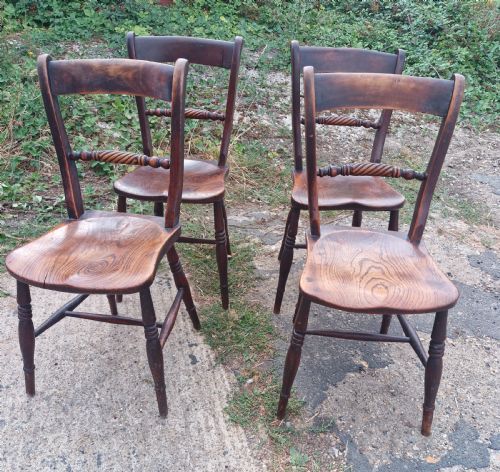
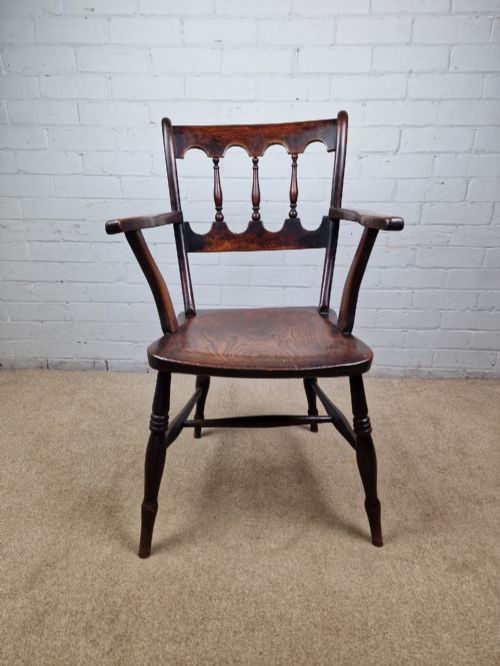
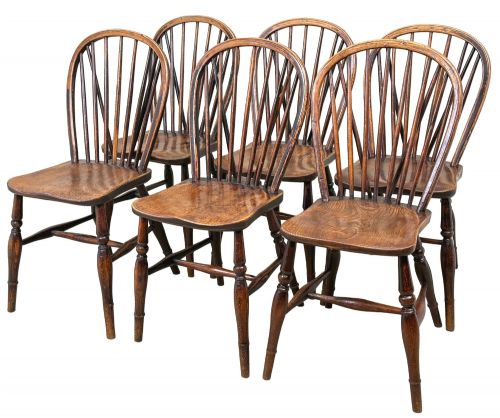
Dark elm dining chairs encompass vernacular timber seating produced across the eighteenth and nineteenth centuries, predominantly taking the form of Windsor and kitchen chairs. These domestic pieces serve everyday seating functions around farmhouse tables, with single chairs, pairs, and larger matched or graduated sets appearing regularly.
The material character stems from native timber grown slowly in British soil, developing a deep patinated tone through decades of use. Elm provides the solid plank seats while companion timbers form spindles, legs, and bentwood bows.
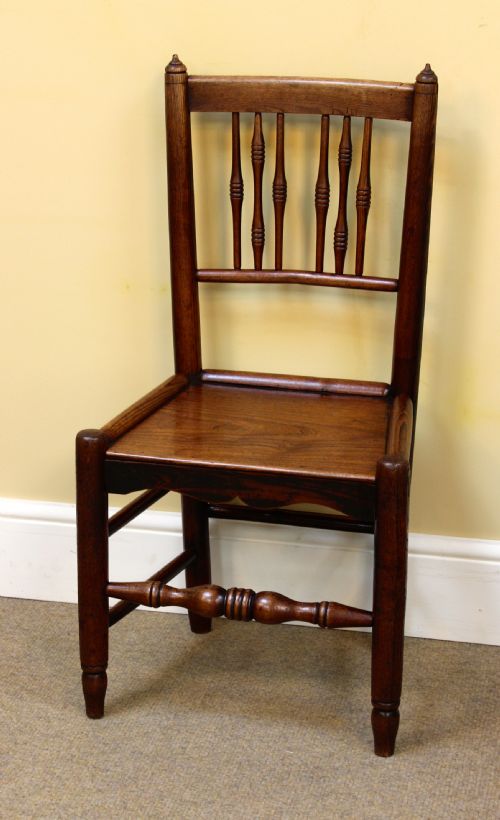
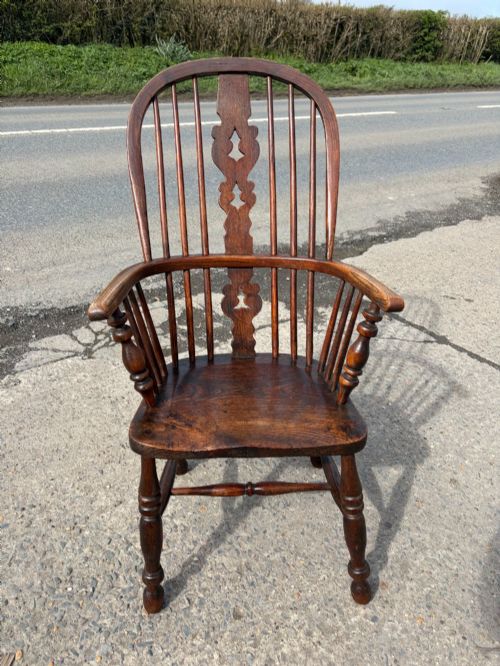
The selection here ranges from primitive stick backs and comb backs to wheelbacks and barbacks, spanning Georgian country workshops into the Victorian era.
Timber construction and joining methods
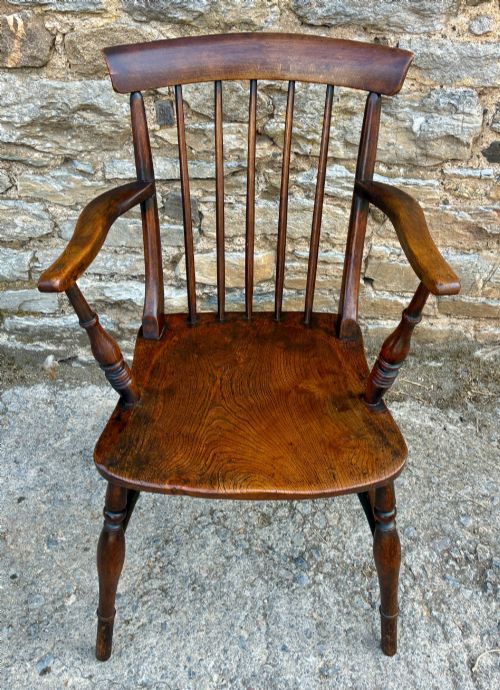
Makers utilised solid elm for saddle-shaped plank seats, boring through the thick timber to wedge tapered legs and back spindles securely from beneath. This through-construction creates inherent rigidity without requiring metal fixings.
Ash, beech, and occasionally yew or laburnum provide the contrasting components, shaped via steam-bending for continuous back rails or turned on pole lathes for spindles and stretchers. The contrasting grains of elm seats and pale turned members create visual depth.
Early makers often grooved the underside of elm seats to save weight, leaving finger channels that reveal the sculptor's hands.
Quality factors in country seating
Proportion and wood selection dictate standing, where deeply sculpted saddle seats and finely turned undercarriages elevate certain examples above utilitarian counterparts. The grain figure within the elm seat surface reveals the underlying quality of the chosen plank.
Structural integrity depends upon original wedged joints and matching turned components within sets, whereas later replacements or heavy timber shrinkage alter the original harmony of an armchair or side chair.
The Dark Elm Dining Chairs Glossary
- Windsor
- A chair built with a central solid wooden seat into which all other structural members are separately inserted. The design relies on staked legs and an overarching bow or comb.
- Wheel back
- A Windsor variation incorporating a pierced central wooden splat carved in the shape of a spoked carriage wheel. It remains a staple of Victorian kitchen dining sets.
- Stick back
- A simplified vernacular chair construction using plain turned spindles radiating from the seat to form the backrest. These pieces dispense with shaped central splats.
- Carver
- A traditional term denoting an armchair designed for the head of a dining table. These pieces feature substantial armrests integrated into the back assembly.
Dark Elm Dining Chairs: Frequently Asked Questions
How do I date a Windsor chair?
Dating relies on construction methods, timber choice, and seat thickness, with earlier eighteenth-century examples showing wider plank seats and simpler turned undercarriages.
Victorian variations introduce factory-turned spindles, steam-bent wheelbacks, and standardised components while retaining the core elm and ash construction.
Are these chairs comfortable for daily dining?
The saddle-shaped solid elm seats are ergonomically carved to fit the body comfortably during long sittings without requiring upholstery.
Their robust timber construction provides reliable daily support while remaining straightforward to maintain in active household environments.
How do I care for antique elm furniture?
Regular dusting with a dry lint-free cloth preserves the surface, supplemented by occasional applications of traditional beeswax to nourish the dry timber.
Keep wooden chairs away from direct heat sources and sudden humidity shifts to prevent timber movement or joint loosening.
What is the difference between a side chair and an armchair?
Side chairs lack armrests, allowing multiple seats to be tucked neatly around a dining table or stored along walls when not in use.
Armchairs feature integral arm supports connected to the seat and back bow, providing a commanding seat designated for the host.