




Dark Brown Throne Chair
These dark brown throne chair examples are heavy timber armchairs spanning the seventeenth to the nineteenth centuries, offering commanding seating and regional historic presence.
Dark Brown Throne Chair
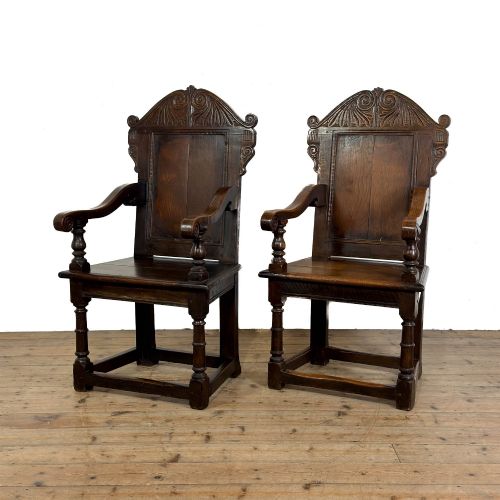
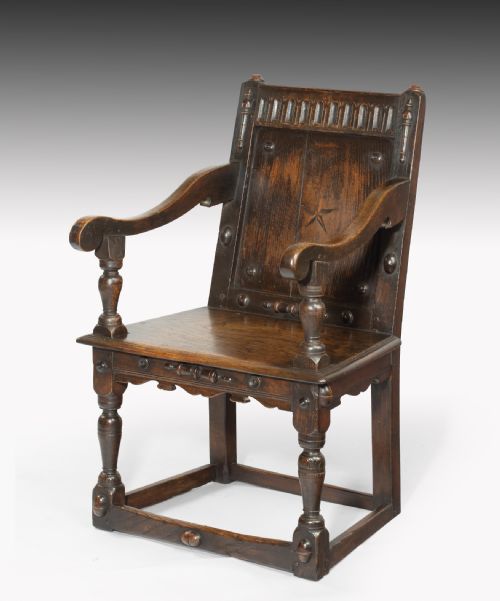
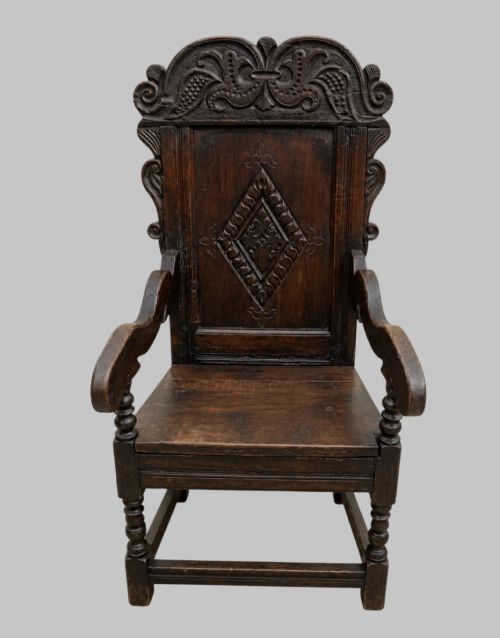
A dark brown throne chair encompasses substantial historic seating forms such as wainscot chairs, panelled armchairs, and high-backed elbow seats. These pieces predominantly date from the seventeenth and nineteenth centuries, reflecting early English, Welsh, Scottish, and continental European woodworking traditions.
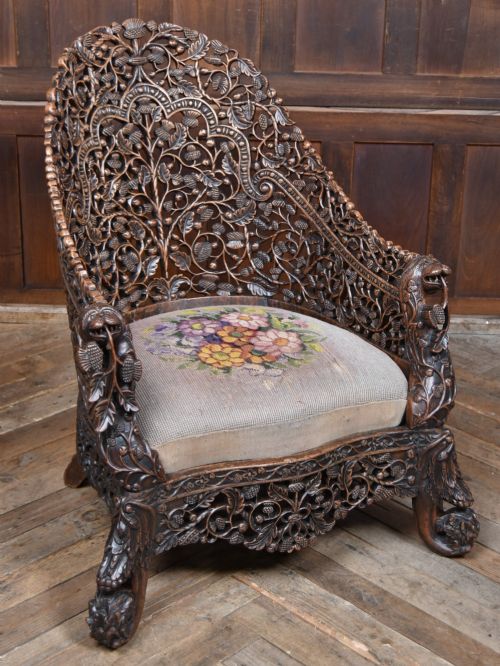
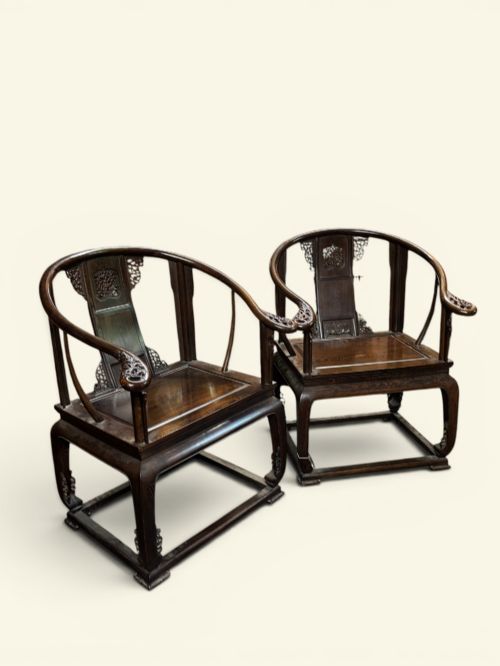
Buyers frequently encounter robust oak construction, alongside walnut, teak, elm, and hardwood alternatives. Regional variations range from Yorkshire and West Country wainscot chairs to Anglo-Indian, Burmese, and Chinese horseshoe-back forms produced across diverse historical periods.
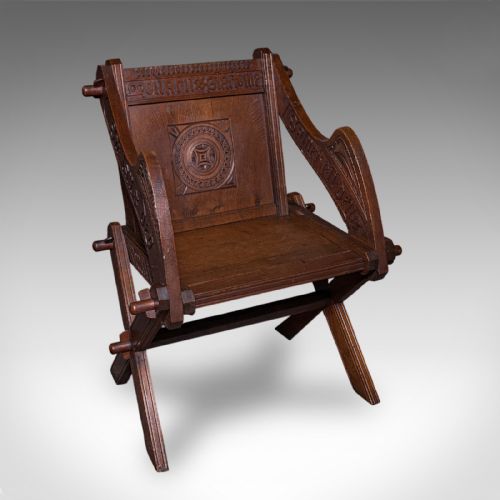
Forms span from enclosed seventeenth-century oak armchairs to nineteenth-century Gothic Revival and Victorian interpretations. Many survive as single pieces, pairs, or near pairs, exhibiting notable carved details and structural authority.
Materials and construction methods
Timber selection centres on dense native hardwoods, principally oak and walnut, chosen for structural stability and dark patination. Joinery relies on traditional pegged mortise and tenon construction, creating rigid frames capable of enduring centuries of use.
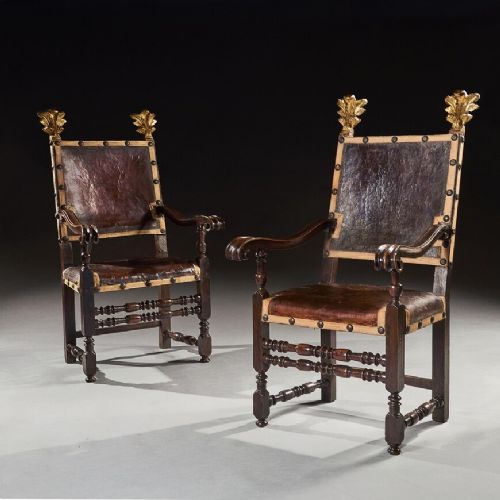
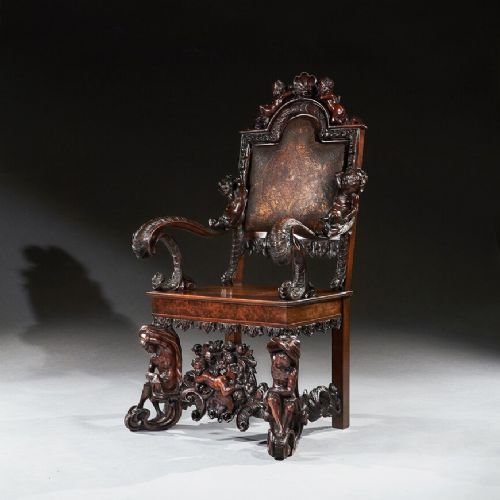
Surface ornamentation involves intricate hand carving, panel moulding, and parcel-gilding. Upholstered variants incorporate leather, fabric, and brass detailing fixed directly to the hardwood frames.
Materials include applied leather, brass, cane, and fabric alongside carved solid timber frames.
Assessing quality in historical seating
Quality rests upon the crispness of the hand carving and the integrity of the original timber framing. Pieces retaining their structural timber without excessive replacement parts demonstrate superior craftsmanship.
Proportion and architectural presence distinguish exceptional examples from standard regional variants. The depth of the dark patination and the harmony of the joinery elevate the standing of a piece.
Andrea Brustolon·A.W.N. Pugin
The Dark Brown Throne Chair Glossary
- Wainscot chair
- An early wooden armchair constructed primarily from oak panels with a solid back. This form originated in the sixteenth and seventeenth centuries.
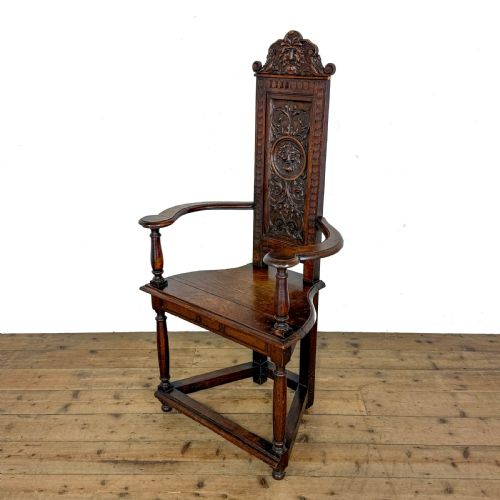
- Caquetoire
- A lightweight continental armchair featuring a trapezoidal seat and a high, narrow back designed for conversation. These chairs emerged during the sixteenth century.
- Horseshoe-back chair
- A traditional Chinese chair design featuring a continuous curved crestrail that forms both the back and the armrests. These pieces often utilise dense hardwoods.
- Parcel-gilt
- Woodwork partially decorated with applied gold leaf or gold paint to highlight specific carved details. This technique adds contrast to dark walnut and oak surfaces.
- Bobbin turning
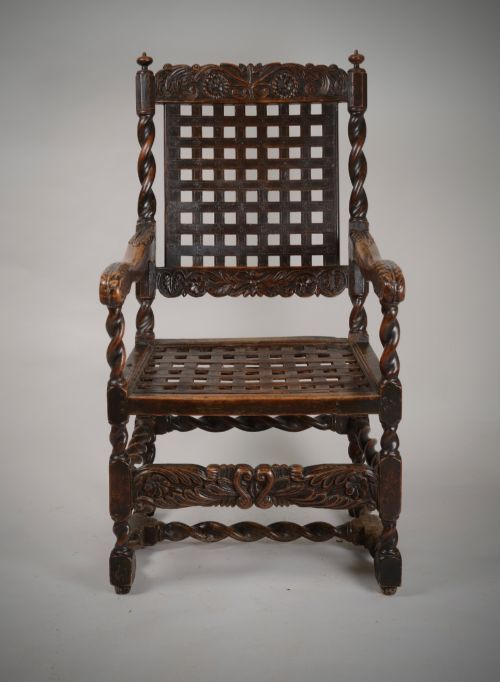
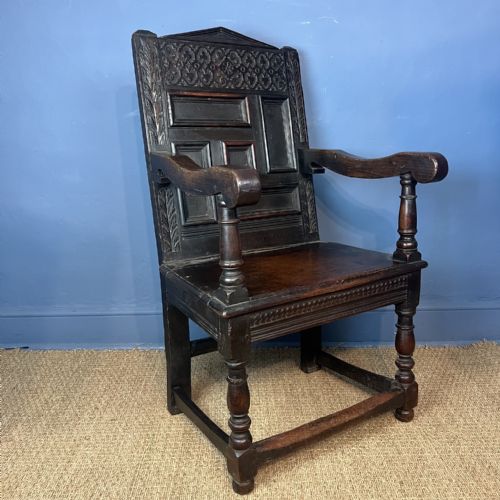
- A form of woodturning characterised by a series of rounded, spool-like shapes repeated along the length of a chair leg or stretcher. This detail appears frequently on seventeenth-century furniture.
Dark Brown Throne Chair: Frequently Asked Questions
What is a wainscot chair?
A wainscot chair is a heavy wooden armchair constructed with panelled backboards and solid wooden seats. They date predominantly to the seventeenth century and reflect early domestic joinery.
These chairs were designed for important household members rather than casual lounging. Their sturdy construction allowed them to survive centuries of continuous domestic use.
How do I date an oak armchair?
Dating relies on examining the joinery methods, tool marks, timber shrinkage, and stylistic indicators such as carved strapwork or panel proportions. Seventeenth-century examples typically show pegged mortise and tenon joints.
Later revival pieces from the nineteenth century often mimic earlier styles but utilise machine-sawn timber or different assembly techniques. Comparing structural wear helps clarify the age of the wood.
Where should I place a heavy wooden armchair?
These imposing chairs function well as statement pieces in hallways, studies, or living rooms where their architectural presence can be appreciated. They require adequate floor space due to their generous proportions.
Keep them away from direct heat sources and strong sunlight to protect the aged timber and any integrated leather or fabric from drying out.
What distinguishes a Gothic Revival chair?
Gothic Revival pieces incorporate medieval architectural motifs such as pointed arches, tracery, and quatrefoils into nineteenth-century furniture designs. They often pair dark oak with buttoned leather upholstery.
This style reinterprets earlier medieval and seventeenth-century forms with Victorian manufacturing techniques. The resulting seating combines historic aesthetics with nineteenth-century comfort.