


Dark Brown Blanket Chest
A dark brown blanket chest brings deep timber warmth and centuries of storage history directly into a modern hallway or bedroom.
Dark Brown Blanket Chest
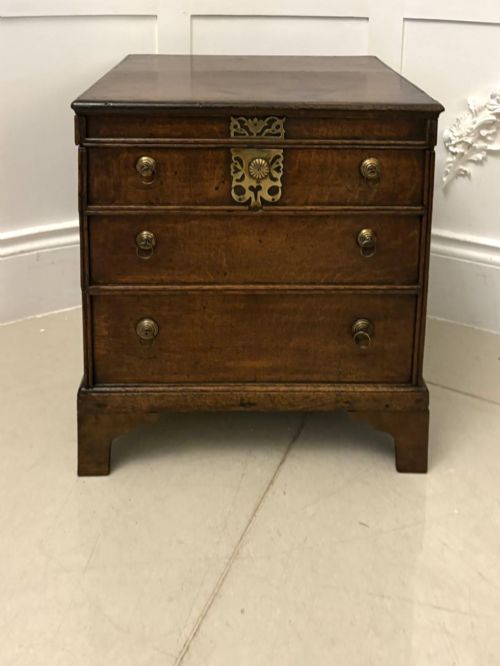
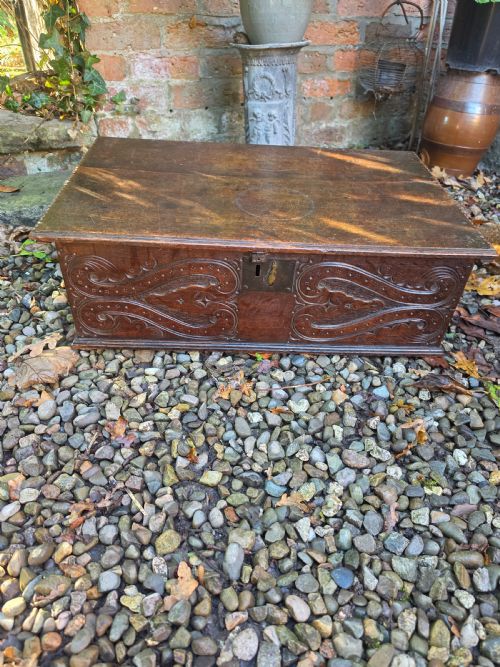
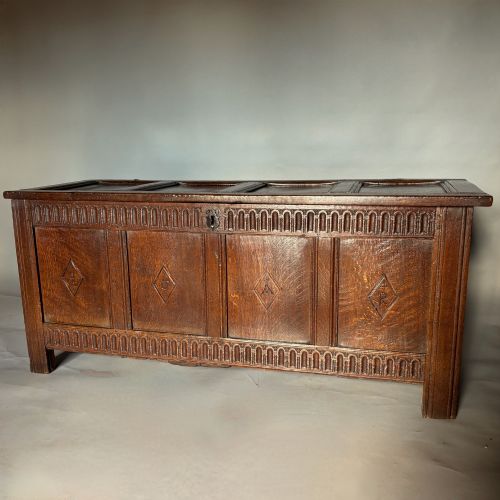
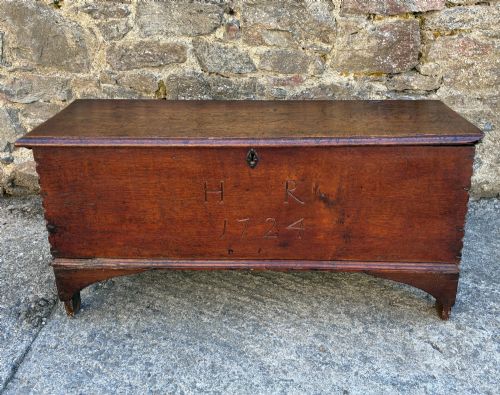
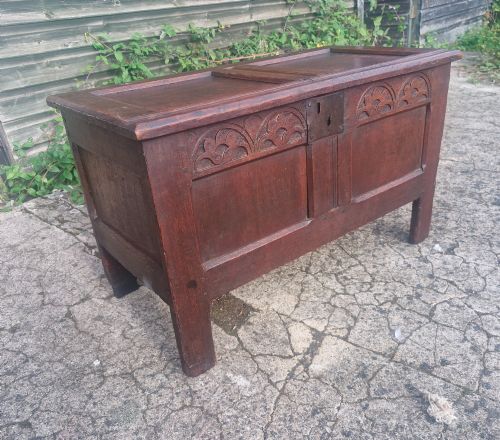
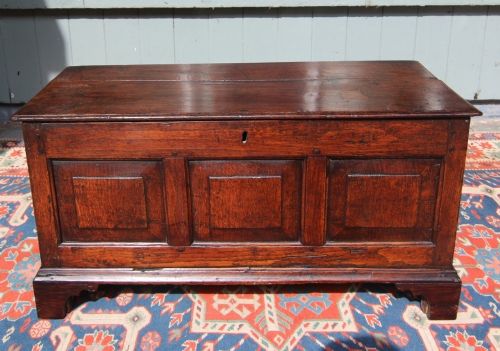
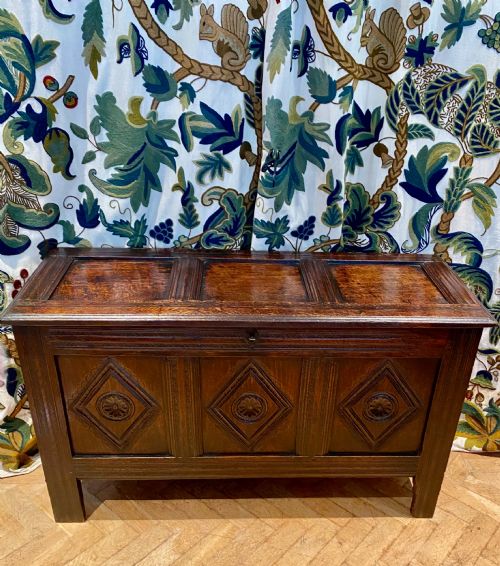
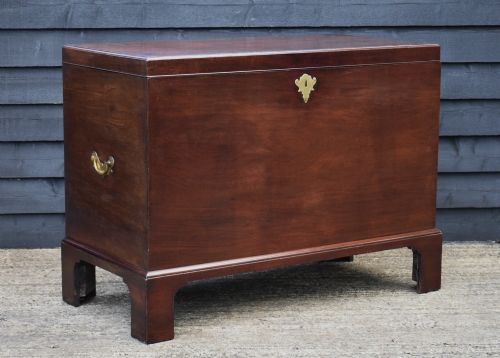
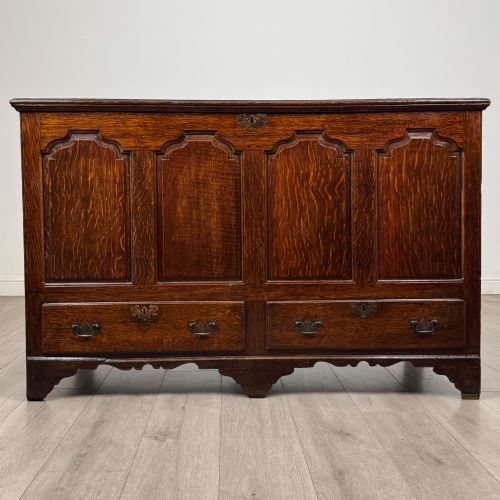
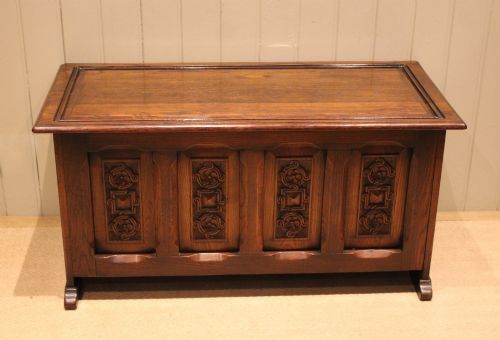
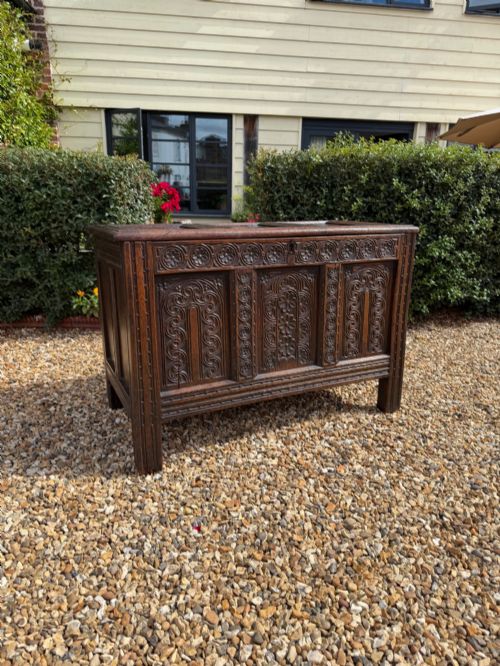
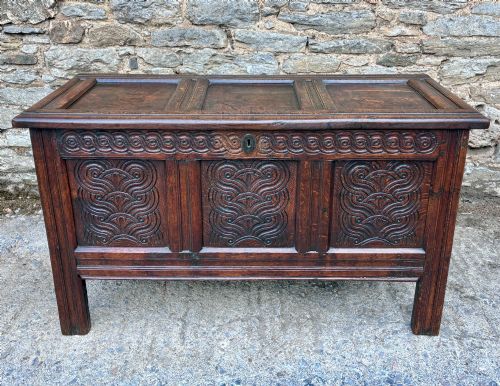
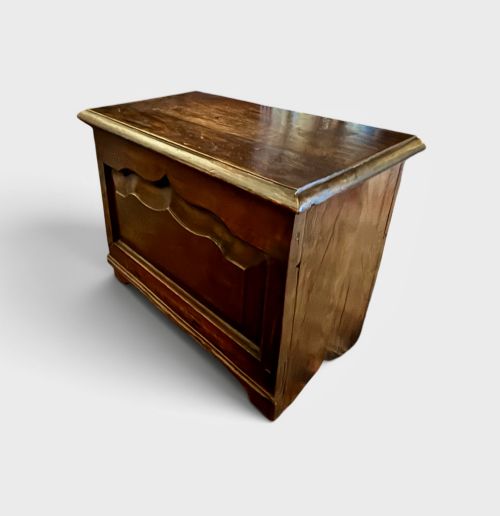
A dark brown blanket chest most commonly takes the form of a solid oak coffer, trunk, or mule chest originating from periods spanning the sixteenth to the nineteenth century. These sturdy wooden repositories served households for generations, holding linens, garments, and valuables before dedicated wardrobes became common.
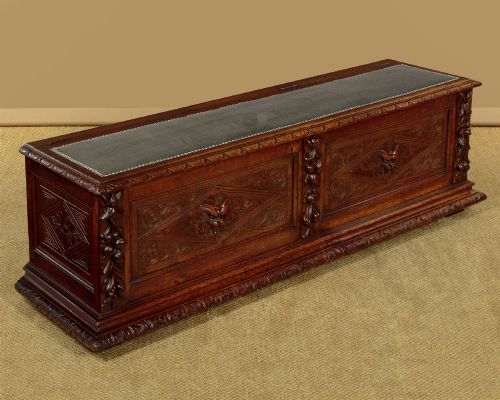
Buyers browsing this selection encounter pieces built in England, Wales, and the Netherlands, alongside regional variations like elm six-plank coffers and studded leather trunks. Stylistic influences range from Elizabethan and Jacobean carving traditions to plain boarded construction and later revival pieces.
Evaluating the Pieces
Quality rests upon the integrity of the original timber structure and the depth of the surface patina developed over hundreds of years. Pieces retaining their early boarded panels, original ironwork, and unblemished proportions stand apart from later replacements.
Carved decoration demonstrates the skill of the original joiner, where crisp relief work on oak panels elevates a utilitarian box into a piece of vernacular art. The survival of contemporary hinges, locks, and inner till boxes further distinguishes superior examples.
Many early coffers feature small internal compartments known as till boxes, originally designed to keep precious tallow candles safe from marauding mice.
Samuel Pratt
The Dark Brown Blanket Chest Glossary
- Coffer
- A heavy wooden chest traditionally used for storing valuables, documents, or household textiles. These sturdy receptacles often feature hinged lids and boarded or panelled construction.
- Mule chest
- A storage chest featuring one or more drawers built into the base beneath the main compartment. This hybrid form bridges the gap between the traditional coffer and the chest of drawers.
- Six-plank coffer
- A primitive box construction made from six individual boards joined simply at the edges. This method represents one of the oldest forms of vernacular furniture making.
- Patina
- The surface sheen and deep coloration developed by wood and metal over centuries of handling, polishing, and ageing. A good surface shows the true age of the timber.
- Strap hinge
- An elongated metal hinge fixed to the exterior lid and front of a chest for reinforcement. Blacksmiths hammered these iron bands by hand on early trunks.
Dark Brown Blanket Chest: Frequently Asked Questions
What were blanket chests originally used for?
Households utilised these heavy wooden boxes to store precious woollen blankets, heavy garments, and household linens away from dampness and pests.
They also served multiple domestic purposes, frequently acting as impromptu seating, tables, or secure repositories for family documents.
How do I care for an antique oak chest?
Keep the timber away from direct heat sources and sudden temperature shifts to prevent the old oak boards from splitting or warping.
Apply a traditional beeswax polish occasionally to nourish the dry wood and maintain the deep brown surface patina.
How can I tell a sixteenth century chest from a later revival piece?
Early pieces display hand-riven timber marks, primitive peg construction, and ironwork forged by hand rather than machined.
Revival furniture from later decades often reveals mechanical saw marks, standardised screws, and timber that lacks genuine centuries-old oxidation.
Where is the best place to position a blanket chest at home?
These low wooden boxes fit naturally at the foot of a bed, providing both practical linen storage and a sturdy seat.
They also work effectively in hallways or living spaces as coffee tables that open up to conceal clutter.