


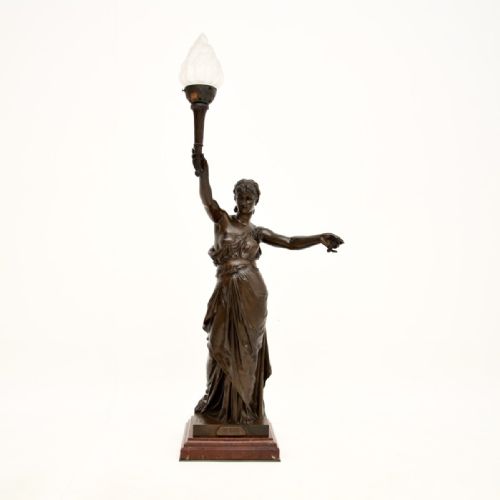
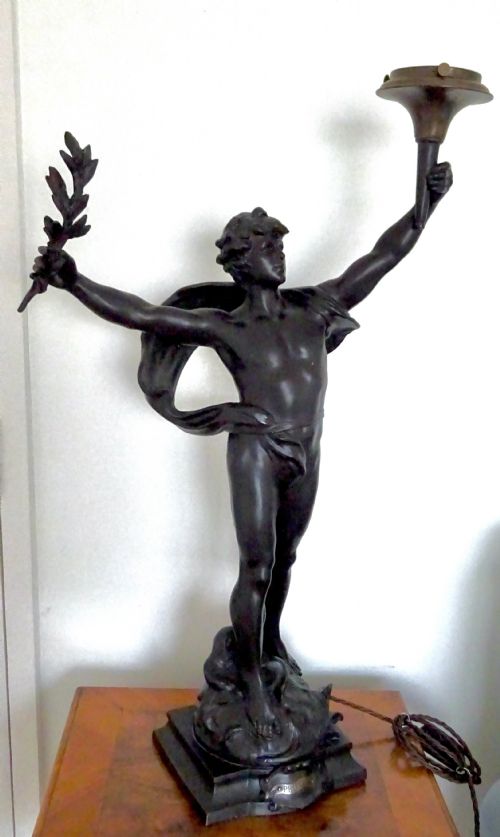
Dark Bronze Figural Torchere
These dark bronze figural torcheres bring sculptural presence and period illumination into a room, shaped by hands that worked in bronze, spelter, and onyx across the nineteenth and early twentieth centuries.
Dark Bronze Figural Torchere
A dark bronze figural torchere combines cast metal human or allegorical figures with lighting forms, originating from French workshops and British makers during the nineteenth century and the Edwardian period. You will frequently encounter pairs of candelabra and single figural lamps mounted on marble, onyx, or china bases.
The sculptural subjects range from classical allegories inscribed with names like Emile Picault and Jean-Jules Cambos to cherubs and decorative torchere lamps. These items function as floor lamps, table lamps, and substantial candelabra designed to hold candles or illuminate interior spaces.
Makers such as Humphrey Hopper and Coutan contributed to this tradition, producing works that draw on French Neoclassical, Rococo Revival, and Regency styles. Buyers searching for a dark bronze figural torchere find pieces spanning from the Regency era through to the nineteen-twenties.
How they were made
Foundries cast figures in bronze or spelter, often finishing the metal with a dark patination to mimic the depth of antique bronze. Artisans combined these metal castings with carved wood, glass, and frosted glass shades.
Bases were turned from solid blocks of marble and onyx, providing the heavy counter-weight required to support tall figural stems. Individual components were assembled with threaded rods and secured to china or stone plinths.
Dark Bronze Figural Torchere Retail Price Guide 2026
Typical asking prices for dark bronze figural torchere among the pieces listed under this phrase on Sellingantiques today, from the lower quarter to the upper quarter. They describe what is for sale here now, not the wider market.
Several cherubs retain their original tinted frosted glass shades, casting a warm glow from unexpected heights.
What varies in quality
The crispness of the metal chasing defines the upper tier of these works, where feather details, drapery folds, and facial expressions remain sharp after casting. Lesser examples rely on softer spelter castings with blurred surface definition and simpler patination.
The selection of base materials marks a clear division in grade, moving from standard turned timber to finely veined onyx and sculpted marble mounts. Signed works by documented sculptors carry a distinct level of artistic execution compared to anonymous foundry production.
Emile Picault·Humphrey Hopper·Jean-Jules Cambos·Coutan·Moreau
The Dark Bronze Figural Torchere Glossary
- Torchere
- A tall ornamental stand or floor lamp designed to carry a light source at the top. The form developed in seventeenth-century France before evolving into nineteenth-century figural lighting.
- Spelter
- A zinc alloy used as a cost-effective alternative to bronze in figural casting. It accepts dark bronze-effect finishes readily but lacks the structural weight and tensile strength of true bronze.
- Patination
- The surface coloration and texture acquired by metal over time or applied intentionally by the foundry. A dark bronze patina enhances the contours of figural castings.
- Regency
- An English design period spanning the early nineteenth century characterised by classical revival motifs. Pieces from this era often incorporate austere architectural lines and bronze mounts.
- Candelabra
- A branched candlestick holder designed to support multiple light fittings. These items frequently share figural bases with torchere lamps of the same period.
Dark Bronze Figural Torchere: Frequently Asked Questions
What is a dark bronze figural torchere?
It is a sculptural lighting piece featuring a human or allegorical figure cast in metal with a dark bronze finish, holding a light source or torch. These items were produced across the nineteenth and early twentieth centuries in France and Britain.
They serve as both illumination and decorative sculpture, often standing on heavy marble or onyx bases designed to anchor the height of the piece.
Where should I place a torchere lamp?
These tall lamps suit corners of reception rooms, entrance halls, or flanking large pieces of furniture where their vertical height adds presence. They work effectively as statement lighting rather than task illumination.
Ensure the heavy marble or onyx base rests on a stable surface capable of supporting the elevated weight of the figural stem.
Are these lamps safe to use today?
Many older pieces have been rewired with modern flex and lamp holders to comply with contemporary electrical standards. A qualified electrician can inspect the internal wiring running through the figural stem.
The original structure remains robust, but the electrical components benefit from professional updates for daily home use.
What is the difference between bronze and spelter?
Bronze is a durable copper alloy that takes fine chisel work and retains sharp sculptural details through centuries of handling. Spelter is a softer zinc-based metal utilised during the later Victorian and Edwardian periods for decorative figures.
Spelter pieces are lighter in weight and may show softer contours where the metal was cast rather than chased by hand.