

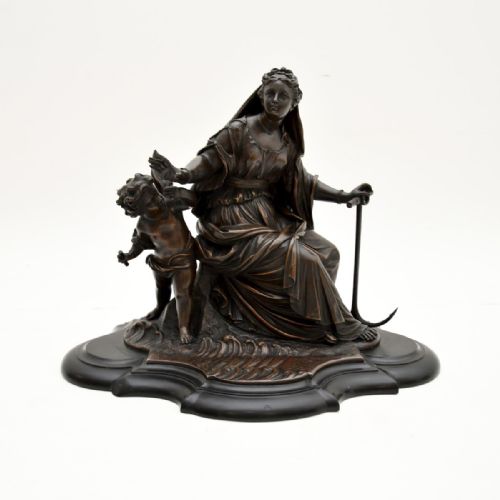
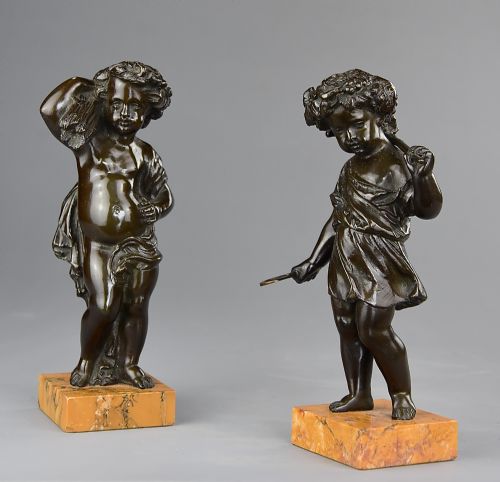
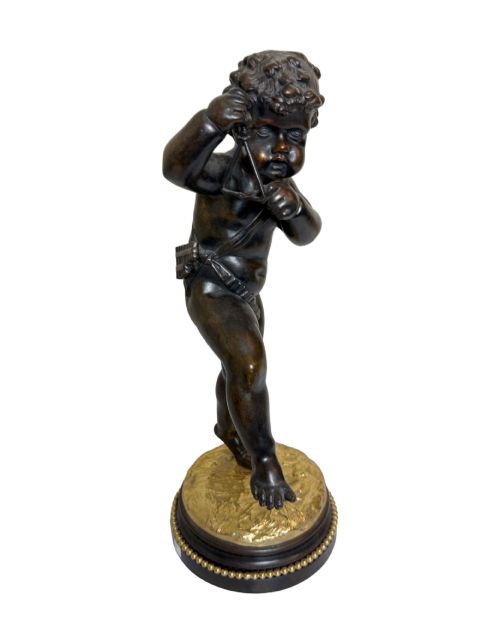
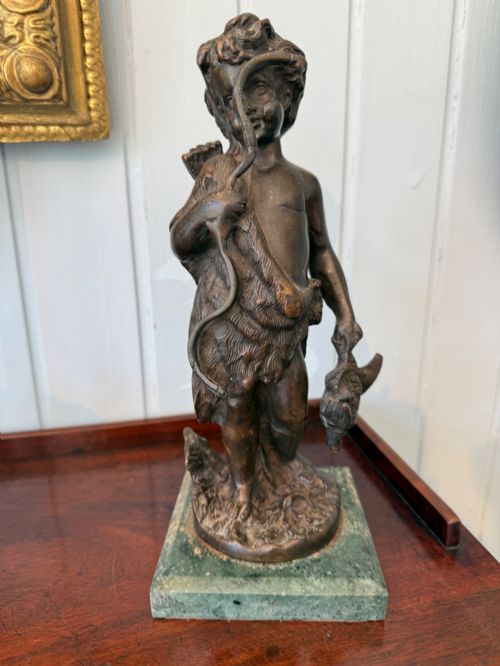


Dark Bronze Cherub Statue
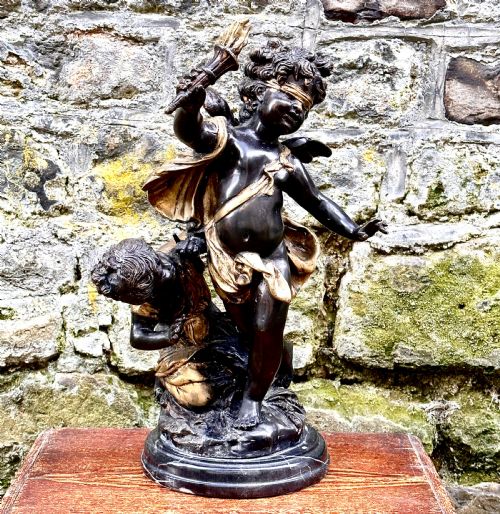
These dark bronze cherub statue pieces are classical figures cast in metal, sought for their spirited depiction of winged youths.
Dark Bronze Cherub Statue
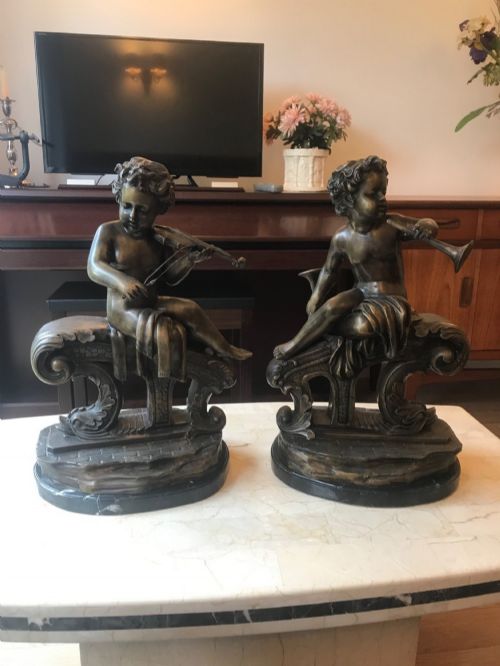
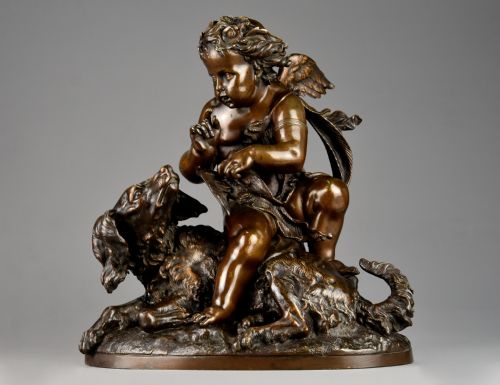
A dark bronze cherub statue represents winged mythological children, putti, or amorini engaged in musical, agricultural, or leisurely pursuits. You will most frequently encounter nineteenth-century French and Italian Grand Tour castings depicting these figures playing instruments, gathering grapes, or holding bows.
The forms span individual standing statuettes, pairs of allegorical figures, doorstops, and figures mounted beside mantel clocks or upon marble bases. These objects draw heavily upon neoclassical and rococo revival aesthetics popular across the nineteenth century.
Origins stretch from French workshops to Italian foundries, capturing classical motifs through figures holding conch shells, wheat sheaves, or musical triangles. The figures often depict mythological youths such as Cupid, Eros, or Bacchus in expressive postures.
How they were made
Sculptures are cast in bronze using traditional foundry methods, resulting in substantial metal objects with varied patination. Surfaces frequently receive a dark patinated finish or gilt treatment to highlight the contours of the figures.
Dark Bronze Cherub Statue Retail Price Guide 2026
Typical asking prices for dark bronze cherub statue among the pieces listed under this phrase on Sellingantiques today, from the lower quarter to the upper quarter. They describe what is for sale here now, not the wider market.
Listings feature bronze, marble, and gilt bronze materials spanning the nineteenth century alongside neoclassical and rococo revival styles.
What varies in quality
The precision of the metal chasing separates standard production from superior work. Crisp rendering of feathered wings, facial expressions, and naturalistic foliage distinguishes finer castings.
The integration of the cast bronze with its supporting material dictates the overall integrity of the piece. Heavy marble plinths, signed foundry markings, and balanced proportions elevate the status of individual sculptures.
Claude Michael Clodion·Louis Auguste Moreau·Charles Cumberworth·Bellenot Paris
The Dark Bronze Cherub Statue Glossary
- Putto
- A plump, naked winged infant depicted in classical art. These figures frequently appear in Renaissance and nineteenth-century revival sculpture.
- Grand Tour
- A cultural journey undertaken by nineteenth-century travellers who collected small bronzes and classical antiquities in Italy and France.
- Patination
- The chemical or natural ageing of the bronze surface that produces a dark, lustrous coloration. This layer protects the metal and defines sculptural depth.
- Neoclassical
- An artistic style drawing inspiration from the classical art and culture of ancient Greece and Rome. This aesthetic heavily influences nineteenth-century French bronze figures.
- Chasing
- The manual finishing of a raw bronze casting using small punches and hammers to sharpen details. Skilled chasing separates superior sculptures from basic production.
Dark Bronze Cherub Statue: Frequently Asked Questions
What is a dark bronze cherub statue?
A dark bronze cherub statue is a cast metal sculpture depicting a winged mythological child, such as a putto, amorino, or Cupid. These pieces often show figures engaged in activities like playing musical instruments or gathering fruit.
Most examples originate from nineteenth-century French and Italian workshops following classical and neoclassical design traditions.
How were these statues used?
These bronze figures served primarily as decorative ornaments for domestic interiors, mantelpieces, and libraries during the nineteenth century. Some examples functioned practically as doorstops or formed integral components of mantel clocks.
Travellers also acquired smaller bronze figures during European tours as mementos of classical art and culture.
How do I care for a bronze statue?
Maintain the surface of a bronze sculpture by dusting it gently with a dry, soft cloth. Avoid using liquid cleaners, polishes, or abrasive materials that can strip the patinated finish.
Keep the metal away from direct moisture and extreme temperature fluctuations to preserve the stability of both the bronze and any attached marble bases.
How can I tell the period of a bronze cherub?
Dating relies upon examining the quality of the casting, the style of the base, and any signature or foundry mark inscribed into the metal. Nineteenth-century pieces often feature characteristic patination and mount styles consistent with French rococo revival or Grand Tour production.
Comparing the sculptural technique to known works by documented modellers helps clarify the date of creation.