





Dark Bronze Candle Sconces
Dark bronze candle sconces bring heavy, warm metal and glowing candlelight into a room, offering both illumination and solid nineteenth-century presence on a wall.
Dark Bronze Candle Sconces
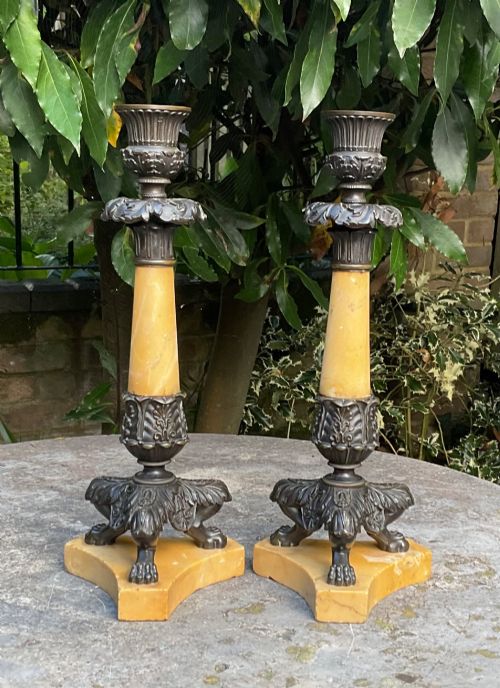
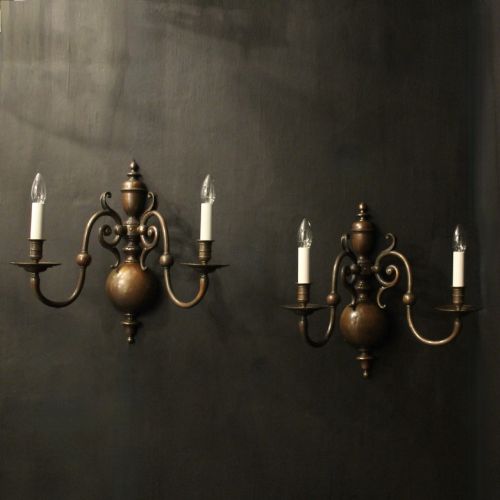
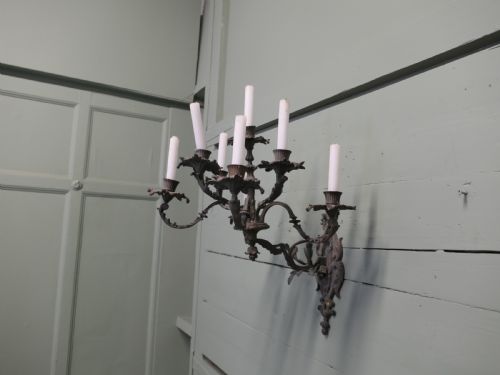
Dark bronze candle sconces and related wall lights take many forms across the nineteenth century, ranging from simple architectural brackets to elaborate figures holding multiple arms. When searching for dark bronze candle sconces, a buyer encounters wall sconces, wall lights, and girandoles alongside related candlesticks and candelabra designed for mantel or table placement.
Most examples date from the Victorian era and the nineteenth century, spanning periods such as the Regency era, 1860, 1880, 1890, and 1920. Pieces frequently incorporate French Rococo, Gothic Revival, Renaissance Revival, French Neo-Grec, and Aesthetic styles, often reflecting Grand Tour influences.
Materials extend beyond dark bronze alone. Listings frequently pair the metal with marble bases, onyx, brass, ormolu, and mirrored glass backplates, while some alternative figural pieces utilise spelter alongside true bronze components.
How they were made
The construction of these pieces relies on cast metalwork combined with stone and glass elements. Founders cast bronze and brass components, while related items utilise spelter for figural sculptures mounted on marble or onyx bases.
Surface patination defines the dark finish of the metal, often achieved through chemical treatment or natural ageing of the bronze. Ormolu accents, mirror plates, and glass additions introduce contrasting textures to the heavy cast frames.
Dark Bronze Candle Sconces Retail Price Guide 2026
Typical asking prices for dark bronze candle sconces among the pieces listed under this phrase on Sellingantiques today, from the lower quarter to the upper quarter. They describe what is for sale here now, not the wider market.
Design styles recorded across the inventory range from French Rococo and Gothic Revival to Renaissance Revival and the Aesthetic period.
What varies in quality
The crispness of the casting marks the distinction between standard production and superior workshop output. Sharply defined chasing on figures, foliage, and scrollwork indicates skilled hand-finishing after the initial metal pour.
The choice of supporting materials also shapes the piece. Solid marble and onyx bases, integrated mirrored backplates, and robust multi-arm construction separate substantial wall lights from simpler domestic candlesticks.
The Dark Bronze Candle Sconces Glossary
- Bronze
- A copper and tin alloy prized for its strength and ability to take a rich, dark patina. It forms the primary structural and decorative body of nineteenth-century wall lights.
- Ormolu
- Gilded bronze used for decorative highlights and mounts. It provides a bright golden contrast against dark patinated bronze surfaces.
- Spelter
- A zinc-based alloy used as an economical alternative to bronze for figural sculptures. It appears in nineteenth-century mantel pieces and candle holders.
- Girandole
- An ornamental wall light featuring a mirror backplate. The glass reflects the candle flame to increase illumination in a room.
Dark Bronze Candle Sconces: Frequently Asked Questions
How do I mount an antique wall sconce?
Antique wall sconces require secure fixing to wall studs or appropriate wall anchors to support the weight of cast bronze and stone components.
Many period pieces retain their original backplates or mounting holes, though modern installation may require discreet adaptation for safety.
What is the difference between a sconce and a candelabra?
A sconce is designed specifically to mount directly onto a vertical wall surface to illuminate a hallway or room.
A candelabra stands upright on a flat surface such as a mantelpiece or table, holding multiple candles on branching arms.
Can these candle sconces be wired for electricity?
Many wall lights and sconces from this era are adapted by electricians to hold internal wiring and modern lamp fittings.
Purists often prefer to keep them for wax candles, but conversion is common for daily household use.
How do I clean dark bronze?
Dusting with a soft, dry cloth is usually sufficient to maintain the dark patinated surface without damaging the historic finish.
Harsh metal polishes and abrasive cleaners strip away the aged patina and should be strictly avoided.