
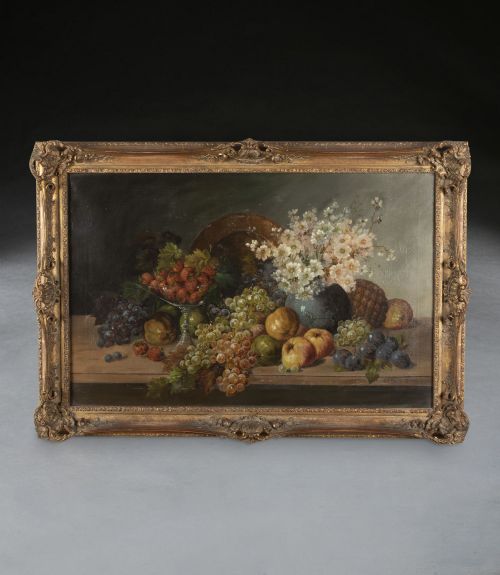


Dark Background Floral Painting
These dark background floral painting examples offer rich botanical studies set against deep shadows, creating striking contrasts that draw the eye.
Dark Background Floral Painting
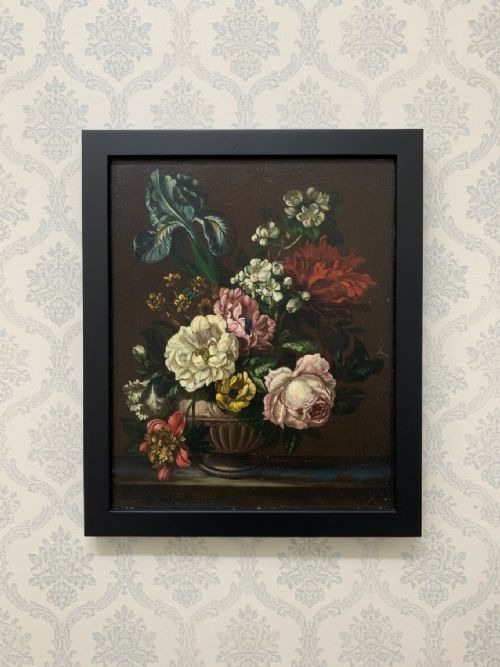
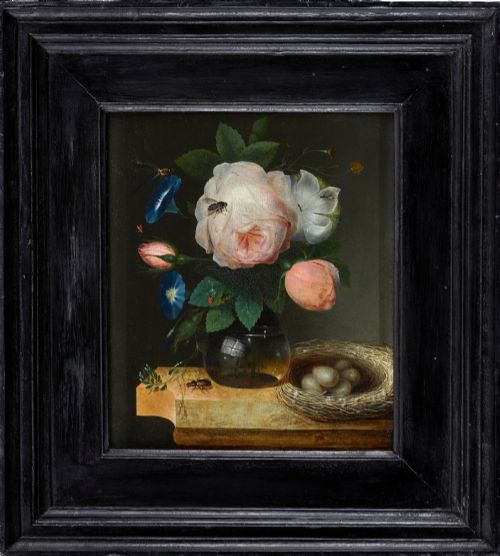
A dark background floral painting presents blooms emerging from deep, shadowy recesses, a tradition rooted in Dutch Golden Age and Flemish Baroque aesthetics. These works capture floral arrangements with intense focus, letting the play of light define the petals and leaves against an obscure void.
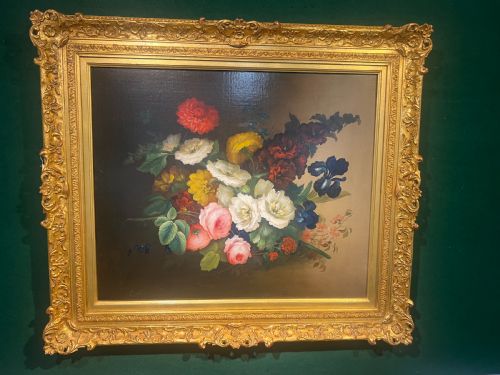
The pieces on this page span from the seventeenth century through the Victorian era and into the early twentieth century. Buyers encounter oil on canvas, oil on panel, and gouache mediums, housed within period timber frames that often feature gold leaf finishes.
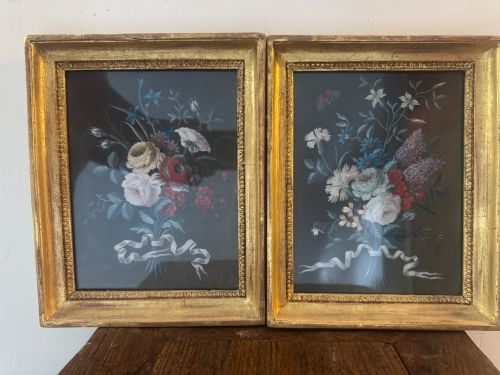
Compositions range from intimate pairs of flower still lifes to grander floral and fruit arrangements. Each piece demonstrates how artists across different centuries utilised deep backgrounds to heighten the luminosity and colour of roses, lilies, and seasonal blossoms.
Materials and execution
Artists built these works primarily using oil paint applied to canvas or wood panel supports. The smooth surface of a wood panel allowed for meticulous detail in rendering delicate petals, while canvas provided a traditional textured ground for broader brushwork.
Gouache on paper also appears among these selections, offering a different matte finish for botanical studies. Timber frames, frequently enhanced with gold leaf, complete the construction and provide structural support for the artworks.
The selection includes works attributed to the Dutch School alongside named artists working in traditional English and continental styles.
Assessing the work
Quality in a dark background floral painting rests upon the handling of light and shadow, where the depth of the dark ground creates a convincing three-dimensional space for the blossoms. Superior examples display confident brushwork that defines the translucency of petals and the natural weight of stems without relying on rigid symmetry.
The integration of the subject with its frame also distinguishes finer pieces, as original timber frames complement the proportions and period of the canvas. The preservation of the pigment layer, particularly the stability of the dark glazes, dictates the overall visual impact of the composition.
Gaspar Peeter Verbruggen·Edwin Steele·James Stuart Park·Margaret Evangeline Wilson·Owen Bowen
The Dark Background Floral Painting Glossary
- Oil on panel
- A painting executed on a rigid wooden support rather than flexible canvas. This technique was favoured in earlier centuries for its smooth surface and durability.
- Gouache
- An opaque water-based medium that dries to a matte finish. It allows for vibrant colour application in works on paper.
- Gold leaf
- Extremely thin sheets of beaten gold applied to wooden frames as a decorative finish. It adds a reflective border that isolates the painting from its surroundings.
- Still life
- An artwork depicting inanimate subject matter, typically commonplace objects or natural items such as flowers and fruit. In these pieces, floral arrangements form the primary focus.
Dark Background Floral Painting: Frequently Asked Questions
How are these paintings cleaned?
Conservation of these works requires professional assessment to protect the aged oil paint and delicate glazes from improper chemical exposure. Dusting should remain minimal and light.
Surface dirt on older canvases or panels can worsen if treated at home. Specialists use tailored solvents that respect the integrity of centuries-old pigments.
Can I hang them in sunlight?
Direct sunlight accelerates the fading of organic pigments used in floral compositions, particularly reds and yellows. Placing pieces away from intense rays preserves the colour balance.
Indirect light works best for displaying oil paintings and gouache works on paper. Wall selection determines the long-term stability of the pigments.
Are original frames important?
Period timber and gold leaf frames provide historical context and structural integrity that match the era of the painting. They contribute to the complete presentation of the artwork.
Replacement frames alter the intended boundary between the piece and its environment. Matching the correct century to the frame remains a priority for traditional collectors.
What defines a dark background?
The dark ground technique uses deep browns, blacks, or shadowed tones to push the background into obscurity. This creates high contrast with illuminated flowers.
Artists employed this method to focus attention entirely on the botanical details in the foreground. The resulting contrast gives the composition its dramatic depth.