
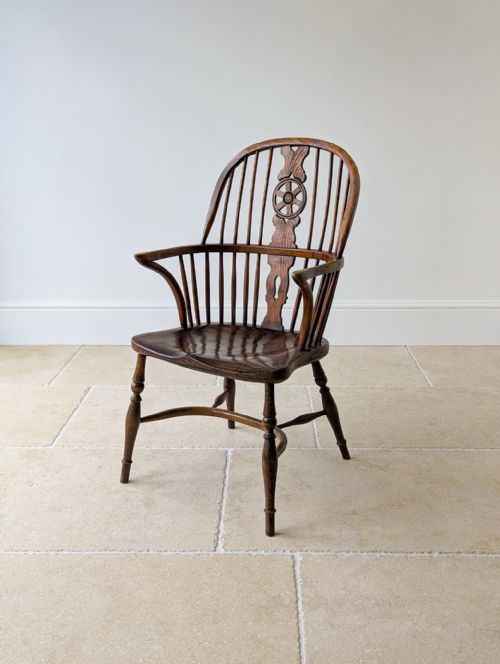
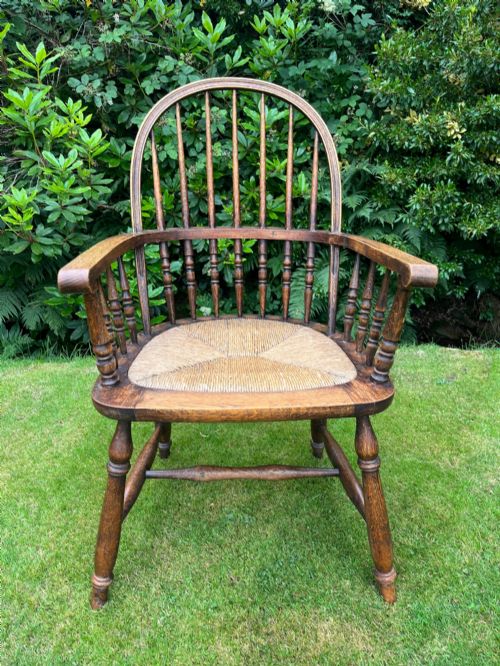
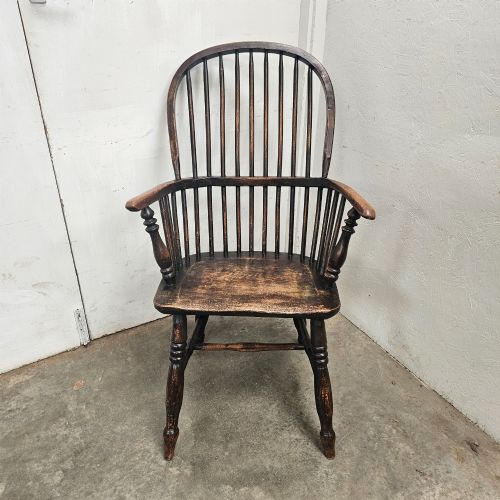
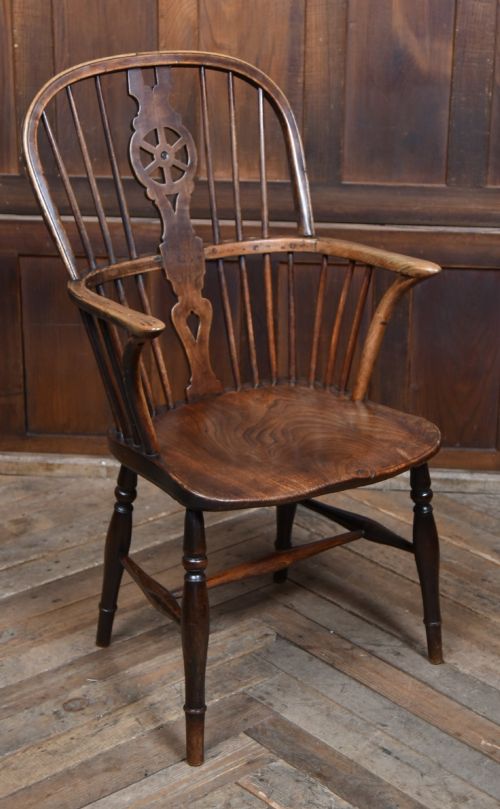



Dark Ash Wooden Chair
A dark ash wooden chair brings tactile rural character into a room through honest timber construction and regional vernacular design.
Dark Ash Wooden Chair
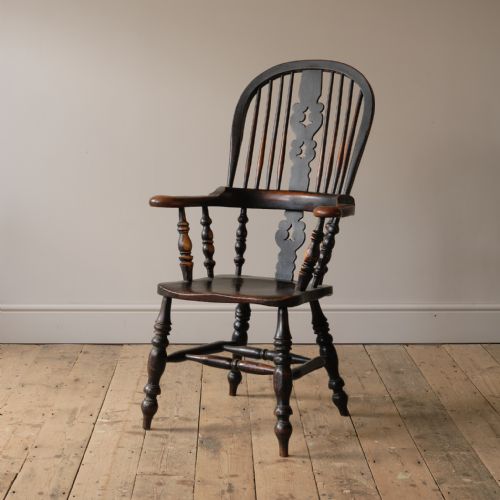
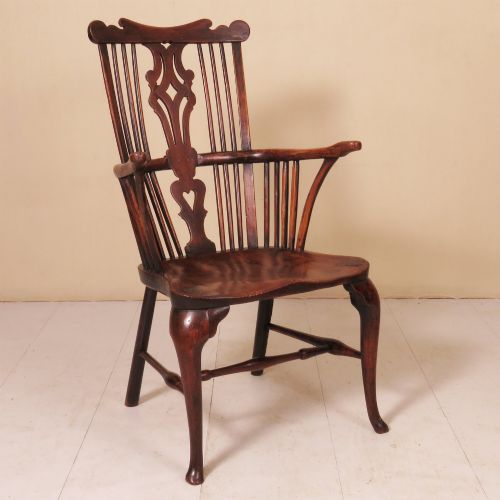
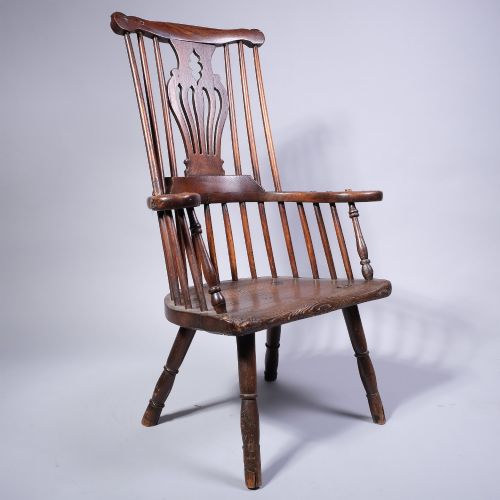
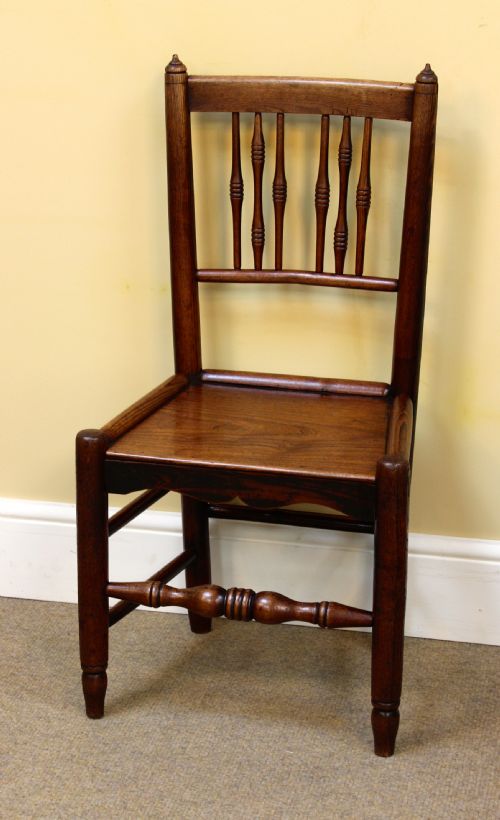
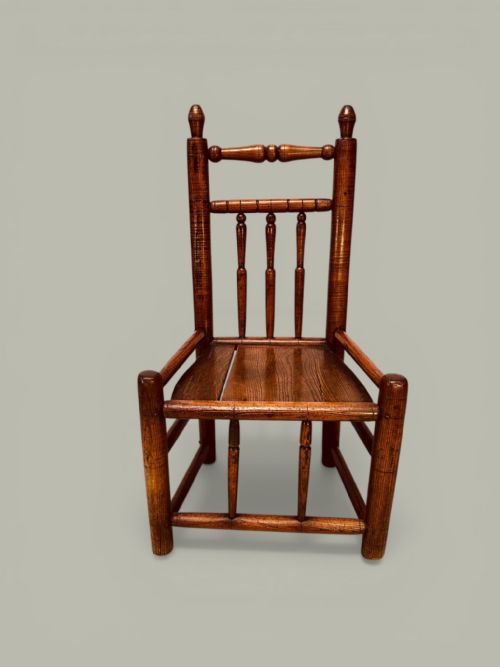
When you search for a dark ash wooden chair, you encounter sturdy seating rooted in 18th-century, Georgian, and Victorian domestic traditions. These pieces include Windsor armchairs, ladder-backs, and kitchen dining chairs shaped by English, Welsh, and Scottish makers.
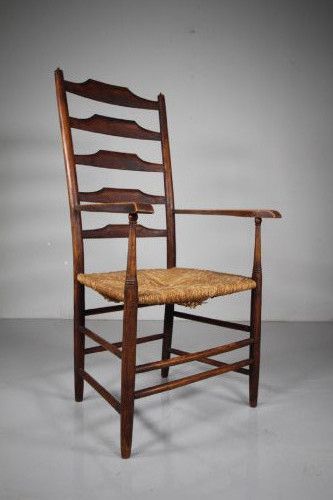
The most common examples on this page are Windsor armchairs and stick-backs combining ash frames with elm seats. You also find ladder-back chairs fitted with natural rush seats and smaller children's rocking chairs from the 19th century.
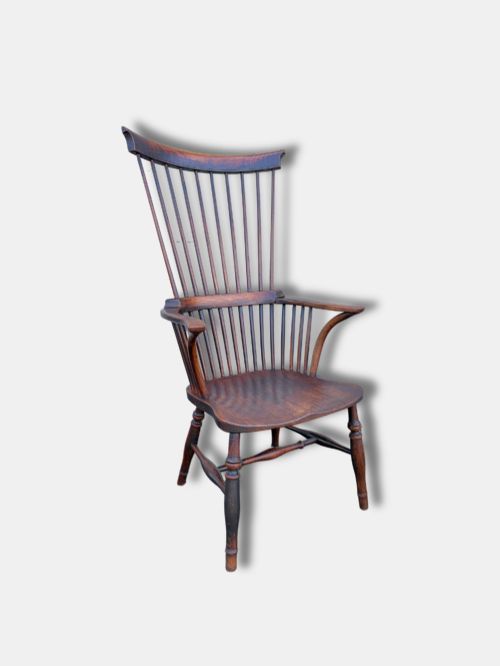
Regional variations dominate the selection, ranging from West Country comb-backs to Cheshire ladder-backs and Scottish vernacular forms. Each piece reflects the local timber availability and domestic seating needs of its period.
How they were made
Constructed primarily from home-grown timber, these chairs pair resilient ash frames with robust elm for solid plank seats. Makers occasionally integrated beech, oak, yew, alder, or fruitwood depending on the regional tradition.
Green woodworking techniques shaped many of these chairs, utilising steam-bent rails for bows and combs alongside turned spindles and legs. Natural rush provided flexible woven seating surfaces for ladder-backs.
Listings feature 18th-century, Georgian, and Victorian pieces alongside 19th-century country examples.
What varies in quality
Quality rests in the balance of the proportions and the clever integration of mixed timbers. Better examples display carefully turned spindles, well-shaped arm bow joints, and thick elm seats sculpted with comfortable saddle depressions.
The integrity of the construction separates standard utility chairs from finer vernacular pieces. Superior items retain their original wedged tenons, matching timber grain patterns, and untouched surface patination built over centuries of use.
Philip Clissett·Duncan McKellar
The Dark Ash Wooden Chair Glossary
- Comb-back
- A Windsor chair variation where the vertical spindles extend through a horizontal top rail resembling the teeth of a comb. This style offers robust upper back support.
- Wheel-back
- A Windsor chair design featuring a pierced splat shaped like the hub and spokes of a cart wheel. It appears frequently in 19th-century English seating.
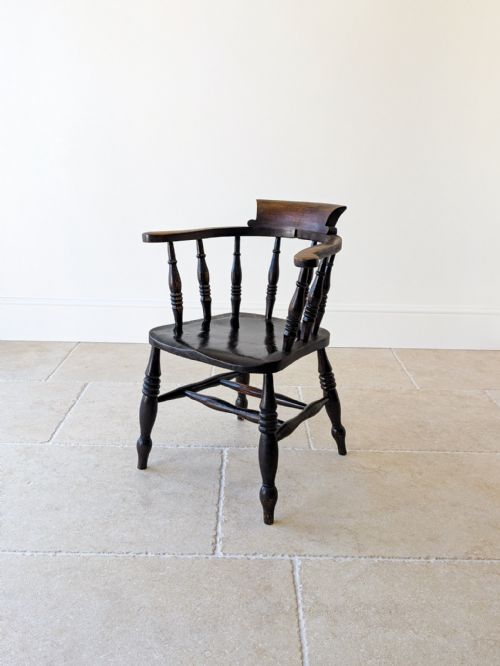
- Smoker's bow
- A low-backed Windsor armchair with a continuous curved arm rail and turned spindles, also known as a captain's chair. These provide compact and sturdy seating.
- Rush seat
- A seating surface woven from dried marsh grasses attached to a wooden frame. It yields a flexible and supportive platform for ladder-back chairs.
- Vernacular
- Objects designed by local craftsmen using traditional regional methods and materials rather than high-style metropolitan blueprints. This defines much country furniture.
Dark Ash Wooden Chair: Frequently Asked Questions
What is a Windsor chair?
A Windsor chair is a form where the legs and back spindles are fitted directly into a solid wooden seat rather than a traditional frame.
Ash typically forms the flexible bow and spindles, while elm provides a stable seat that resists splitting.
How do I care for ash furniture?
Keep ash chairs away from direct heat sources and rapid humidity shifts to prevent the timber from drying out or splitting.
Apply a traditional beeswax polish occasionally to nourish the wood and maintain its deep natural finish.
Are ladder-back chairs comfortable?
Ladder-back chairs offer upright support suited for dining tables and kitchen use rather than deep lounging.
Natural rush seats adapt to the body over time, providing a flexible surface that adds comfort to the upright posture.
How do I date an old chair?
Dating relies on examining tool marks, timber combinations, assembly methods, and the specific vernacular style of the region.
Hand-turned spindles and primitive wedge construction often point towards 18th or early 19th-century country workshops.