


Damask Wingback Chair
A damask wingback chair combines traditional upholstery with high backs, offering both warmth and comfort.
Damask Wingback Chair
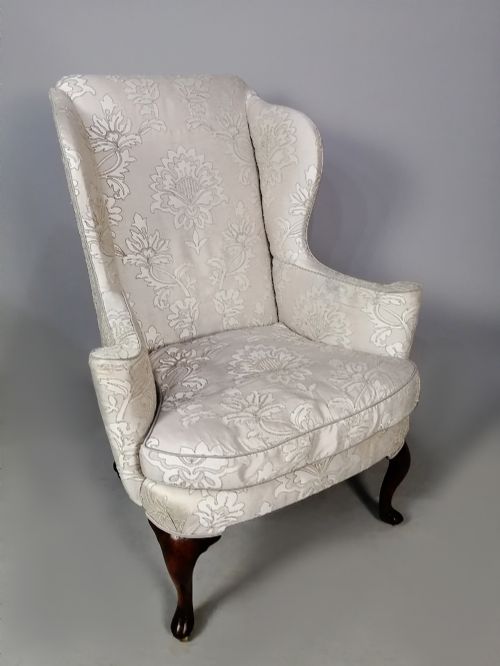
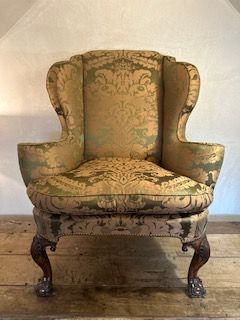
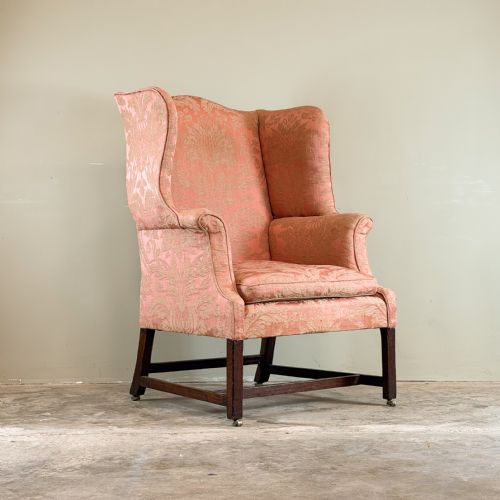
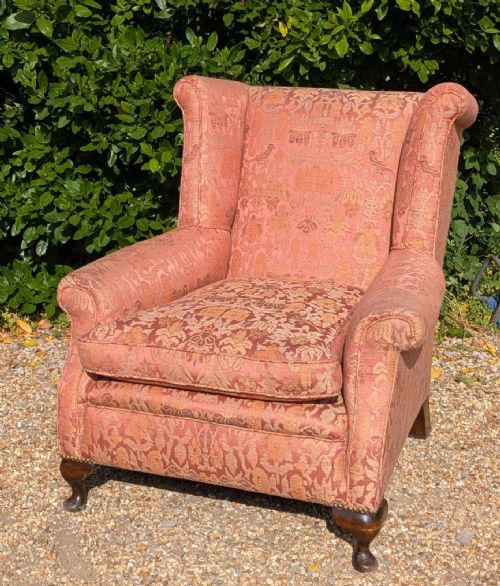
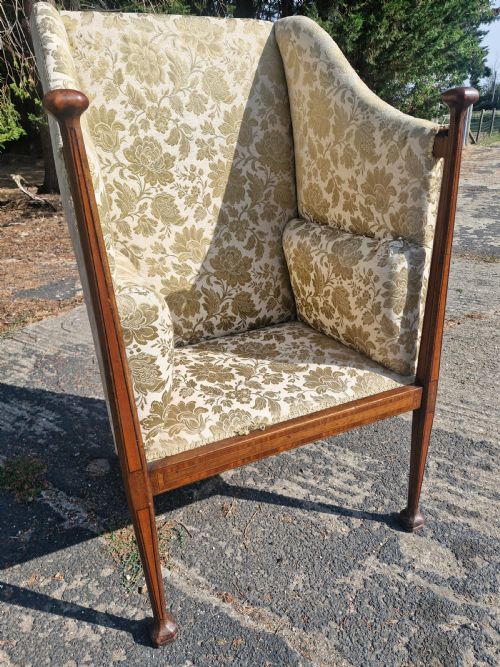
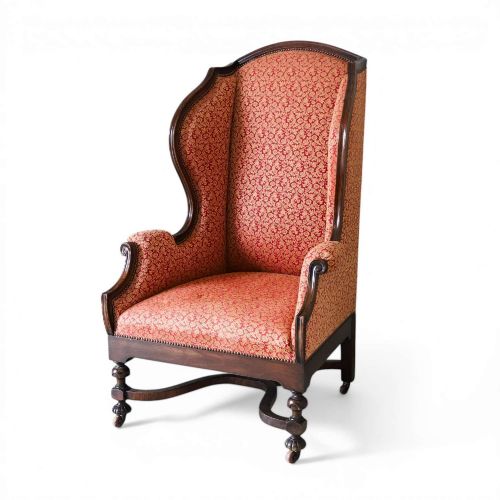
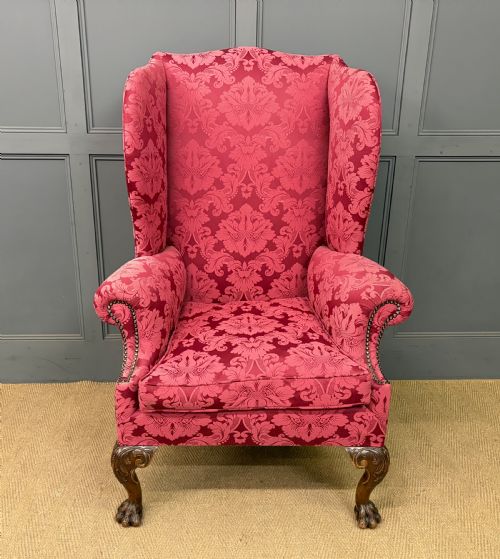
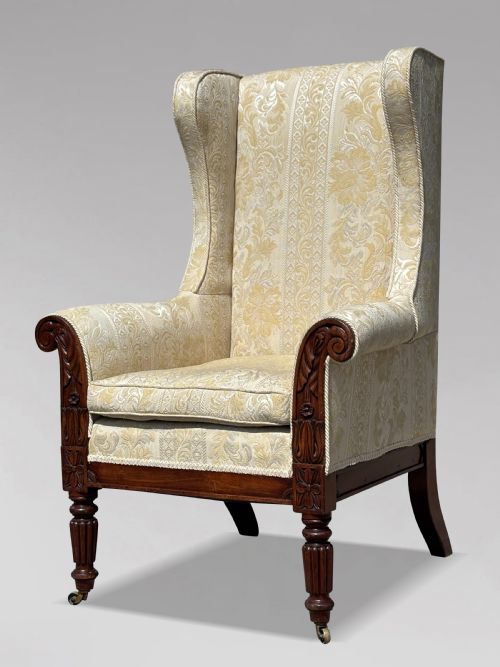
A damask wingback chair is a substantial seating form designed to shield the sitter from draughts by the fireside. The pieces found here span from the 18th century through to the 1930s, encompassing Georgian, Victorian, and Edwardian periods.
Buyers will most frequently encounter 19th-century interpretations alongside earlier George II and George III examples. The selection also includes revival styles such as Carolean and Chippendale, alongside salon suites and library armchairs.
The defining characteristic remains the upholstered high back flanked by protective side wings. These armchairs bridge formal reception rooms and cozy domestic interiors with equal ease.
Materials and Construction
Frames are constructed primarily from solid mahogany and walnut, providing a sturdy architectural skeleton for the upholstery. Brass accents occasionally appear on castors or hardware supporting the heavy timber structures.
Textiles play a central role, utilising damask fabric and dedicated damask upholstery to cover the generous padding. Feather filling is also recorded in period seating, ensuring a yielding interior beneath the outer textile layer.
Listings span from the 18th century to the 1930s, featuring walnut and mahogany frames paired with damask fabric.
Evaluating Craftsmanship
Quality rests heavily on the depth and execution of timber carving upon the exposed frame. Finely carved mahogany or walnut elements distinguish bespoke commissions from standard production pieces.
The integrity of the structural joinery and the resilience of the internal stuffing dictate the longevity of the seat. Superior examples retain substantial weight and balanced proportions throughout the wings and arm supports.
The Damask Wingback Chair Glossary
- Damask
- A reversible figured fabric traditionally woven on a jacquard loom with patterns formed by contrasting warps and wefts. This material lends a subtle sheen and textured pattern to period upholstery.
- Wingback
- An armchair featuring side panels attached to the back and arms designed to trap heat and deflect cold air. The style gained prominence in domestic interiors during the late 17th and 18th centuries.
- Carolean Style
- A revival aesthetic reflecting the ornate decorative vocabulary of the reign of Charles II. This look typically incorporates rich scrollwork and deeply carved woodwork.
- Chippendale Style
- Furniture inspired by the designs of Thomas Chippendale, notable for intricate fretwork and ball-and-claw feet. Pieces adopting this vocabulary display confident proportions and classical motifs.
- Bergere
- An enclosed upholstered armchair with wooden frames and closed upholstered sides. The form provides a deep, comfortable seat often associated with French revival tastes.
Damask Wingback Chair: Frequently Asked Questions
What is a damask wingback chair used for?
These seats were originally positioned close to fireplaces to shield the occupant from cold draughts. The high sides and padded wings trapped warmth around the head and shoulders.
Today, they serve as prominent focal points in living rooms, libraries, and bedrooms. They continue to provide deep, supportive seating for reading or relaxing.
How do I identify a Georgian wing chair?
Georgian examples often display characteristic timber framing in mahogany or walnut with restrained proportions. Look for period joinery methods and classical carving details on the legs.
Earlier 18th-century pieces possess distinct structural weight compared to later Victorian revivals. Examining the underside and frame construction helps confirm the era of origin.
What materials are used in these armchairs?
The structural frames rely primarily on hardwoods such as mahogany and walnut, complemented occasionally by brass fittings. Exposed woodwork is frequently hand-carved.
The upholstery utilises damask fabric alongside traditional padding materials like feather fillings. These elements combine to create a durable and comfortable seat.
Are these chairs comfortable for daily use?
Many period examples feature deep padding and feather filling designed for sustained relaxation. The supportive high back and enclosed wings offer excellent ergonomic support.
Maintenance depends on the condition of the internal webbing and upholstery. Well-preserved pieces easily accommodate regular daily sitting.
How do I tell an original from a revival piece?
Revival pieces from the Victorian and Edwardian eras often imitate earlier 18th-century Georgian or Carolean forms. Inspecting the timber ageing, tool marks, and construction techniques clarifies the true age.
Stylistic markers alone can be misleading, as 19th-century makers frequently reproduced earlier aesthetics with great skill. Documentation or provenance notes can also assist in verification.