


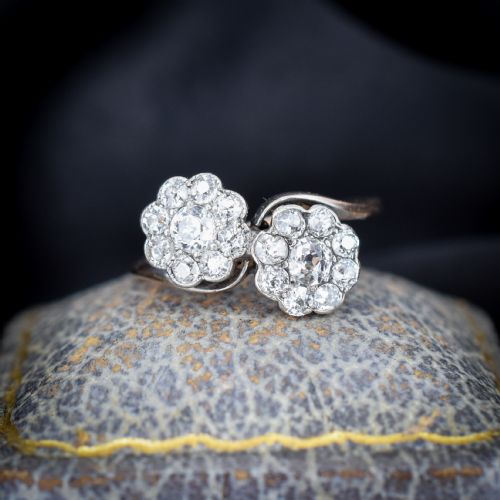

Daisy Cluster Engagement Ring
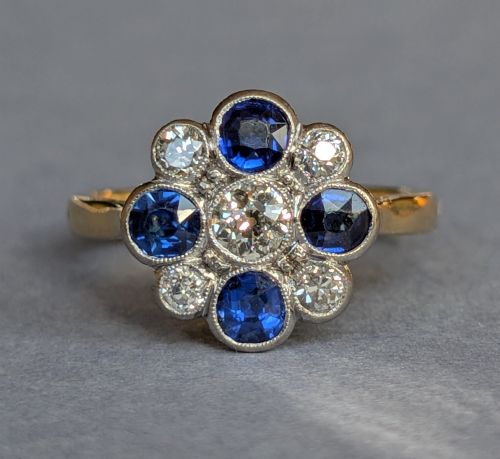
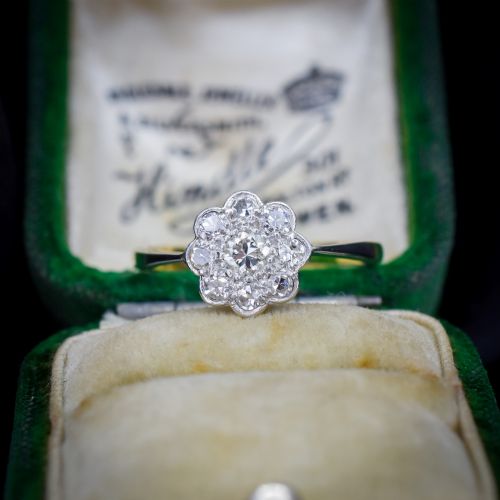
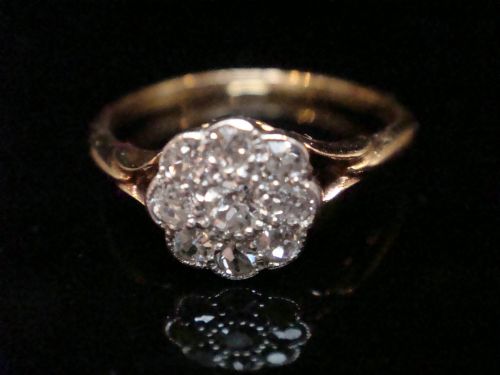
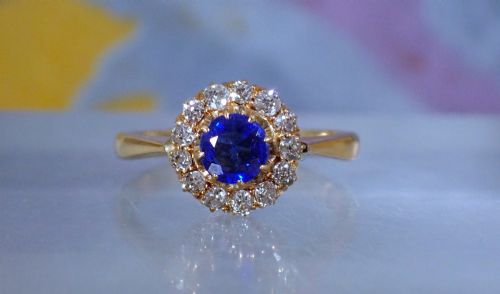
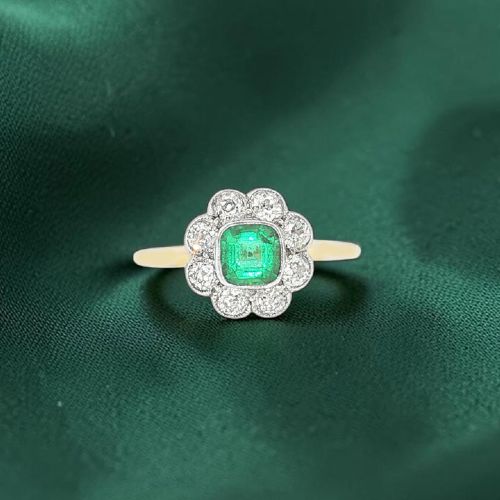
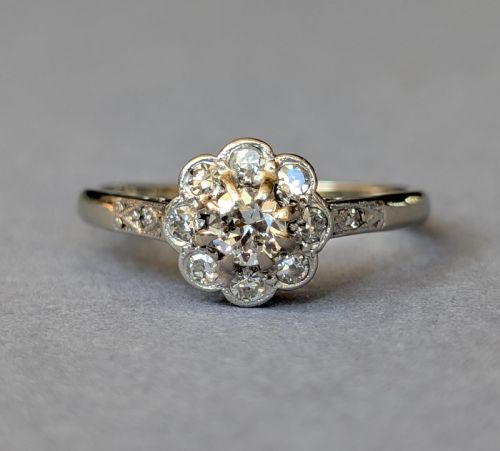
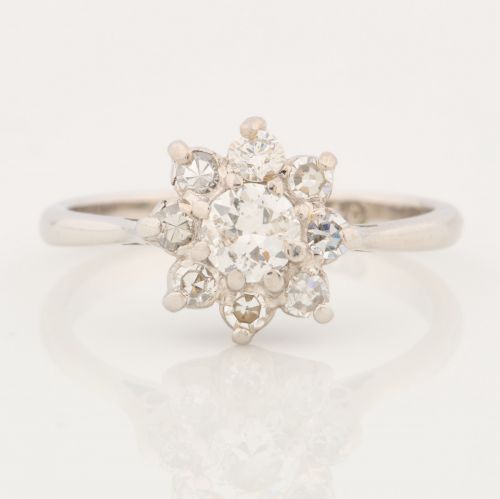
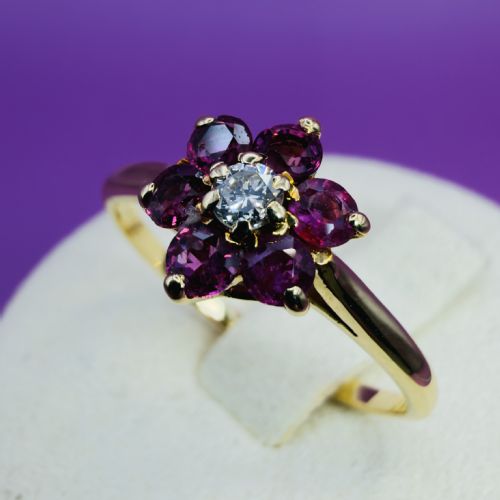
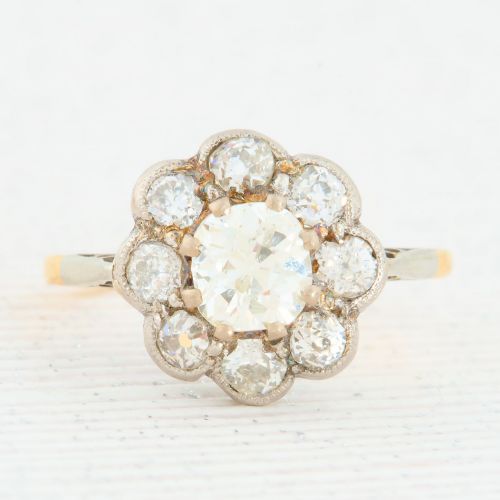
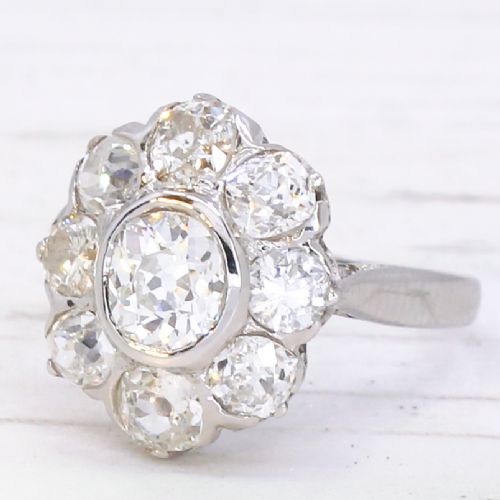
A daisy cluster engagement ring brings together a central stone encircled by smaller gems, offering a floral silhouette favoured across decades.
Daisy Cluster Engagement Ring
A daisy cluster engagement ring gathers a cluster of gemstones to form a distinct floral motif upon the finger, mimicking the petals of a flower. These pieces span multiple eras including the Victorian, Edwardian, Art Deco, and mid-century periods, with Edwardian and 1920s examples appearing frequently.
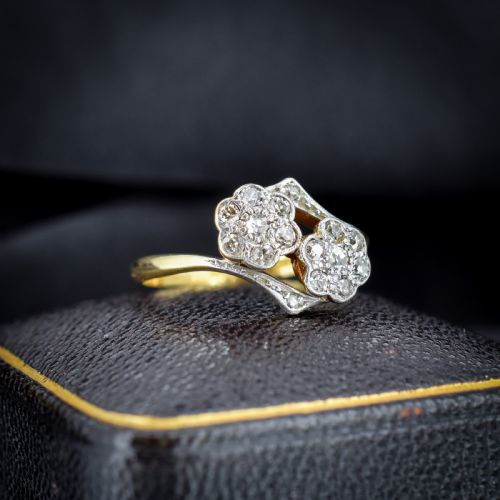
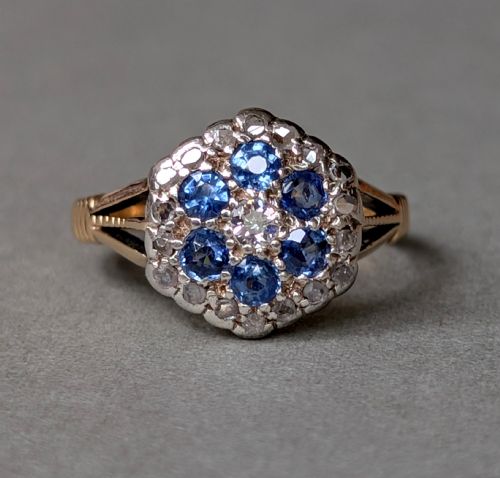
Most variations set a central diamond or sapphire surrounded by a border of smaller sparkling gems, mounted on bands of 18ct yellow gold, white gold, or platinum. Collectors encounter both straightforward floral clusters and more imaginative double twist or toi et moi configurations.
The enduring appeal lies in the geometric balance of the cluster head combined with the warmth of antique gold settings. These rings range from delicate Edwardian floral motifs to bolder Art Deco geometric designs.
Materials and construction
Goldsmiths constructed these rings primarily using 18ct gold, often pairing yellow gold shanks with platinum settings to enhance the brilliance of old cut diamonds. Platinum claws securely held stones while maintaining a minimal visual profile.
Gemstone selection relied on durable stones suited for daily wear, predominantly diamonds accompanied by sapphires, emeralds, rubies, or pearls. Master jewellers utilised old cut and brilliant cut diamonds arranged closely to maximise light reflection across the cluster head.
Listings feature yellow gold, white gold, and platinum settings spanning the Edwardian, Art Deco, and mid-century eras.
Assessing quality
The harmony of the cluster setting dictates visual impact, where matching stone sizes and tight claw work create a unified floral form without excessive metal showing between gems. Superior examples exhibit well-matched central and outer stones with minimal inclusions.
Wear on the band and settings indicates the history of the piece, though sturdy gauge gold and intact platinum work signify robust initial manufacture. The precision of the hand-cut diamonds and the symmetry of the surrounding petals separate ordinary examples from finer specimens.
The Daisy Cluster Engagement Ring Glossary
- Old cut
- A diamond cut by hand before modern machinery, characterised by a smaller table, higher crown, and deep culet that catches candlelight.
- Cluster ring
- A ring design featuring a central gemstone encircled by a ring of smaller stones, resembling a flower.
- Toi et moi
- A ring style featuring two main stones positioned side by side, translating from French as you and me.
- Platinum
- A dense, durable white metal utilised in antique jewellery for secure stone settings and fine detailing.
- Target ring
- A specific type of cluster ring featuring concentric circles of contrasting gemstones around a central stone.
Daisy Cluster Engagement Ring: Frequently Asked Questions
How do I care for my ring?
Clean antique settings gently with warm soapy water and a soft brush, avoiding harsh ultrasonic cleaners that can loosen older stones. Regular checks by a jeweller ensure the platinum or gold claws remain secure around each gem.
Store the ring in a dedicated box away from other jewellery to prevent scratching softer stones or delicate metalwork on the gallery.
Are these rings suitable for daily wear?
Diamonds and sapphires possess the hardness required for everyday engagement ring use, making most cluster configurations robust choices. Edwardian and Victorian pieces have survived a century or more, demonstrating their structural resilience.
Gentle treatment during manual tasks helps preserve delicate platinum settings and prevents unnecessary strain on the antique gold band.
How can I date my cluster ring?
Dating relies on stylistic clues such as the transition from yellow gold Edwardian floral motifs to geometric Art Deco platinum mountings. Hallmarks and the specific style of diamond cutting also provide clear indicators of the era of manufacture.
Comparing the mount construction against known period styles helps narrow the decade of production when official hallmarks are worn.
What makes a daisy cluster unique?
The organic floral arrangement offers a distinct alternative to single-stone solitaire rings while providing substantial finger coverage. Each piece reflects the hand-cut character of antique stones and the specific aesthetic of its maker.
No two antique clusters are entirely identical due to the variations inherent in hand-cut diamonds and bespoke period craftsmanship.