
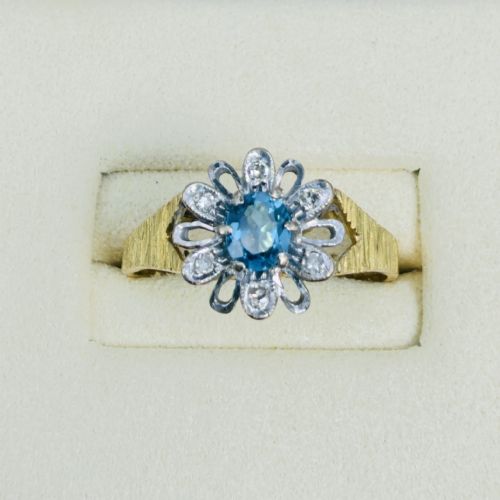
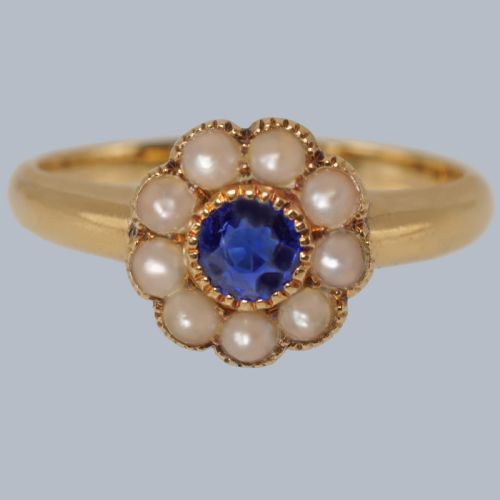


Blue Gemstone Flower Ring
A blue gemstone flower ring brings together bright central stones and surrounding petals, offering a classic cluster form built for everyday wear.
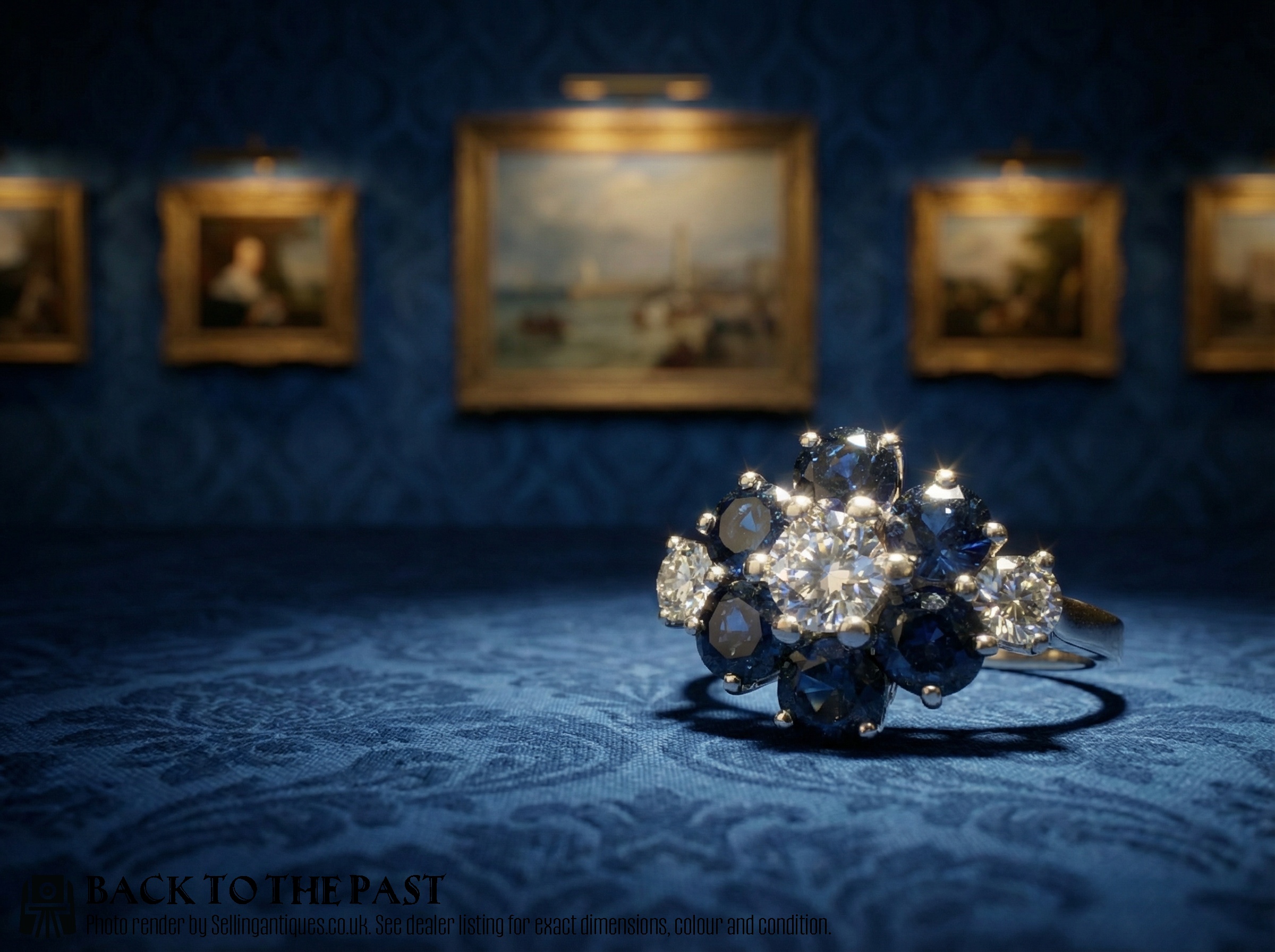
Blue Gemstone Flower Ring
A blue gemstone flower ring groups smaller diamonds or pearls around a central sapphire, aquamarine, turquoise, or opal to form a floral or daisy cluster silhouette. These pieces appear across the Victorian, Edwardian, Art Deco, and Mid-Century periods, showing enduring popularity for cluster arrangements.
The most common examples on this page are sapphire and diamond clusters mounted in yellow gold, white gold, or platinum. Buyers also encounter turquoise, split pearl, and aquamarine variations framed by bright diamond petals.
How they were made
Goldsmiths set these clusters using 18ct yellow gold, 18ct white gold, and platinum to secure the central blue gems and surrounding white stones. Metals like 9ct gold also support specific mid-century pieces.
Craftsmen arranged diamonds, split pearls, and turquoise around sapphires or aquamarines to mimic natural flower petals, utilising close-set claw or bezel settings to hold each stone firmly in place.
Central blue gemstones include sapphire, aquamarine, turquoise, and opal, framed by diamond or split pearl petals.
What varies in quality
The distinction between standard examples and finer pieces lies in the colour saturation of the central blue gemstone and the matching proportions of the surrounding diamond petals. Uniformity in stone size and precise metalwork elevate the overall visual harmony of the cluster.
Superior execution shows in the crispness of the floral silhouette and the weight of the gold or platinum mounting, ensuring the ring sits comfortably while maintaining structural integrity across the setting.
The Blue Gemstone Flower Ring Glossary
- Cluster ring
- A ring featuring a central stone encircled by a border of smaller gems. This configuration maximises surface sparkle and creates the characteristic floral outline.
- Daisy ring
- A specific type of cluster ring where white diamond petals surround a dark blue sapphire centre. The layout directly imitates the petals and eye of a simple flower.
- Split pearl
- A whole pearl sliced in half and flattened at the back to sit flush within a jewelled setting. These components add a soft lustre frequently seen in Victorian examples.
- Platinum
- A dense, naturally white precious metal favoured for secure stone settings. Its strength allows for fine wirework without risking the stability of the cluster.
Blue Gemstone Flower Ring: Frequently Asked Questions
What periods do these rings come from?
These rings span the Victorian, Edwardian, Art Deco, and mid-century eras, reflecting changing tastes in cluster design from the late nineteenth century onward.
Each period brings distinct mounting styles, ranging from bright yellow gold Victorian settings to crisp platinum or white gold mid-century examples.
Which stones form the flower centre?
Sapphires provide the most frequent deep blue focal point, alongside pale aquamarines, bright turquoise, and opal variants. Surrounding stones are typically diamonds or split pearls acting as petals.
This combination creates the characteristic botanical layout seen across traditional and vintage cluster rings.
How should I wear a cluster ring?
Cluster rings suit daily wear when chosen with durable stones like sapphire and diamond set securely in 18ct gold or platinum. Their raised floral profiles sit well alone on the hand.
Care should be taken with softer materials like opal or split pearl to protect them from knocks during active tasks.
How do I tell Edwardian from Victorian rings?
Victorian examples often utilise yellow gold mountings paired with split pearls or turquoise alongside sapphires. Edwardian pieces lean towards lighter platinum and yellow gold combinations with fine diamond work.
Examining the metal choice and setting style helps distinguish the manufacturing decade of each floral cluster.