


Antique Sapphire Daisy Ring
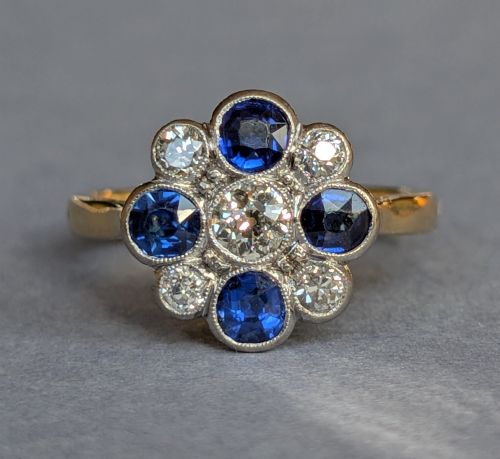
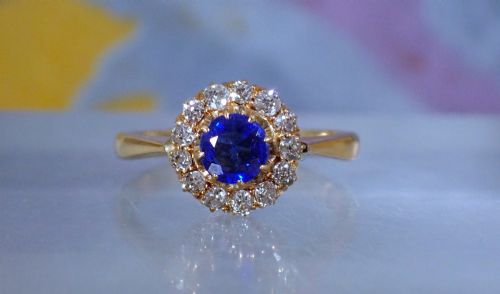
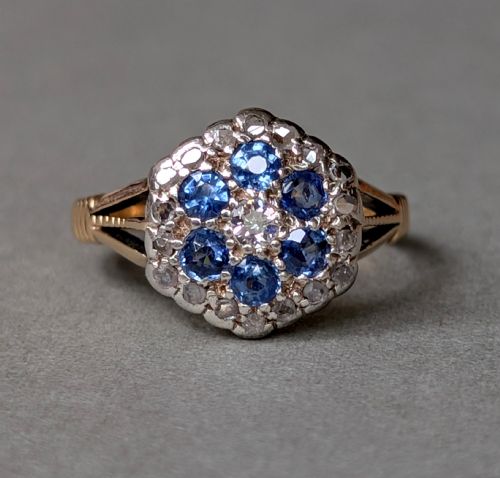
An antique sapphire daisy ring brings together a central blue stone and a border of diamonds in a classic flower cluster.
Antique Sapphire Daisy Ring
The materials recorded in these pieces rely predominantly on eighteen carat gold, often paired with platinum settings for the gemstone cluster. Examples range from Victorian beginnings through Edwardian lace work to geometric Art Deco designs and later vintage iterations. Each ring presents a recognizable floral silhouette formed by a deep blue sapphire at the heart and sparkling diamonds as petals.
What varies in quality
The distinction between tiers rests upon the saturation and clarity of the central sapphire alongside the cut and match of the surrounding diamonds. Superior examples display a vibrant cornflower or deep royal blue tone that holds its colour evenly under various lighting conditions.
Workmanship in the setting technique also defines the grade of the piece, where fine claw work and balanced proportions elevate the floral illusion. The integration of platinum with eighteen carat gold indicates a deliberate choice to enhance the brilliance of the diamond border.
Every single one of these little floral clusters manages to stay in permanent bloom without needing a drop of water.
The Antique Sapphire Daisy Ring Glossary
- Daisy cluster
- A ring design featuring a central gemstone encircled by a ring of smaller stones resembling a flower. This formation remains the defining characteristic of the pieces on this page.
- Platinum
- A dense, durable white metal utilised in jewellery manufacture to securely hold small diamonds without obscuring their sparkle. It gained popularity in Edwardian and Art Deco settings.
- Art Deco
- A design style spanning the interwar years characterised by geometric lines, symmetry and stylized motifs. In these rings, it translates to clean borders around the central sapphire cluster.
- Edwardian
- A period of jewellery design noted for lightness, lace-like platinum work and delicate floral arrangements. Pieces from this era often utilise eighteen carat yellow gold shanks with white metal topped clusters.
Antique Sapphire Daisy Ring: Frequently Asked Questions
How do I wear an antique daisy ring daily?
These rings suit daily wear provided you remove them during heavy manual tasks to protect the settings.
Store them individually in a fabric lined box to prevent the diamonds from scratching other jewellery.
What periods do these rings come from?
The pieces span from the late nineteenth century through the Edwardian era and Art Deco period into the mid twentieth century.
Victorian, Edwardian, and vintage mid century examples all appear within this selection of floral cluster rings.
How do I tell Edwardian from Art Deco?
Edwardian rings typically show organic, garland style platinum work with softer curves mimicking lace and natural foliage.
Art Deco examples favour strict geometric lines, sharp angles and symmetrical arrangements around the central sapphire.
Are the diamonds and sapphires natural?
The stones found in these period pieces are natural gems characteristic of late nineteenth and twentieth century jewellery production.
Each sapphire and diamond reflects the cutting techniques and material availability of its specific decade.