





Cylindrical Nightstands
Cylindrical nightstands offer neat bedside storage and striking circular form, bringing compact elegance to the bedroom.
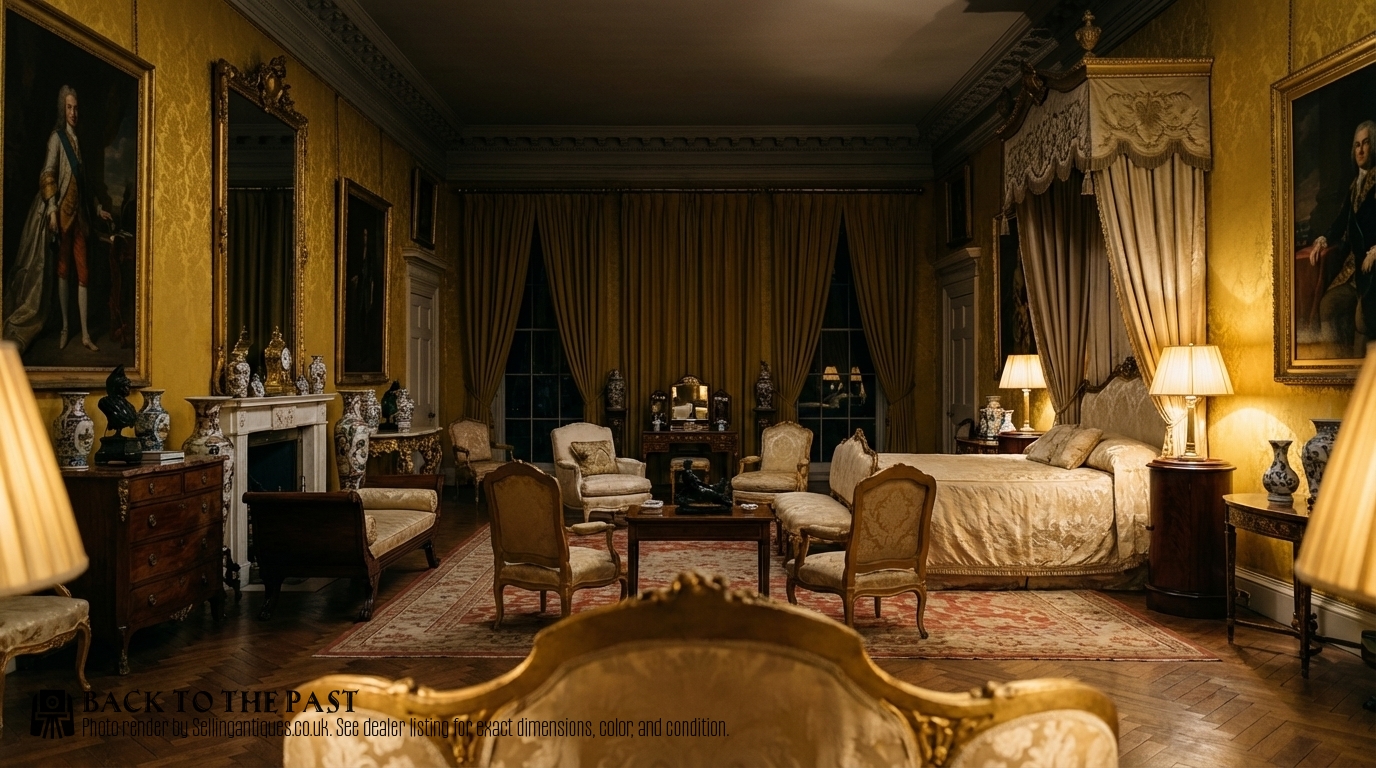
Cylindrical Nightstands
Cylindrical nightstands encompass round bedside cupboards, pedestal cabinets, and cylinder stands designed for bedside use. These pieces provide concealed storage within a distinct circular footprint that saves floor space.
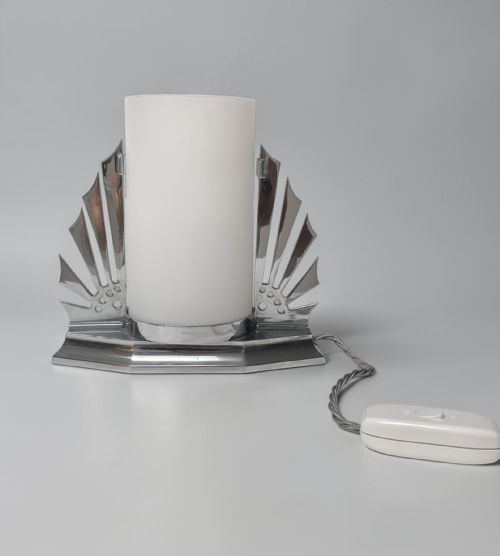
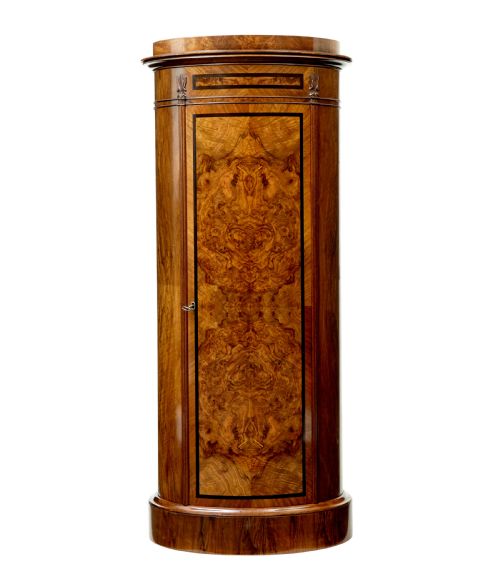
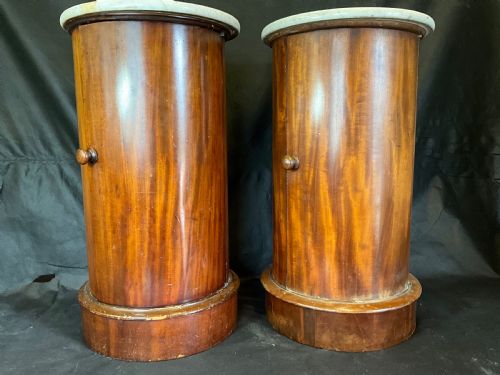
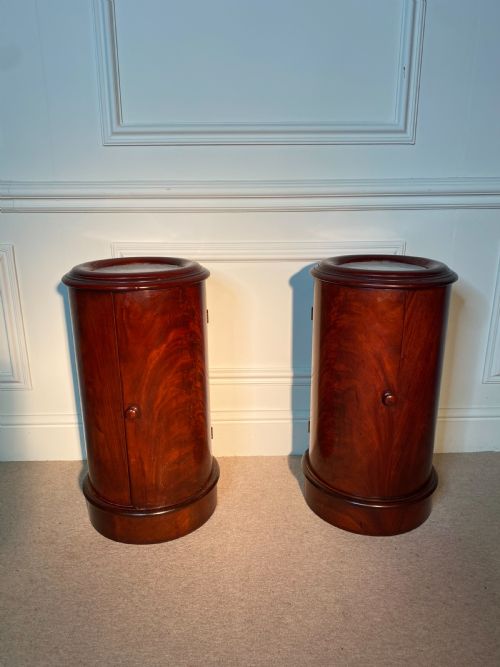
The selections available here range from Regency flame-mahogany and French Empire examples to Victorian marble-top cabinets and Art Deco lamps. Victorian iterations frequently feature inset marble tops above mahogany or burr walnut bodies.
Makers and cabinetmakers from the nineteenth century onward utilised classical column proportions and circular door construction. Buyers will encounter both single cabinets and matched pairs ready for placement beside a bed.
How they were made
Makers constructed these round carcasses using curved mahogany, flame mahogany, or burr walnut veneers applied to internal framing. This technique required precise carpentry to achieve a seamless circular door that fitted snugly into the cylindrical body.
Surface treatments frequently incorporated inset marble slabs on the top surface to provide a durable, wipe-clean finish. Details like brass and chrome fittings completed the construction, adding functional contrast to the timber.
Listings feature mahogany, burr walnut, and marble across nineteenth-century and Art Deco periods.
What varies in quality
Quality rests primarily on the grain selection of the timber, particularly where figured flame mahogany or burr walnut wraps around the curved door. Superior examples display continuous, matched veneer work that disguises the door margins.
The integration of the top surface also separates standard cabinets from finer pieces, especially where heavy marble slabs sit flush within moulded wooden rims. Interior joinery and original hardware further distinguish workshop standards across different periods.
The Cylindrical Nightstands Glossary
- Flame Mahogany
- A wood veneer showing a distinct feather-like pattern derived from the branch junctions of the tree. It provides a highly decorative surface on curved cabinet doors.
- Burr Walnut
- Timber featuring knotty growths that produce intricate, swirling grain patterns. Cabinetmakers used it to create luxurious surfaces on nineteenth-century pedestal cupboards.
- Pedestal Cabinet
- A tall, freestanding cylindrical cupboard designed to stand beside a bed or chair. These pieces typically contain a single internal shelf behind a curved door.
- French Empire
- A classical style spanning the early nineteenth century characterised by restrained dignity and rich mahogany surfaces. Pieces from this era often emphasise clean architectural proportions.
Cylindrical Nightstands: Frequently Asked Questions
What periods do cylindrical nightstands come from?
The pieces span the Regency, French Empire, and Victorian eras, alongside later Art Deco designs. Most examples date from the nineteenth century.
Cabinetmakers of these periods favoured circular forms for bedside use because they softened the geometry of traditional bedroom furniture.
Are marble top bedside cabinets practical?
The stone surfaces provide a durable and heat-resistant shelf for placing water jugs, lamps, or nighttime essentials. They protect the timber underneath from spills.
Victorian makers frequently paired marble with mahogany to create a surface that resisted everyday wear.
Do these cabinets come in pairs?
Selected listings feature matched pairs of cylindrical bedside cabinets, while others are offered as single pieces. Pairs are particularly sought after for balanced bedroom placement.
Dimensions and timber selections generally align when pieces originate as a matched set from the nineteenth century.
How do I identify French Empire styling?
French Empire pieces display classical proportions, dark mahogany timbers, and minimal ornamentation that lets the wood grain take prominence. They reflect early nineteenth-century design trends.
Such cabinets often exhibit precise cylindrical turning and understated structural dignity.