






Cylindrical Mahogany Pedestals
These cylindrical mahogany pedestals combine practical bedside storage and display with the rich warmth of figured timber.
Cylindrical Mahogany Pedestals
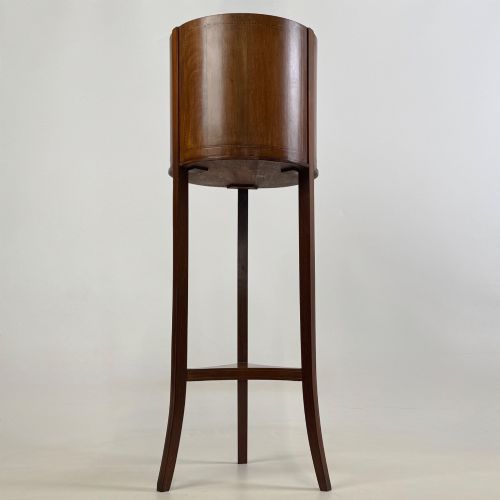
When you search for cylindrical mahogany pedestals, you find round cabinet forms designed for use beside a bed or as lamp and plant stands. The pieces here span the Regency, Victorian, and Edwardian eras, along with continental European examples in the Biedermeier style.
The primary form is the cylindrical bedside cupboard or cabinet, often topped with marble or solid timber. Alongside these are plant stands, lamp tables, and column nightstands built from mahogany and flame mahogany veneer.
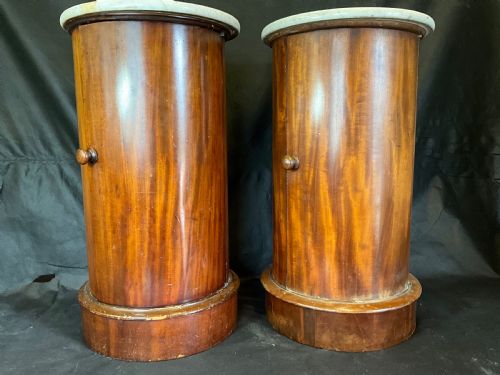
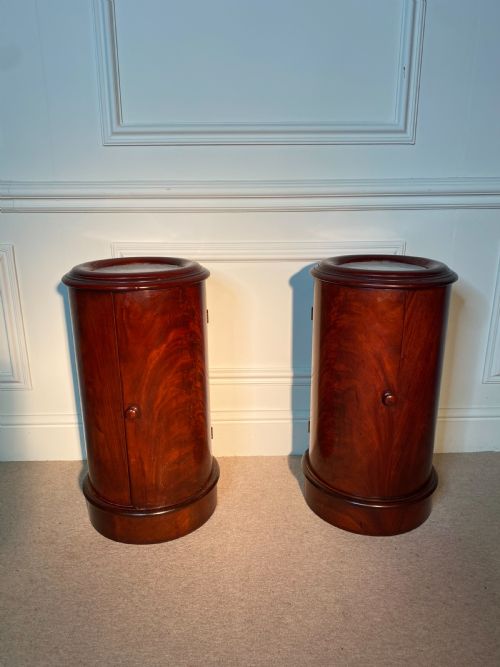
Originating from English and continental workshops, these items serve as compact storage units with doors that follow the curve of the body. You also encounter matched pairs designed to sit symmetrically on either side of a bed.
How they were made
Cabinet makers built the curved bodies of these pieces using mahogany and flame mahogany veneer laid over a stable secondary wood core. This technique allowed workshops to display the swirling grain patterns of flame mahogany across tight circular doors.
Many examples feature fitted marble tops that provide a durable and cool surface for daily use. Brass details, ceramic elements, and subtle inlay work frequently accent the timber carcases.
Construction relies on careful joinery to maintain the cylindrical shape without warping over time. The doors are hung to follow the curve precisely, often securing with small brass latches or key escutcheons.
Listings for cylindrical mahogany pedestals feature pieces in Regency, Victorian, and Edwardian styles, alongside continental Biedermeier examples.
What varies in quality
The distinction between standard examples and finer pieces rests in the selection of the mahogany veneer. Highly figured flame mahogany exhibits a deep, chatoyant grain that marks a more ambitious piece of furniture.
Construction details such as heavy inset marble slabs and well-fitted curved doors elevate certain cabinets above simpler turned plant stands. Matched pairs also demonstrate a higher level of initial commission work compared to single items.
The Cylindrical Mahogany Pedestals Glossary
- Flame mahogany
- A veneer cut from the fork of the mahogany tree where the branch meets the trunk. This produces a distinctive fire-like ripple pattern across the wood.
- Biedermeier
- A Central European style from the first half of the nineteenth century prioritising clean lines and polished wood veneers over heavy ornamentation.
- French Empire
- A classical revival style popular in the early nineteenth century characterised by architectural dignity and rich mahogany surfaces.
- Pedestal cabinet
- A freestanding vertical storage piece with a small footprint, usually enclosing a single internal shelf behind a curved door.
Cylindrical Mahogany Pedestals: Frequently Asked Questions
What were cylindrical mahogany pedestals used for?
These pieces served primarily as bedside cabinets to hold chamber items, night lights, and personal belongings out of sight.
Over time, similar cylindrical forms found use in reception rooms as lamp stands, column supports, and plant pedestals.
How do I care for mahogany veneer?
Keep the timber away from direct sunlight and strong heat sources to prevent the mahogany veneer from drying out or splitting.
Apply a traditional wax polish occasionally to nourish the grain and maintain the natural sheen of the wood surface.
Are marble tops original to these cabinets?
Many Victorian and nineteenth-century bedside cabinets were fitted with inset marble tops to provide a practical, stain-resistant surface.
These stone slabs are typically set directly into the timber rim of the cylinder and match the period of the carcase.
How can I tell a Regency pedestal from a Victorian one?
Regency pieces often display restrained classical lines with rich flame mahogany surfaces dating from the early nineteenth century.
Victorian cabinets generally show heavier proportions and occasionally incorporate marble tops or more varied interior configurations.