

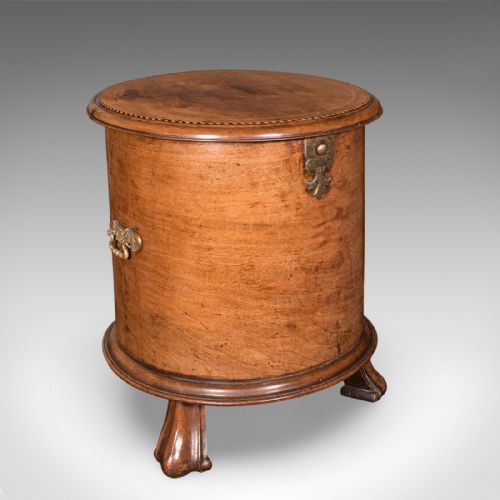


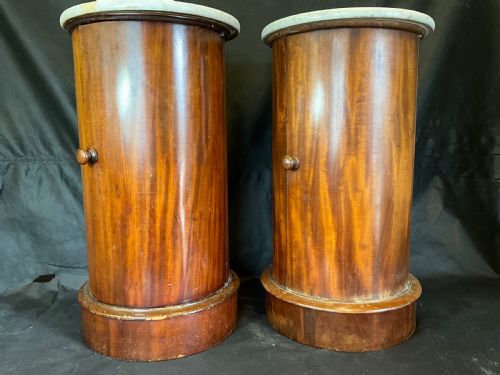


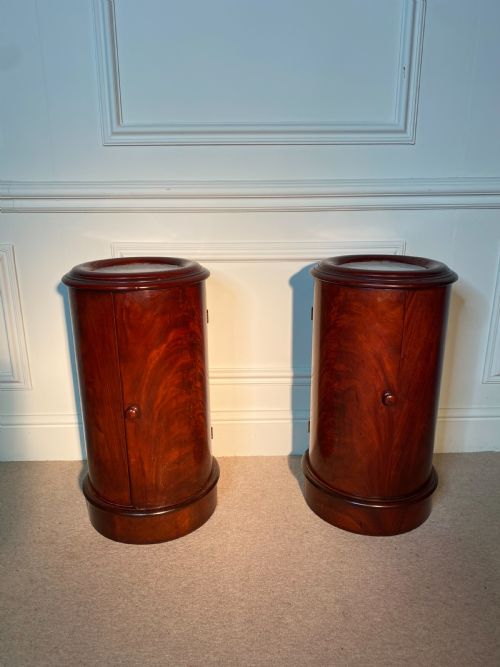
Cylindrical Mahogany Cabinet
These cylindrical mahogany cabinets offer clever circular storage and rich timber grain, making them a practical and striking addition to any room.
Cylindrical Mahogany Cabinet
A cylindrical mahogany cabinet provides neat, enclosed storage with a distinctive curved footprint that fits easily beside a bed or in a corner. These pieces surface most frequently from the Victorian and Regency eras, often taking the form of bedside cupboards or compact nightstands.
Makers shaped these upright vessels to maximise interior space without sharp corners, using solid timber or veneers to wrap smoothly around the circular frame. Buyers encounter variations including marble-topped display stands, wine coolers, and pedestal cabinets.
Materials and construction
Cabinet makers built the curved bodies of these pieces using mahogany and flame mahogany veneers laid over a sturdy structural core, achieving the smooth cylindrical shape through careful timber bending and shaping techniques. The figured grain of flame mahogany provides a distinct visual movement across the curved surface.
Many nineteenth-century examples incorporate inset marble tops, adding a durable and cool stone working surface above the wooden body. Brass fittings, handles, and gallery rails frequently appear as accents on the timber and stone structures.
Cylindrical Mahogany Cabinet Retail Price Guide 2026
Typical asking prices for cylindrical mahogany cabinet among the pieces listed under this phrase on Sellingantiques today, from the lower quarter to the upper quarter. They describe what is for sale here now, not the wider market.
Distinctions in quality
The calibre of a cylindrical mahogany cabinet rests on the selection of timber veneers and how seamlessly the curved door matches the grain of the surrounding body. Superior pieces display book-matched flame mahogany that wraps continuously around the cylinder.
Attention to detail in the interior joinery and the precise fit of the curved door mark the difference between standard production and finer cabinet work. The inclusion of heavy, unblemished marble tops and original brass hardware further elevates the standing of an individual piece.
The Cylindrical Mahogany Cabinet Glossary
- Flame mahogany
- A veneer cut from the fork of the mahogany tree where the branch meets the trunk, producing a rippling, flame-like pattern. This figured wood is prized for its dramatic visual depth.
- Bedside cabinet
- A small enclosed piece of furniture designed to stand next to a bed for holding night-time necessities. They frequently feature a cylindrical body with a single door.
- Biedermeier
- A Central European design style spanning the nineteenth century, characterised by utilitarian comfort and clean lines that highlight wood grain over heavy ornamentation. Danish interpretations of this style often feature simplified geometric forms.
- Cellarette
- A wine cooler or storage chest, sometimes built on a pedestal base to hold bottles securely off the floor. These vessels appeared in Regency dining settings.
- Veneer
- A thin layer of superior wood adhered to a secondary timber base to create a decorative exterior surface. This technique allows cabinet makers to display striking grain patterns across curved bodies.
Cylindrical Mahogany Cabinet: Frequently Asked Questions
What were cylindrical mahogany cabinets used for?
These cabinets served primarily as bedside storage for chamber pots, night-time essentials, and personal items within nineteenth-century bedchambers. Their enclosed circular design kept contents hidden while occupying a minimal footprint.
Other variations functioned as lamp stands, display pedestals, or specialised cellarettes for holding wine bottles in formal dining rooms.
How do I date a cylindrical cabinet?
Dating relies on observing stylistic markers, construction methods, and timber choices recorded across Regency and Victorian eras. Regency examples often display cleaner classical proportions, while mid-nineteenth-century pieces frequently incorporate marble tops and richer flame veneers.
Regional differences also help identify the period, such as the distinct minimalist aesthetic found in Danish Biedermeier pieces from the mid-nineteenth century.
Are these cabinets difficult to place in modern rooms?
The curved footprint of a cylindrical cabinet allows it to tuck easily into corners or sit beside modern seating without blocking traffic flow. Their modest scale makes them adaptable as bedside tables, side stands, or small display pedestals.
The rich tones of mahogany and flame mahogany blend naturally with both traditional and contemporary interiors.
What is the difference between a pedestal cabinet and a bedside cupboard?
While both share a vertical, often cylindrical form, pedestal cabinets frequently function as display stands or column supports for lamps and figures. Bedside cupboards are specifically built with internal shelving or compartments designed for overnight storage next to a bed.
Both forms utilise the same curved mahogany construction techniques but serve distinct functional roles in historic room layouts.