

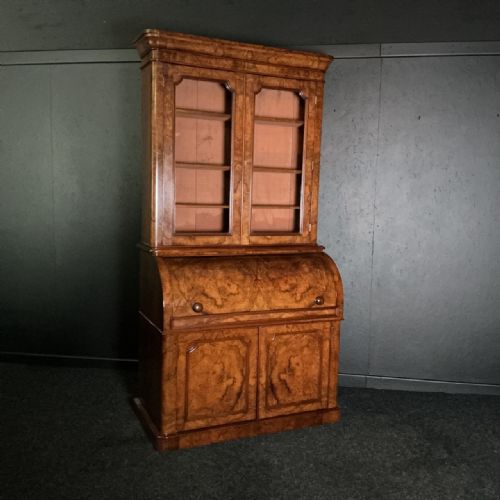
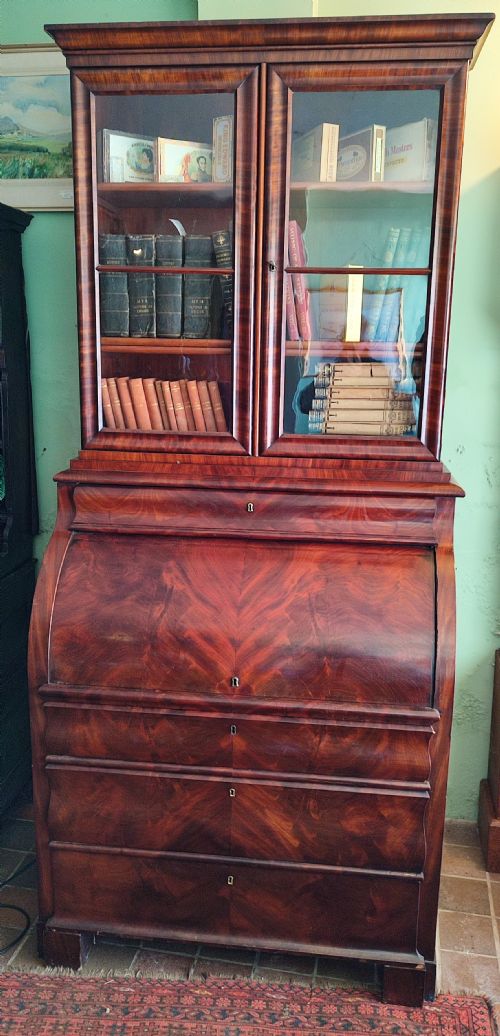


Cylinder Desk Cabinet
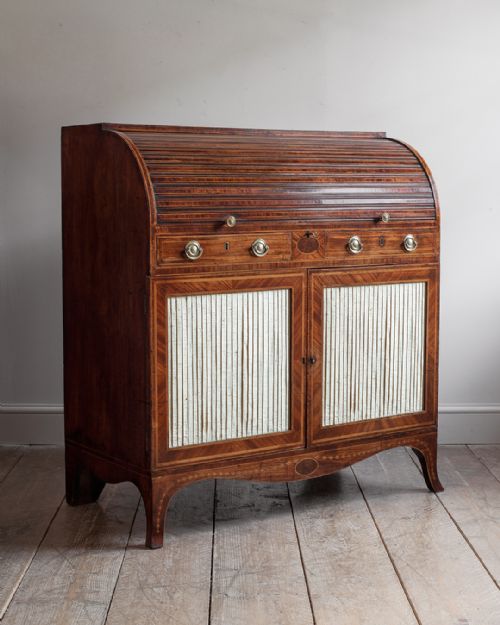
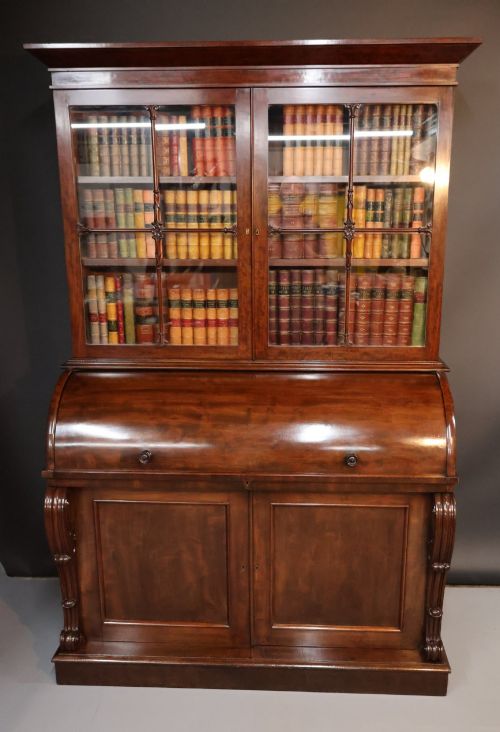
These cylinder desk cabinet pieces bring refined architectural presence and concealed writing spaces to a room, driven by curved wooden shutters.
Cylinder Desk Cabinet
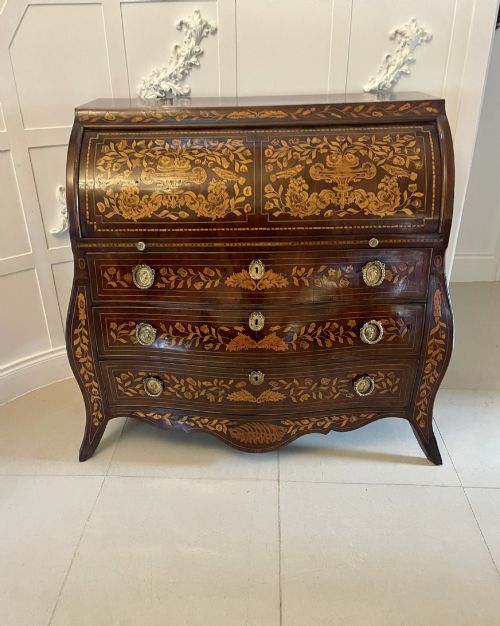
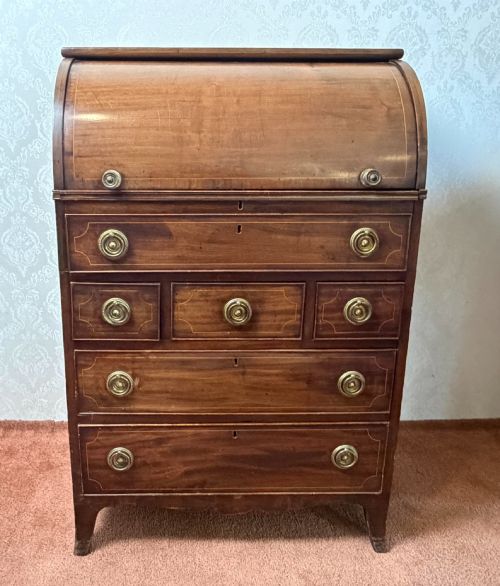
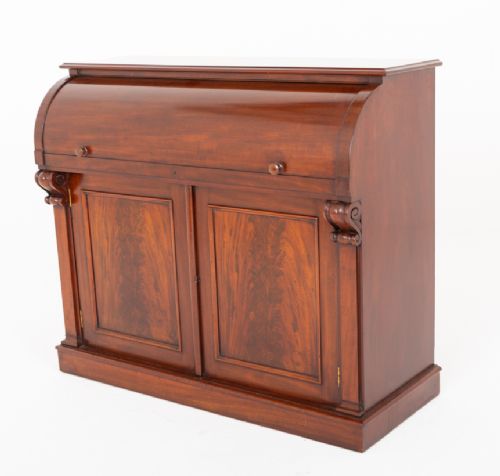
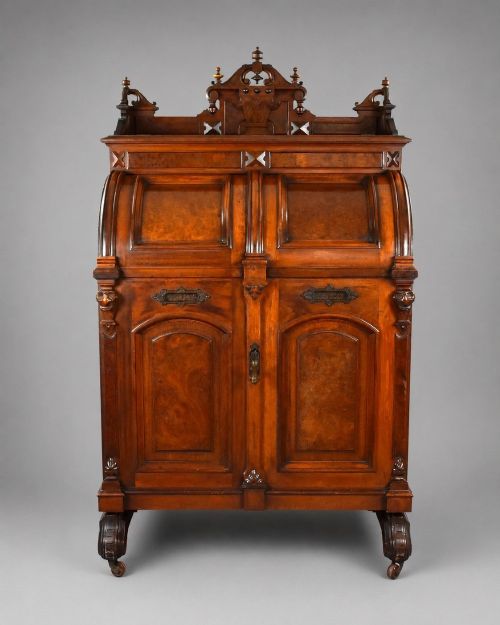
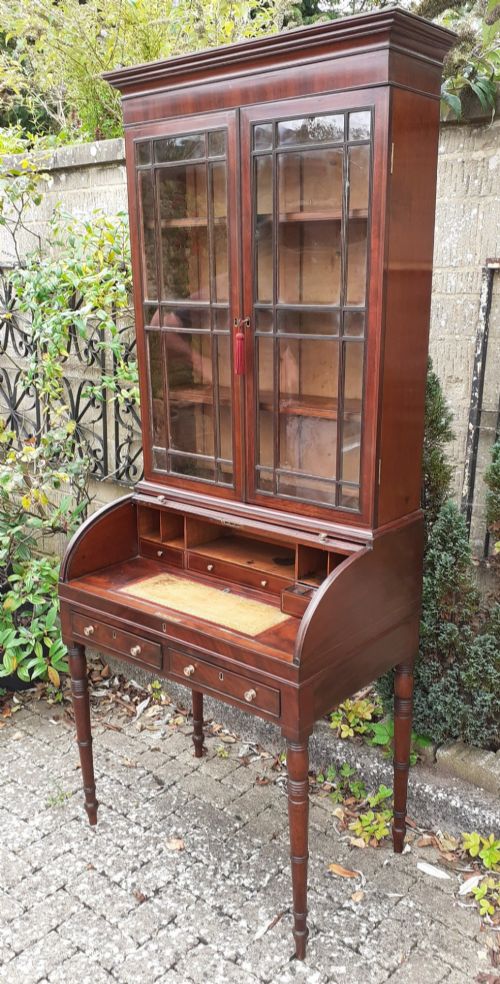
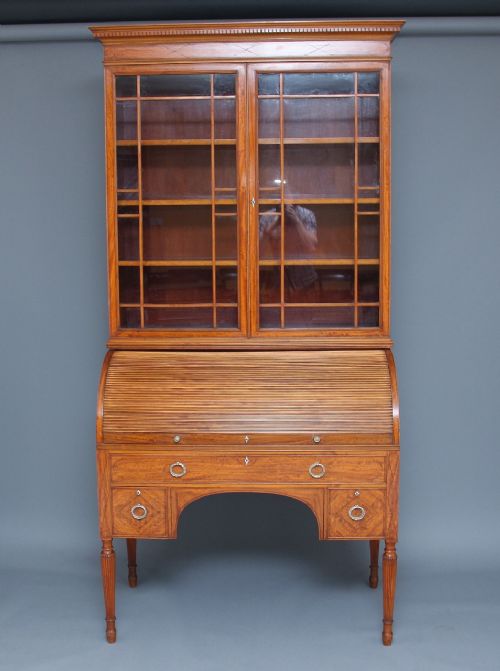
A cylinder desk cabinet combines a roll-top or curved shutter enclosure with a pull-out writing slide, frequently surmounted by a glazed or panelled bookcase section. When you examine a cylinder desk cabinet on this page, you encounter forms spanning the 18th century through to the Edwardian period, executed in regional British workshops as well as continental centres.
The dominant examples utilise mahogany, satinwood, and walnut, often ornamented with marquetry or brass inlay, reflecting Georgian, Regency, and Victorian tastes. Pieces range from full-sized bureau bookcases to compact ladies writing tables and miniature display formats.
Materials and construction methods
Cabinet makers built the rolling cylinder shutter from narrow vertical wooden strips glued to a flexible canvas or leather backing, allowing the mechanism to glide smoothly within curved side grooves. Carcase construction relied on solid timbers such as mahogany and oak, faced with figured veneers including burr walnut and satinwood.
Inlaid decoration incorporated contrasting fruitwoods, floral marquetry, and fine brass stringing, while glass doors in the upper bookcase sections utilised individual hand-blown panes secured with wooden glazing bars.
Secret drawers released by hidden spring-loaded catches remain a delightful feature waiting to be discovered inside these writing compartments.
Distinctions in quality
Quality rests upon the precision of the rolling cylinder mechanism and the selection of timber veneers. Superior examples exhibit tightly figured burr walnut or meticulously matched satinwood grain that flows seamlessly across the fall-front and drawers.
Internal cabinetry reveals the hand of the maker through secret compartments, pigeonholes faced in fine woods, and dovetailed drawer construction, contrasting with simpler utilitarian production.
Tudor & Burrey·Edwards & Roberts
The Cylinder Desk Cabinet Glossary
- Cylinder
- A curved wooden shutter that rolls back into the body of the desk to reveal the writing surface and interior fittings.
- Marquetry
- Decorative veneer work forming pictorial or floral patterns using various coloured woods laid into a ground.
- Secretaire
- A piece of furniture containing a fitted writing drawer or pull-out flap with a leather-lined writing surface.
- Tambour
- A sliding door or shutter constructed from narrow strips of wood glued to a flexible fabric backing.
- Biedermeier
- A central European style spanning the 19th century characterised by clean lines, restrained ornamentation, and prominent wood grains.
Cylinder Desk Cabinet: Frequently Asked Questions
How does the cylinder mechanism operate?
The curved wooden shutter runs along channeled grooves cut into the interior sides of the carcase. As you push the shutter upward, it disappears into the upper cavity of the desk.
When the pull-out writing slide is extended, it often unlocks the mechanism, allowing the cylinder to roll back freely without catching.
Where were these desks placed in a home?
These pieces served primarily in private libraries, studies, and drawing rooms as secure places for correspondence and bookkeeping. The upper bookcase sections housed reference volumes and ledgers.
Compact variations were also designed for ladies boudoirs, functioning as combined writing and display cabinets.
How do I identify a Georgian piece from a Victorian one?
Georgian and George III examples frequently employ satinwood, fine mahogany, and understated brass stringing with neoclassical proportions. Victorian interpretations lean toward heavier proportions, burr walnut veneers, and elaborate marquetry inlay.
Construction details inside the small drawers also assist, as machine-cut dovetails indicate a later 19th-century date.