
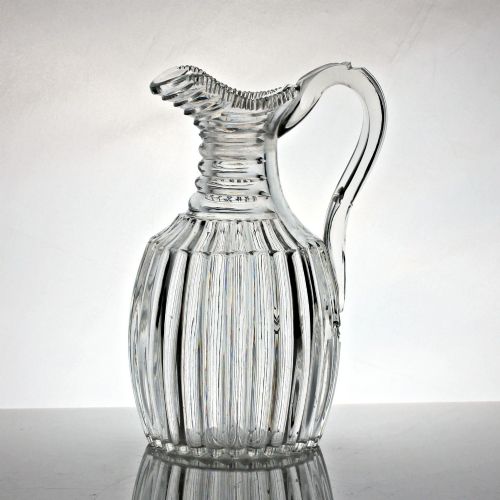
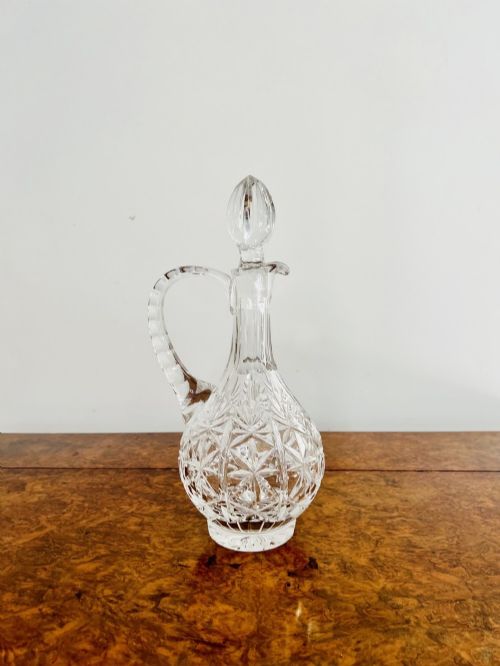
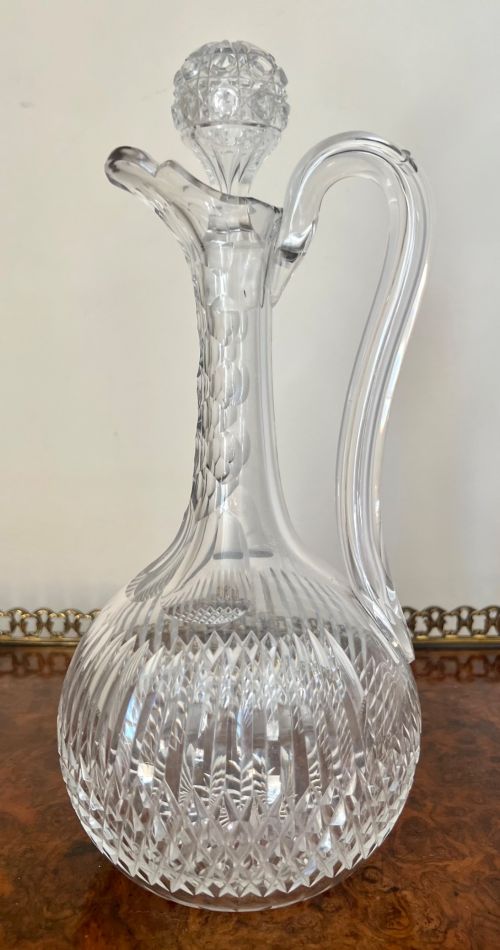
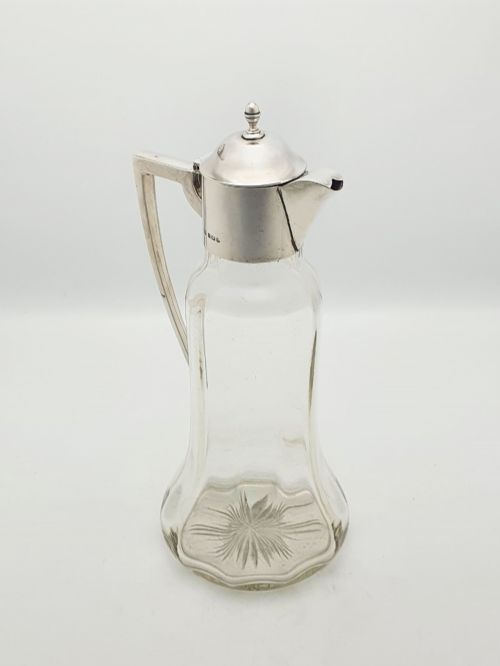


Cut Glass Wine Pitcher
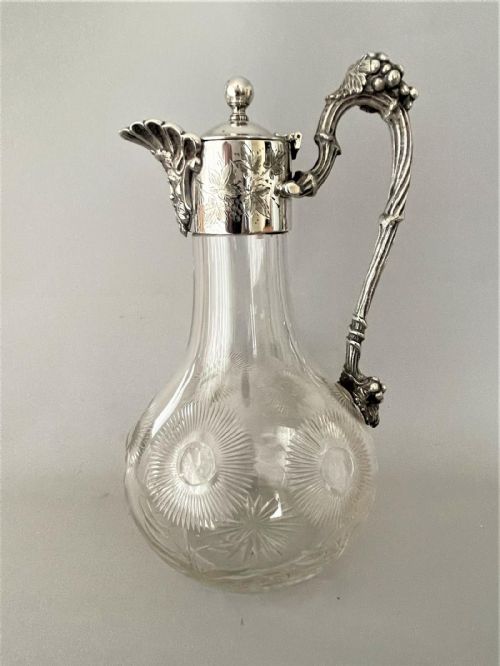
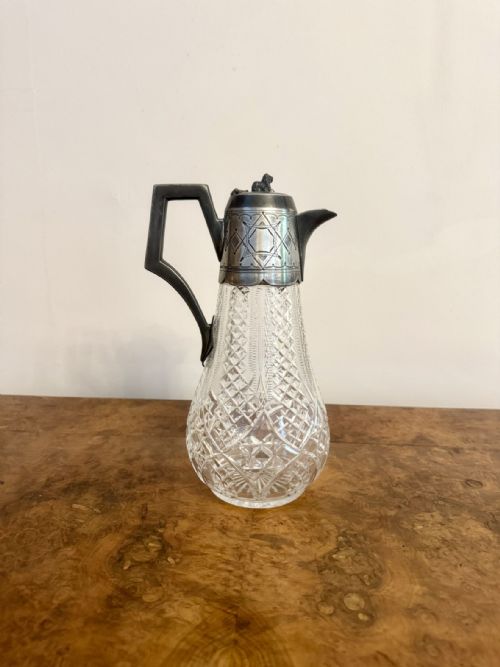
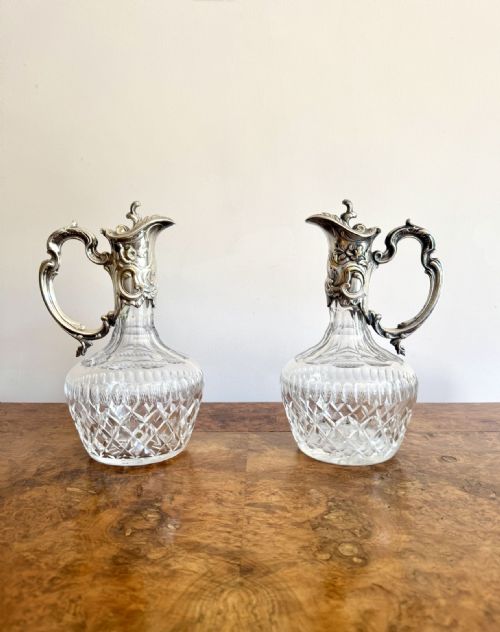
These cut glass wine pitcher pieces combine heavy cut crystal bowls with silver mounts, offering both elegance and function for the dining table.
What these pieces are
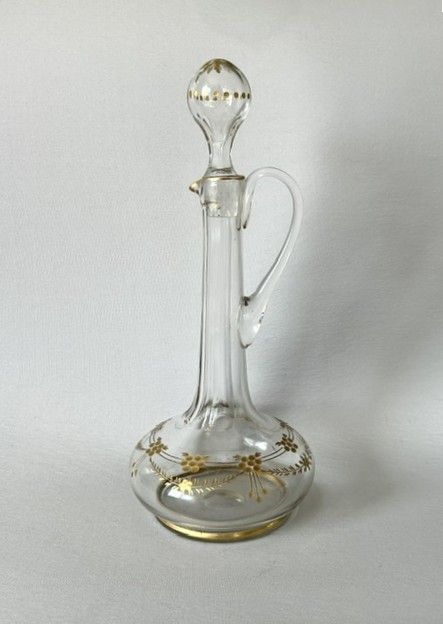
A cut glass wine pitcher serves as a decorative vessel for decanting and serving wine at the table. These vessels appear in forms such as claret jugs, decanters, and ewers, spanning the Victorian and Edwardian periods.
The objects combine clear glass bodies with metal fittings, predominantly silver plate or sterling silver covers and mounts. Buyers most frequently encounter Victorian examples featuring ornate cutting on the glass alongside Edwardian ewers dated around nineteen hundred.
How they were made
The glass bodies are formed from heavy crystal or cut glass, shaped by blowing or moulding before artisans apply deep geometric or floral incisions by hand. This extensive wheel-cutting creates the characteristic faceted surface that catches the light.
Metalwork components, including silver covers, collars, and handles, are fashioned from sterling silver or silver plate. These mounts are securely fitted to the glass necks, often featuring hinged lids and thumbpieces for pouring.
Retail Price Guide 2026
Typical UK retail prices for cut glass wine pitcher, calculated from the Sellingantiques database of over a million retail prices indexed since 2003. This retail price guide relies exclusively on Sellingantiques data; no external sources or auction records are used, so the figures do not describe the wider market.
Current listings feature Victorian and Edwardian pieces, incorporating materials such as cut glass, crystal, sterling silver, and silver plate.
What varies in quality
Quality rests in the crispness and depth of the glass cutting, where sharper facets and intricate patterns distinguish superior vessels from plain or lightly etched examples. The weight and clarity of the crystal further indicate the standard of production.
The material and execution of the mounts play a significant role, with solid sterling silver fittings commanding greater regard than standard silver plate. Additionally, the proportion and balance between the heavy glass body and the metal handle dictate the overall refinement of the piece.
The Cut Glass Wine Pitcher Glossary
- Claret Jug
- A specialised vessel designed specifically for serving red wine, typically featuring a pourer and a hinged lid. These pieces date prominently to the Victorian era.
- Ewer
- A large pitcher with a wide spout and a looped handle, traditionally used for holding water or wine. Edwardian examples often showcase simpler profiles than their Victorian predecessors.
- Silver Plate
- A base metal coated with a thin layer of silver, frequently utilised for the mounts and covers on these pitchers. It provided a bright finish akin to solid silver at a lower production cost.
- Sterling Silver
- An alloy consisting of ninety-two point five percent silver and seven point five percent other metals, used for high-end mounts. Hallmarks stamped onto these elements help identify the metal purity and origin.
- Crystal
- A high-clarity glass containing lead oxide, which increases the weight and refractive index of the material. This composition allows for deeper and more brilliant cutting.
Frequently Asked Questions
How do I date a cut glass wine pitcher?
Dating relies primarily on the style of the cutting, the shape of the vessel, and any accompanying silver hallmarks. Victorian examples often display heavier, more elaborate ornamentation compared to later Edwardian pieces.
Examining the construction of the handle and the mounting style also provides chronological clues. Pieces marked with specific period markers align with manufacturing trends from eighteen eighty to nineteen hundred.
Are these pitchers suitable for serving wine today?
These vessels function well for decanting and serving wine at the table, much as they did in the nineteenth and early twentieth centuries. The glass bodies hold liquids safely, provided the interior is cleaned with care.
Hand washing remains essential to preserve both the vintage crystal and the delicate silver plate or sterling silver mounts. Avoiding sudden temperature changes protects the antique glass from thermal shock.
What is the difference between a claret jug and an ewer?
A claret jug is specifically tailored for red wine service, generally incorporating a narrower neck and a fitted pouring lip beneath a hinged lid. Ewers traditionally feature a broader, more open spout and a more sculptural silhouette.
Both forms utilise cut glass and silver mounts interchangeably across the Victorian and Edwardian periods. Collectors often use these terms based on the precise shape of the rim and handle configuration.
How can I tell sterling silver from silver plate?
Sterling silver mounts feature official hallmarks stamped into the metal, denoting the purity standard and the assay office. These small punches provide definitive proof of solid silver construction.
Silver plate lacks these specific assay marks and may show areas where the underlying base metal is visible beneath the silver coating. Examining the interior of the mounts often reveals the nature of the metal.