


Cut Glass Wine Flagon
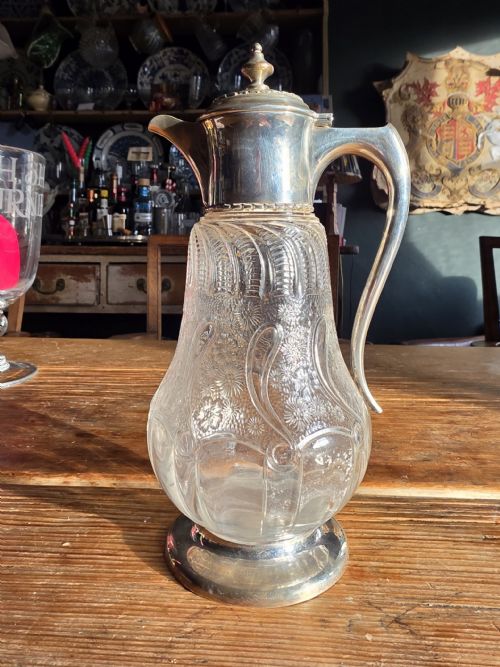
A cut glass wine flagon brings weight and sparkle to the table, combining heavy cut crystal with gleaming silver mounts for serving wine.
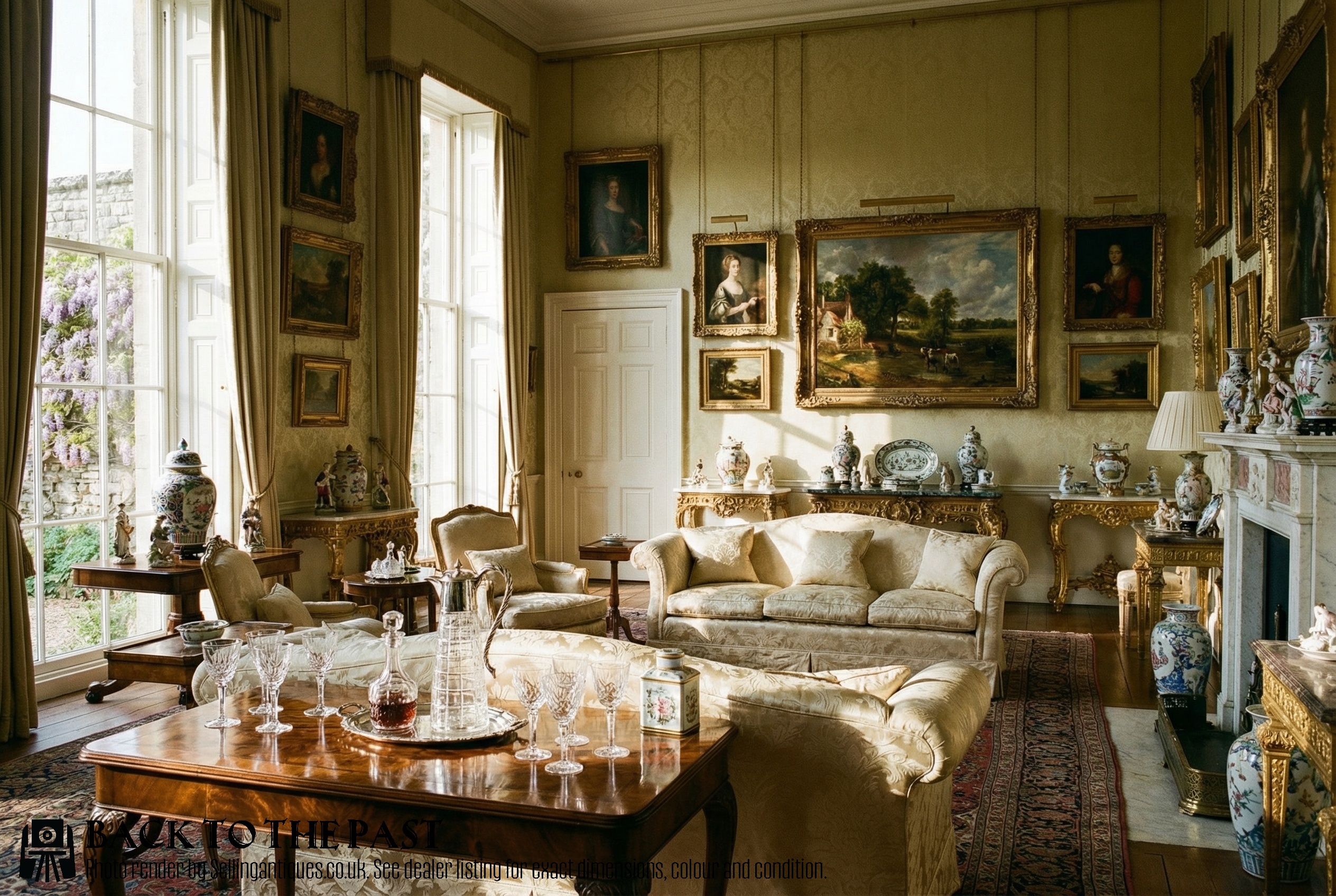
Cut Glass Wine Flagon
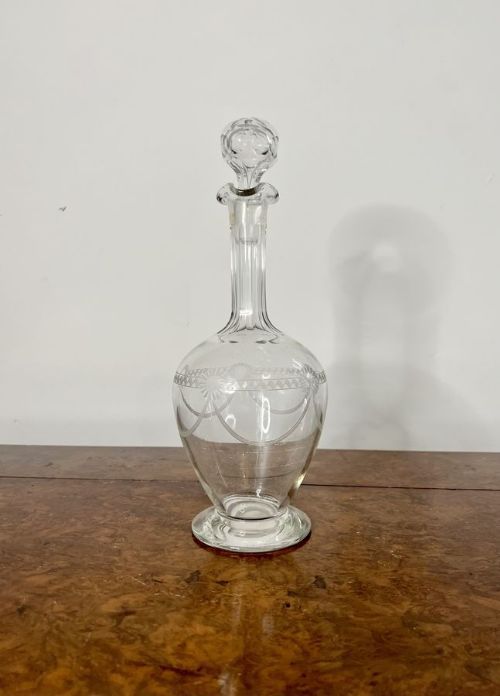
When you search for a cut glass wine flagon, you encounter vessels designed for serving wine at the dining table, spanning forms such as claret jugs, decanters, and ewers. These pieces originate predominantly from the Victorian and Edwardian eras, alongside nineteenth-century French examples.
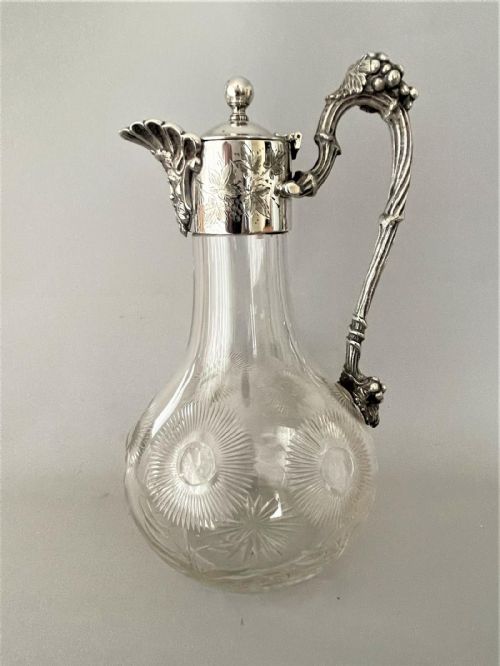
The most common versions met on this page are Victorian and Edwardian claret jugs and decanters. They combine heavy glass bodies with mounted silver or silver-plated collars, handles, and hinged lids.
What varies in quality
The distinction between tiers rests in the depth and crispness of the glass cutting, where sharper facets catch the light more intensely. Weight and thickness of the lead crystal also signal better substance.
Mounts contribute significantly to the grade of the piece, with solid sterling silver collars and substantial silver-plated mounts exhibiting finer cast detail than lighter, plainer alternatives.
Among the glassware sits a Victorian novelty champagne bottle decanter alongside a mount with an unusual face spout.
William Comyns·William Davenport·Orfèvrerie Produx Saint Hilaire
The Cut Glass Wine Flagon Glossary
- Claret jug
- A specialised vessel designed specifically for serving red wine, usually featuring a handle and a hinged lid.
- Ewer
- A large jug with a wide spout and a decorative handle, historically used for pouring water or wine.
- Silver plate
- A thin layer of silver fused to a base metal such as copper or brass, commonly used for mounts.
- Lead crystal
- Glass containing metallic lead oxide, which increases brilliance, weight, and clarity.
- Ruby overlay
- A manufacturing technique where a layer of red glass is fused over clear glass before being cut away to reveal the clear base beneath.
Cut Glass Wine Flagon: Frequently Asked Questions
How do I clean a cut glass wine flagon?
Wash the vessel by hand in warm soapy water using a soft bottle brush to protect the delicate interior corners and mounts. Avoid sudden temperature changes to prevent cracking the old glass.
Dry the exterior immediately with a lint-free cloth to maintain the sparkle of the cut facets, and leave the stopper or lid off until the interior dries completely.
Were these pieces used only for claret?
While many are termed claret jugs, these vessels served various table wines and fortified beverages during formal Victorian and Edwardian dining. Different forms accommodated white wine, dessert wine, or whisky.
The interchangeable use meant that households utilised a single elegant vessel for whichever vintage accompanied the meal.
How do I tell Victorian pieces from Edwardian ones?
Victorian examples often display heavier, more elaborate ornamentation with deep, complex glass cutting and ornate silver mounts. The forms tend toward exuberant shapes and traditional floral or heraldic motifs.
Edwardian pieces frequently show a slightly lighter touch in their design, reflecting a shift toward refined elegance while retaining substantial lead crystal bodies.
Can I still use these flagons for serving wine?
These antique vessels function effectively for decanting and serving modern wines at the table. The secure silver-plated or sterling silver mounts and hinged lids assist with controlled pouring.
Careful handling during washing and pouring ensures the fragile antique glass remains intact for continued use.