



Cut Glass Whiskey Decanters
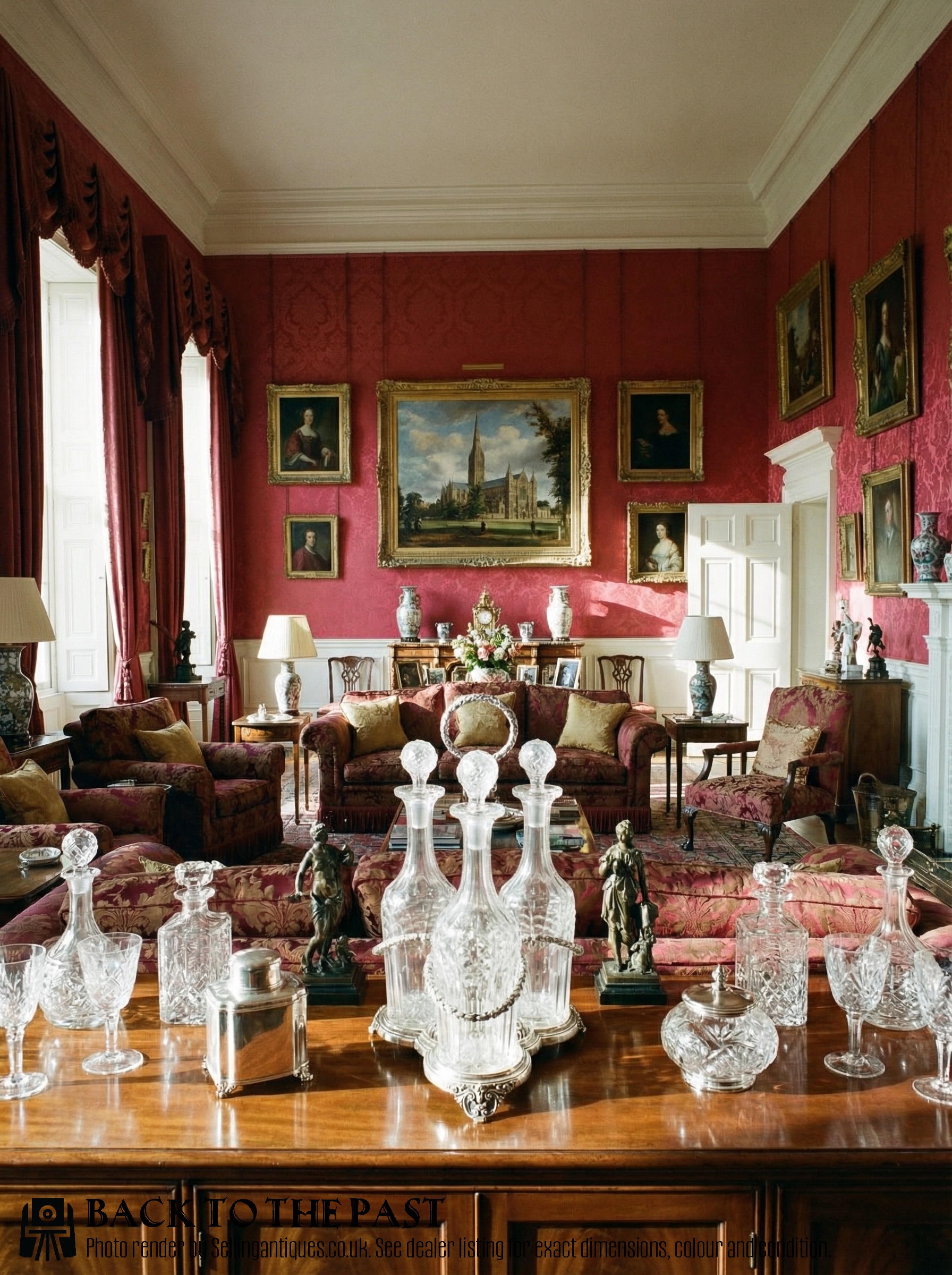
Cut glass whiskey decanters are heavy table vessels crafted to hold spirits, bringing tactile weight and brilliant refraction to any sideboard.
Cut Glass Whiskey Decanters
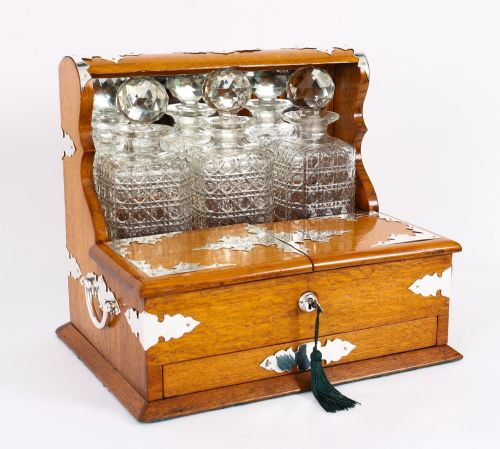
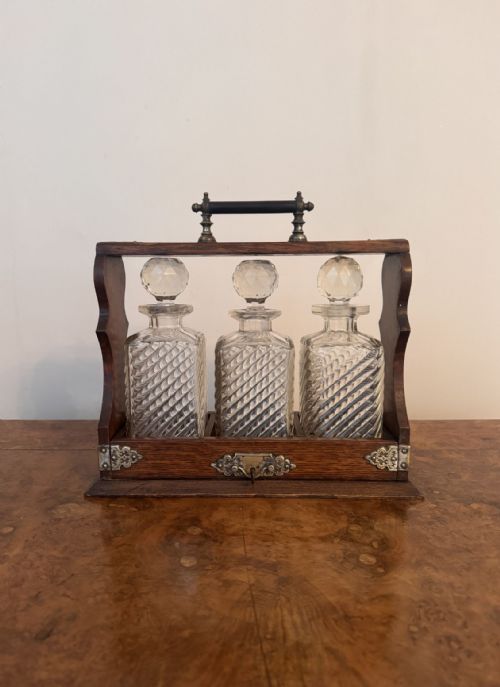
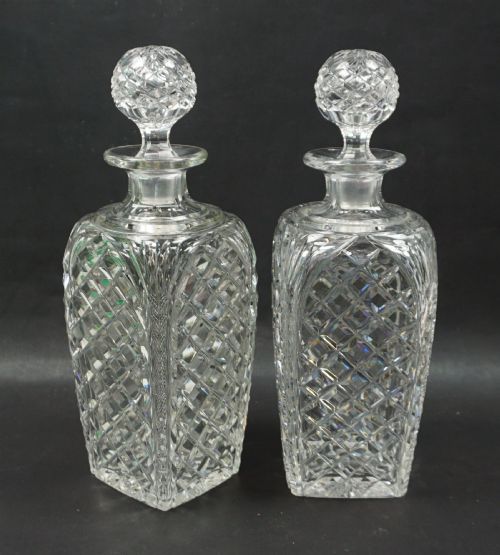
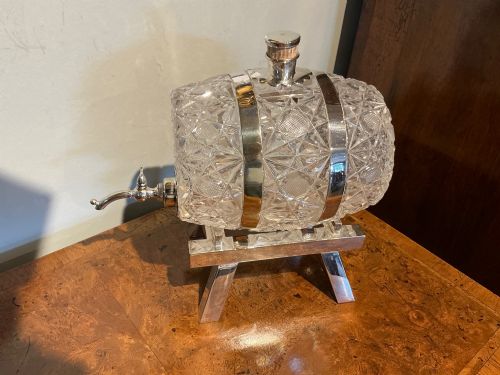
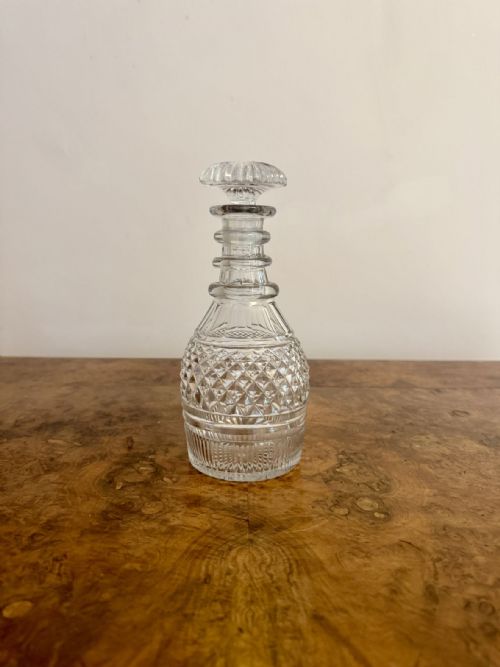
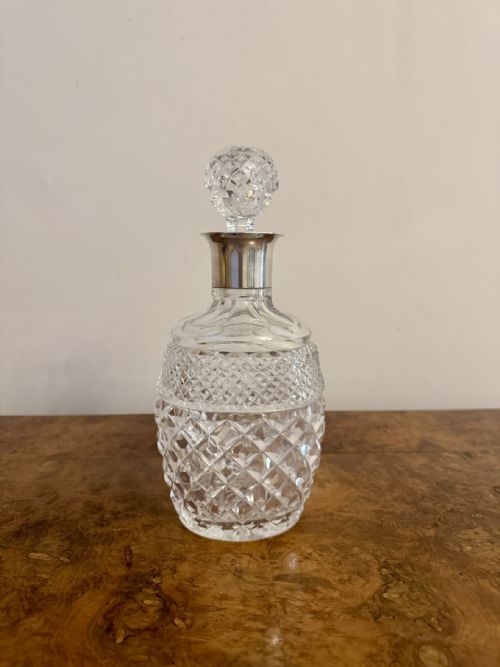
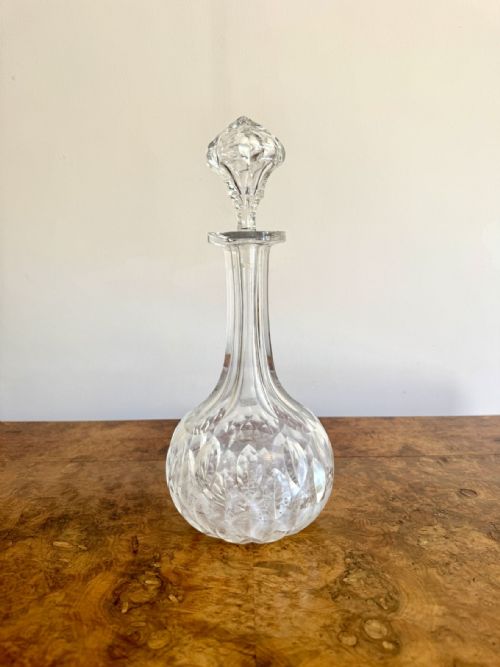
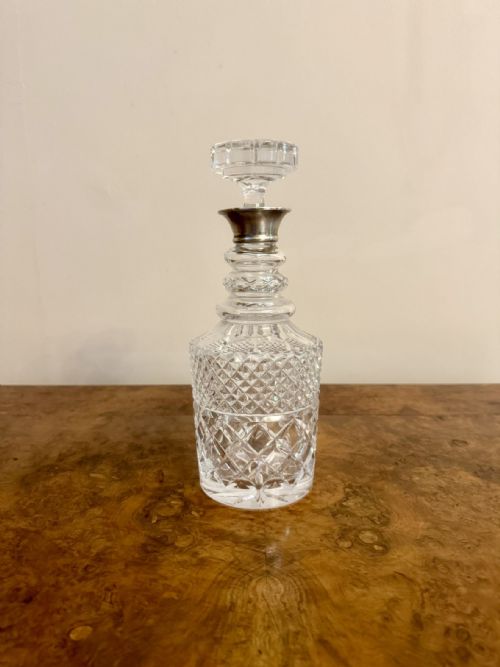
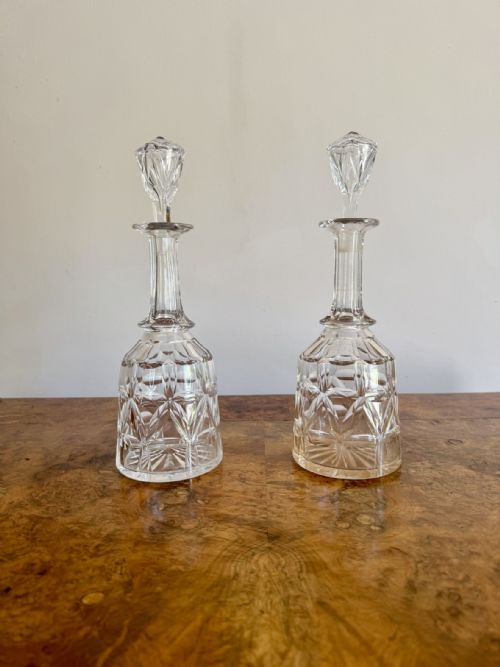
When searching for cut glass whiskey decanters, a buyer encounters a diverse selection ranging from single standalone bottles to multi-bottle sets housed within locking frames. The most common forms on this page include Edwardian and Victorian examples shaped as square section tapered vessels, bell shaped decanters, and spirit barrels.
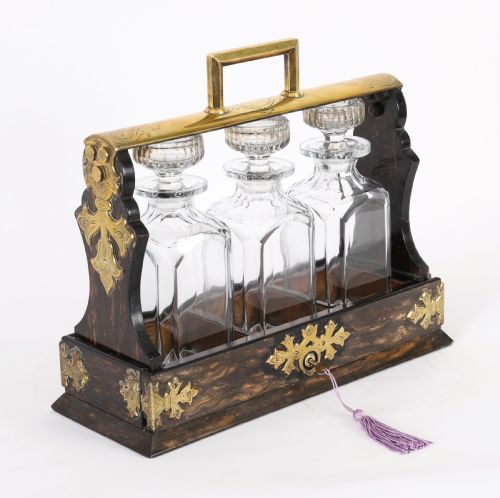
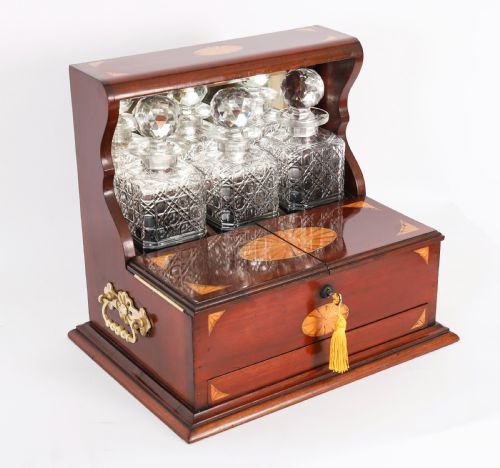
Many of these pieces are part of larger drink service groupings, appearing alongside oak and coromandel tantalus frames, games compendiums, and silver mounted whisky noggins. Materials span lead crystal and cut glass combined with sterling silver collars, silver plate, oak, brass, and satin wood inlay.
Dating primarily from the mid-nineteenth century through the Edwardian period and into the nineteen-twenties, these items reflect the formal entertaining habits of their eras. Buyers find both standalone bottles and secure tantalus sets equipped with locks to protect the contents.
Materials and Technique
The construction of these items relies on heavy glass blowing and deep mechanical or wheel cutting to create intricate geometric patterns across the body. Crystal and standard glass formulations are shaped into thick walls capable of enduring the pressure of deep facet, flute, and diamond cutting.
Metalwork forms an integral part of the manufacturing process, with sterling silver and silver-plated mounts fitted securely around the necks as collars or pourers. Timber frames utilised for tantalus housings involve cabinet-making techniques in oak, satin wood, and coromandel, often reinforced with brass handles and locking mechanisms.
Current listings feature cut glass whiskey decanters housed in oak tantalus frames dating from the Victorian and Edwardian eras.
Markers of Quality
Quality in these pieces is dictated by the crispness and depth of the glass cutting, where sharper facets catch the light more uniformly across the surface. Heavier lead crystal bodies provide a more substantial feel in the hand compared to lighter, thinner moulded alternatives.
The standard of secondary materials further separates individual examples, distinguishing solid sterling silver collars and heavy brass framework from basic silver plate and lightweight softwood housings. The presence of matching stoppers and fully operational locking tantalus mechanisms adds functional integrity.
James Powell·Hukin & Heath
The Cut Glass Whiskey Decanters Glossary
- Tantalus
- A locking wooden frame that holds decanters securely to prevent guests from helping themselves without the key. The design frustrates would-be drinkers by displaying the bottles while keeping the stoppers locked in place.
- Whisky Noggin
- A small single-serving whiskey jug, often fitted with a sterling silver lip mount and a matching whiskey label. These small vessels typically accompany individual place settings or small trays.
- Lead Crystal
- Glass containing a high proportion of lead oxide, which increases the weight, refractive index, and clarity of the material. This composition allows for deeper and sharper facet cutting.
- Spirit Barrel
- A horizontal cylindrical decanter vessel, frequently mounted on a small wooden cradle. These items were designed to dispense spirits in domestic settings during the Victorian era.
- Optically Blown
- A glassmaking technique where molten metal is blown into a ribbed mould to create subtle vertical patterns within the walls of the vessel. This method produces lighter bottles with uniform internal ripples.
Cut Glass Whiskey Decanters: Frequently Asked Questions
What is a tantalus?
A tantalus is a secure wooden frame fitted with a locking metal bar that encloses the necks of the decanters. This mechanism allows hosts to display their whiskey bottles while preventing unauthorized access to the contents.
Most surviving examples date from the Victorian and Edwardian periods, constructed in oak or coromandel with brass mounts.
How do I date a decanter?
Dating relies on observing the overall shape, the style of the cut glass patterns, and the characteristics of any metal collars. Victorian pieces often feature deep hand-cut flutes and heavy sterling silver mounts, while Edwardian designs frequently lean towards slender bell shapes or square tapered profiles.
Hallmarks on silver collars or whisky noggin mounts provide definitive assay office years for specific metal components.
What is a whisky noggin?
A whisky noggin is a small individual decanter or jug designed to hold a single measure of spirit. These pocket-sized vessels usually feature a sturdy glass body and a sterling silver pouring lip.
They commonly appear alongside small silver spirit labels identifying the contents as whiskey.
Are stoppers usually original?
Original stoppers are hand-ground to fit the specific neck of each individual decanter during manufacture. Collectors check for matching cut patterns and corresponding internal numbers on both the stopper base and the bottle neck.
Replacements do occur due to breakage over decades of domestic use.
How should I clean cut glass?
Cleaning requires warm water and mild detergent, avoiding harsh abrasives that might scratch the exterior cut facets. Wooden tantalus frames and silver collars need separate care to keep moisture away from the grain and metal surfaces.
Allowing decanters to air dry thoroughly prevents moisture marks from forming inside the narrow necks.