


Cut Glass Trinket Jar
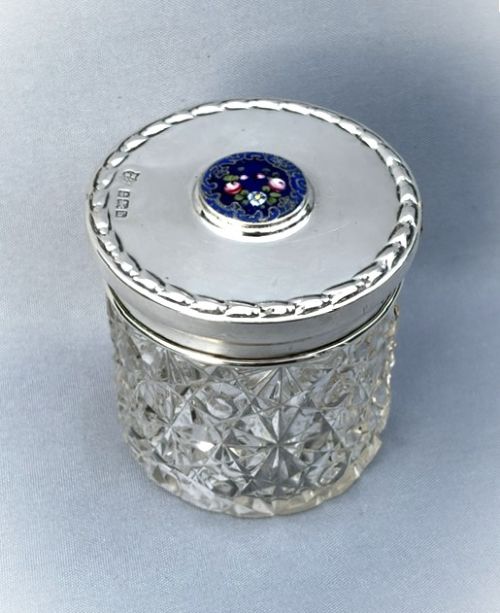
A cut glass trinket jar sits on the dressing table to hold small treasures, combining heavy faceted crystal with precious metal and enamel lids.
Cut Glass Trinket Jar
A cut glass trinket jar brings together utilitarian vanity storage and decorative metalwork, spanning periods from the Georgian era through the Edwardian years to Art Deco designs. These pieces appear as lidded bowls, heart-shaped boxes, and cylindrical jars intended for dressing tables and dressing table sets.
The most common versions met on this page date from the Edwardian period and the 1920s, combining deep-cut crystal bodies with sterling silver mounts. Makers paired clear or coloured glass with hinged or lift-off lids in silver, silver gilt, and tortoiseshell.
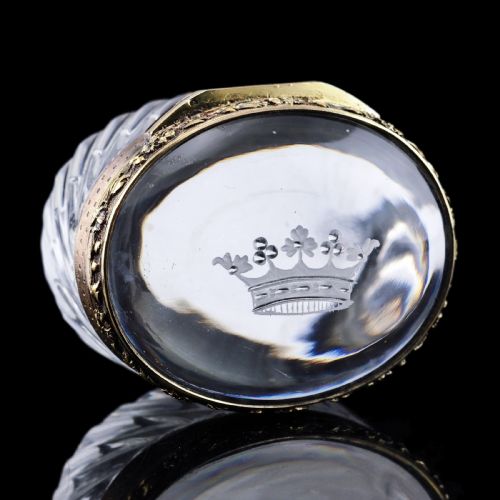
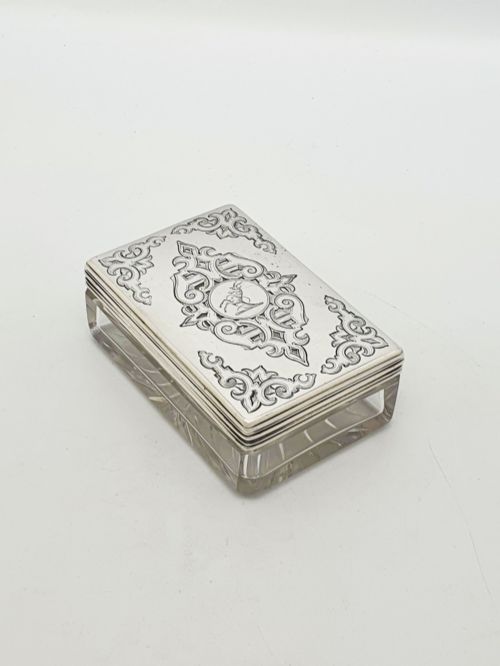
Earlier examples stretch back to the nineteenth century and Georgian times, offering heavier hand-cut forms with crests and engraved mounts. Mid-century and later pieces continue the tradition with clean geometric lines and vibrant enamel work.
Materials and Craftsmanship
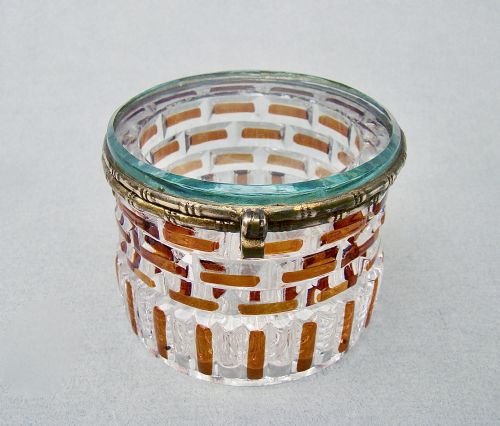
Craftsmen produced the bodies of these pieces from heavy lead crystal and glass, employing deep cutting, wheel-engraving, and facet-cutting to catch the light. The glass is paired with sterling silver collars, bezels, and hinged lids fabricated in workshops across Birmingham, London, and continental centres.
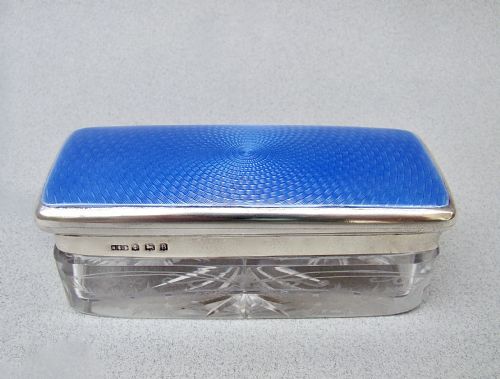
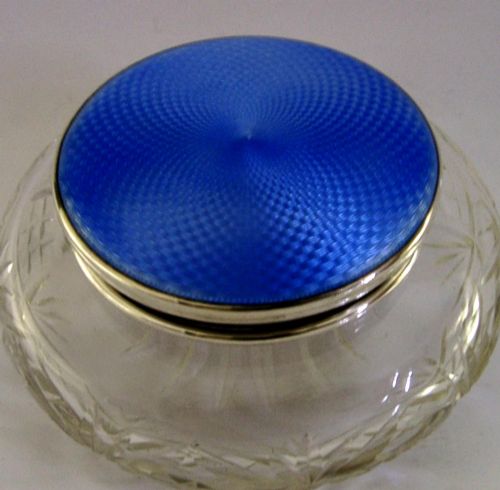
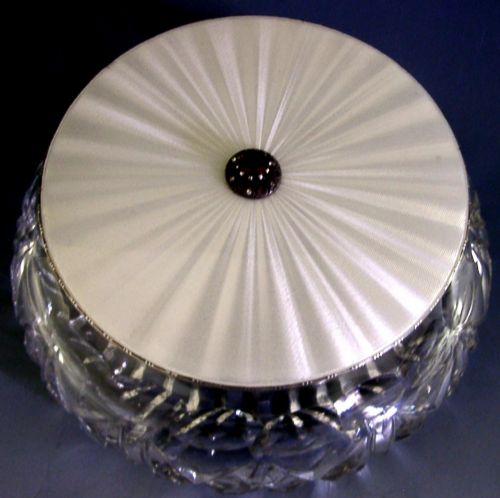
Enamelling techniques add colour and texture to the metal mounts, particularly guilloché enamel applied in translucent layers over engine-turned silver bases. Tortoiseshell and silver gilt provide alternative lid materials, secured tightly to the glass rims with pins and plaster.
Assessing Quality
Quality rests upon the crispness of the glass cutting and the weight of the metal mount. Superior pieces display deep, sharp facets on the crystal and heavy gauge sterling silver that resists denting on the lid and collar.
The intricacy of the enamel work separates standard items from finer examples, with guilloché patterns showing precise engine-turning beneath unblemished translucent colour. Maker marks and clear hallmarks on the silver further distinguish workshop-produced pieces from unmarked wares.
Henry Clifford Davis·Hasset and Harper·Posen of Frankfurt and Berlin·Jonathan Douglas·William Comyns
The Cut Glass Trinket Jar Glossary
- Guilloche Enamel
- A decorative technique where metal is engine-turned with a precise repeating pattern before translucent enamel is applied over the top. This allows the engraved geometric design to show through the coloured glass-like coating.
- Sterling Silver
- An alloy of silver containing 92.5 percent pure silver and 7.5 percent other metals, usually copper, to increase durability. Most British vanity jars bear hallmarks indicating this standard and the year of assay.
- Silver Gilt
- Silver that has been coated with a thin layer of gold on its surface, often called vermeil. This treatment provides the rich warmth of gold while utilising a silver base.
- Tortoiseshell
- The outer shell of certain turtle species, historically used for decorative boxes and lid inlays due to its mottled amber and brown patterning. It is warm to the touch and polished to a high gloss.
- Rock Crystal
- A term historically applied to highly transparent, flawless quartz or very pure, heavy lead glass carved with high-relief details. It describes pieces with exceptional clarity and depth of facet.
Cut Glass Trinket Jar: Frequently Asked Questions
What is a cut glass trinket jar?
A cut glass trinket jar is a small lidded container designed to hold jewellery, pins, and cosmetics on a dressing table. The body consists of heavy faceted glass or crystal, topped with a fitted metal lid.
These jars were staple accessories of the vanity table from the Georgian period through the Art Deco era. They range from simple cylindrical pots to elaborate heart-shaped boxes with coloured enamel.
How do I date a silver and glass jar?
Dating relies primarily on the hallmarks stamped into the sterling silver mounts, which indicate the assay office, maker, and year of manufacture. Stylistic clues such as Edwardian proportions or Art Deco geometric enamelling also point to specific decades.
Unmarked pieces require analysis of the glass-cutting style, the thickness of the silver collar, and the manufacturing techniques used on the lid. Comparing the construction methods to dated examples narrows the period of origin.
How were these jars used originally?
They served practical roles in the daily grooming rituals of the nineteenth and early twentieth centuries, holding hairpins, rings, and small trinkets. Dressing table sets often coordinated several jars of varying sizes for different cosmetics.
Heavier lidded bowls functioned as powder jars or potpourri holders, scented with dried petals. Their placement on dressing tables reflected both personal vanity and the Victorian and Edwardian love for ordered interior accessories.
How should I clean the silver and glass?
Cleaning requires separating the care of the glass from the metal and enamel components. Use a soft cloth and mild soapy water on the crystal, taking care to avoid soaking the plaster or cement that often secures the silver collar to the rim.
Polish the sterling silver gently with a specialist silver cloth, keeping polish away from enamel surfaces and tortoiseshell inserts. Avoid abrasive cleaners and ultrasonic baths, which can damage delicate adhesives and soft organic materials.