




Cut Glass Sconces
Cut glass sconces bring brilliant refraction and warm candle or electric light to a room, catching the eye with every turn.
Cut Glass Sconces
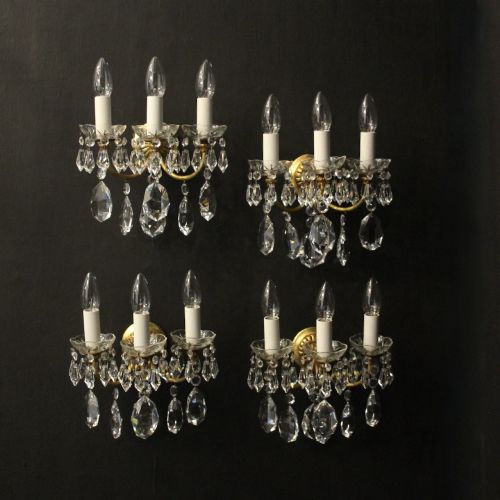
Cut glass sconces are wall-mounted lighting fixtures designed to hold candles or electric bulbs, scattering light through faceted surfaces. When you search for cut glass sconces, you encounter pairs and sets originating from the nineteenth and early twentieth centuries.
The selections span styles from French Chateau and Regency to Edwardian and Neo-Classical forms. Wall lights, bag wall lights, and twin branch fixtures dominate the available inventory, often paired with matching metal mounts.
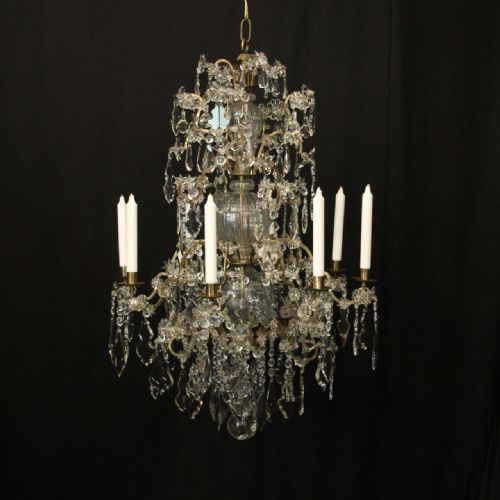
Originating largely from French, English, and Scandinavian workshops, these pieces bring period character to hallways and reception rooms. The forms range from simple pairs of candle brackets to elaborate multi-arm fixtures.
Materials and Construction
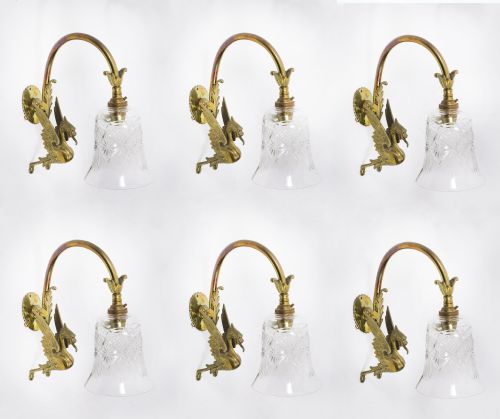
The primary bodies utilise clear glass and crystal, shaped by hand-cutting techniques that produce sharp facets to maximise light reflection. Metal components such as brass, gilt bronze, ormolu, and silver provide structural support and decorative backplates.
Makers combined cast metal frames with wired or pinned crystal drops and lustres, securing them carefully to ensure stability on the wall. Gilded finishes and original brass fittings appear frequently across nineteenth and twentieth-century examples.
Listings feature pieces spanning the nineteenth century through the 1930s, utilising brass, gilt bronze, ormolu, and cut crystal.
Assessing Quality and Execution
Quality rests in the crispness of the glass cutting and the weight of the metal mountings. Deep, hand-cut facets refract light cleanly, whereas shallow pressing lacks the same optical brilliance.
The integration of the metal frame with the crystal elements dictates the overall harmony of the piece. Superior examples exhibit finely chased ormolu or heavy cast brass that securely anchors the glass without obscuring its clarity.
F. & C. Osler·Baccarat
The Cut Glass Sconces Glossary
- Ormolu
- A gilded bronze technique used extensively on nineteenth-century mounts and decorative frames. This process gives the metal a rich, golden appearance.
- Lustre
- A glass pendant or hanging prism attached to a lighting fixture to enhance light dispersion. These drops swing gently to catch ambient light.
- Bag wall light
- A sconce style featuring a cascading cluster of glass drops shaped like a small bag or basket. They direct light downward through dense arrays of crystal.
- Bevelled glass
- Glass panes with edges cut and polished at an angle to create a framed, prism-like border. This technique adds depth to mirror plates and backing panels.
Cut Glass Sconces: Frequently Asked Questions
How do I clean cut glass sconces safely?
Remove detachable crystal drops and wash them gently in lukewarm soapy water, drying them thoroughly with a lint-free cloth before reattachment.
Wipe the metal mounts with a soft, dry cloth to preserve the original finish without introducing moisture to aged joints.
Were these sconces originally wired for electricity?
Most nineteenth-century and early twentieth-century examples started life holding candles before being converted to accept electric wiring later in their lifespan.
When wiring historic wall lights, consult a qualified electrician to ensure modern safety standards integrate respectfully with antique components.
How do I securely mount heavy crystal sconces?
Wall lights incorporating cast bronze and dense crystal require solid fixings into wall studs or appropriate masonry anchors to support their weight.
Check that the backplate sits flush against the wall so the fixture hangs straight without placing undue strain on the mounting arms.
How can I distinguish Edwardian sconces from earlier pieces?
Edwardian pieces often reflect revivals of earlier styles, utilising machine-assisted cutting techniques alongside traditional brass casting methods.
Earlier nineteenth-century examples tend to display heavier hand-cut lead crystal and warmer patinated bronzes unique to their period of manufacture.