




.JPG)
Cut Glass Pepper Shaker
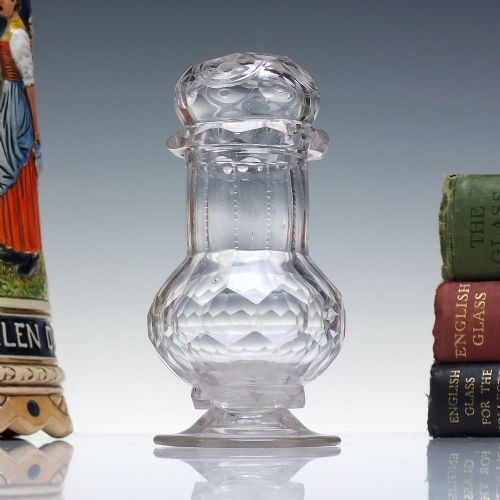
A cut glass pepper shaker brings bright sparkle and weight to the table, formed from heavy crystal or glass mounted with silver plate or solid silver.
Cut Glass Pepper Shaker
When you search for a cut glass pepper shaker, you are looking at small table vessels designed to dispense seasoning, often found as part of larger cruet sets or sugar casters. The pieces on this page span the Georgian, Victorian, Edwardian, and Art Deco periods, showing forms ranging from simple pepper pots to elaborate lighthouse sugar casters and multi-bottle condiment stands.
You are most likely to meet Edwardian and Victorian examples on this page, frequently rendered in cut glass or lead crystal with silver plate mounts. These functional items reflect the dining habits of their respective eras, utilising faceted glass bodies to catch the light during meals.
How they were made
The body of a cut glass pepper shaker is shaped from glass or lead crystal, then hand cut with geometric or linear patterns to create refractive facets. Artisans combined these glass bodies with fitted metal components, employing silver plate or solid silver for the collars, lids, and pierced shaker tops.
Manufacturing methods evolved from Georgian hand-blown and cut techniques into the heavier, sharply defined moulding and cutting seen in Victorian, Edwardian, and Art Deco pieces. Metal mounts were securely attached to the glass necks, often featuring screw threads or friction fits to secure the pierced shaker tops.
Listings feature pieces spanning from the 18th century through the Georgian, Victorian, Edwardian, and Art Deco eras.
What varies in quality
The distinction between standard and finer examples rests upon the crispness of the glass cutting and the weight of the material used. Heavy lead crystal with deep, sharply defined facets sits at the upper end of the scale, offering a substantial feel in the hand compared to lighter, thinner pressed glass.
Mount quality also dictates overall merit, where solid silver fittings or thick silver plate over durable base metals demonstrate superior craftsmanship. The precision with which the pierced shaker top fits the collar separates everyday utility pieces from finer dining table accessories.
The Cut Glass Pepper Shaker Glossary
- Cut glass
- Glass that has been shaped and patterned by holding it against a rotating abrasive wheel, leaving sharp-edged geometric facets. This technique enhances the material's brilliance and light refraction.
- Lead crystal
- A type of glass containing a significant proportion of lead oxide, which increases weight, clarity, and the ability to disperse light into spectral colours. It is the preferred medium for finer tabletop vessels.
- Silver plate
- A base metal, such as copper or Britannia metal, coated with a thin layer of pure silver through electroplating or older fusion methods. It provided the appearance of solid silver at a more accessible cost for dining accessories.
- Cruet set
- A matched collection of bottles, jars, and shakers held within a dedicated stand for condiments like oil, vinegar, salt, pepper, and mustard. These sets sat at the centre of the dining table.
- Sugar caster
- A tall container with a pierced domed lid used for sprinkling powdered or granulated sugar over food. Forms range from traditional baluster shapes to geometric Art Deco lighthouse designs.
Cut Glass Pepper Shaker: Frequently Asked Questions
How do I date a cut glass pepper shaker?
Dating relies on observing the combination of glass cutting styles, metal mounts, and overall vessel form. Georgian and 18th-century pieces often feature hand-blown bodies with simpler hand-cut facets, while Victorian and Edwardian examples utilise heavier crystal and silver plate mounts.
Art Deco items from the 1920s and 1930s introduce geometric, architectural silhouettes like the lighthouse form. Comparing these stylistic markers helps place the piece within its historical era.
Were these used individually or in sets?
Pepper shakers were utilised both as standalone table items and as integrated parts of larger cruet sets or condiment stands. Multi-bottle cruet sets held various combinations of oil, vinegar, mustard, and pepper for formal dining.
Individual pepper pots and sugar casters served specific seasoning duties at the table, often matching the wider tableware of the household.
How do I care for silver plated mounts?
Silver plated mounts require gentle cleaning with a soft cloth and a dedicated silver polish to remove tarnish without scratching the delicate plating. Care must be taken to avoid getting abrasive cleaning agents onto the cut glass body.
Storing these items in dry conditions helps prevent moisture from tarnishing the metalwork and protects the glass from accidental impact.