


Cut Glass Dressing Jar
When you search for a cut glass dressing jar, you discover functional vanity items featuring heavy crystal bases and precious metal lids.
Cut Glass Dressing Jar
A cut glass dressing jar is a vanity accessory designed for holding powders, creams, and perfumes on a dressing table. When exploring this selection, a buyer encounters forms spanning the Victorian, Edwardian, and Art Deco periods, alongside Georgian and mid-century examples.
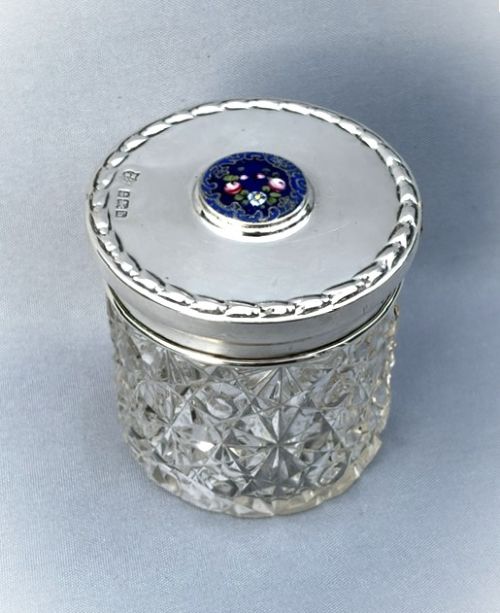
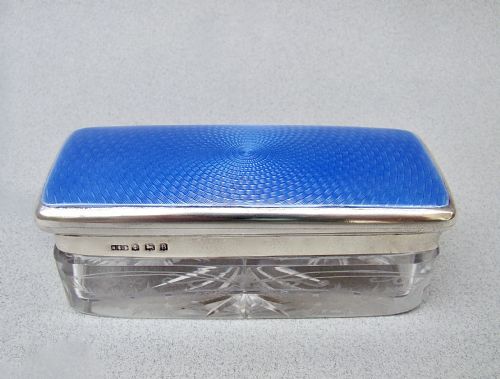
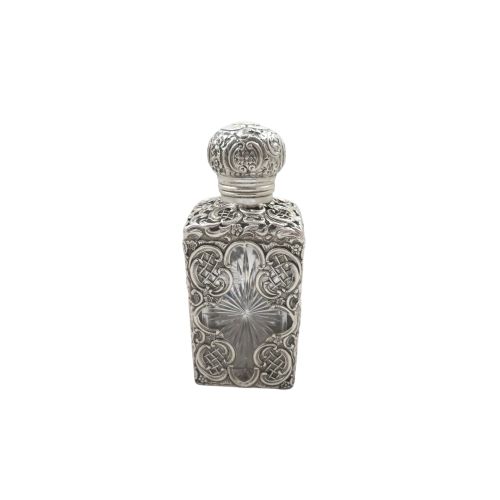
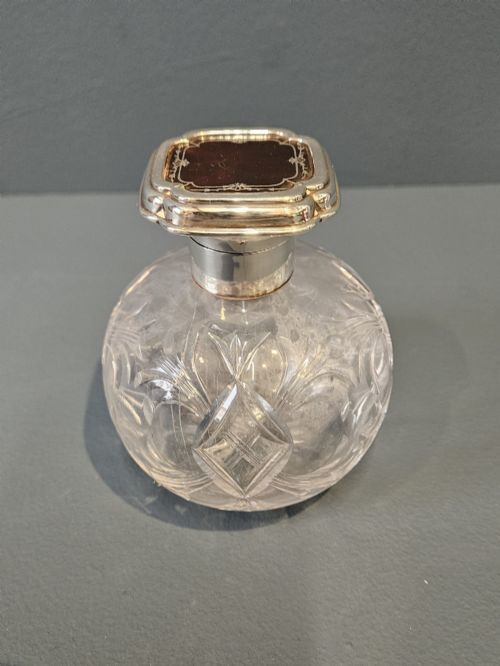
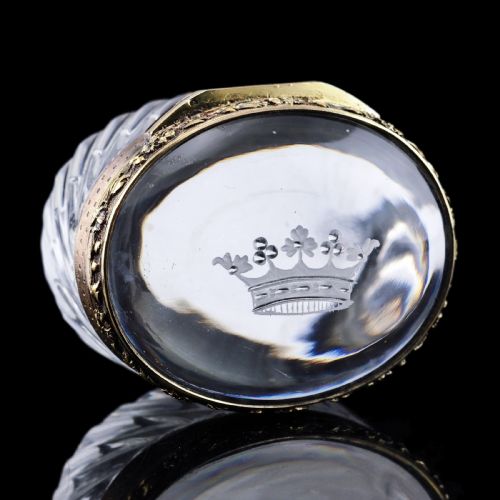
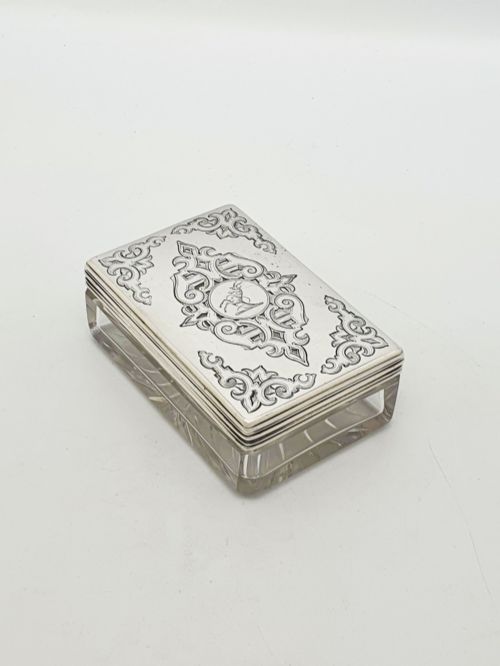
The objects take many shapes, including round trinket pots, rectangular boxes, and globular scent bottles. Most variants pair a moulded or wheel-cut crystal body with a fitted solid silver, enamel, or tortoiseshell lid.
How They Were Made
The bases combine heavy glass, crystal, or amethyst-coloured glass formed with deep panel cuts, hobnail patterns, or sliced facets. Silversmiths mounted these vessels with sterling silver collars, hinged lids, and decorative overlays.
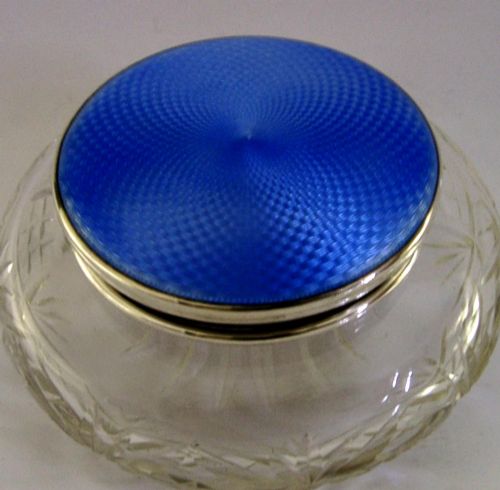
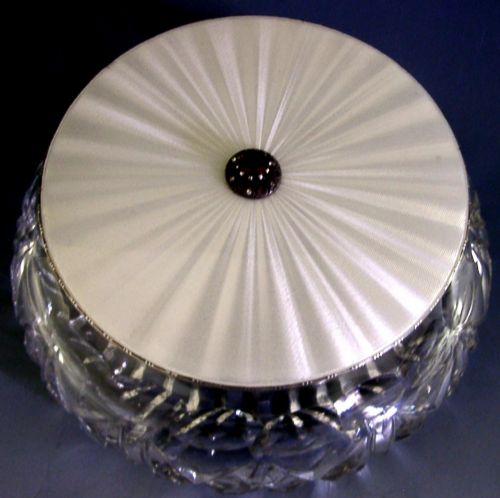
Lids frequently showcase additional craftsmanship such as guilloché enamel, coloured enamel, floral repoussé, or inlaid tortoiseshell. Hallmarks stamped into the metal components record the assay office, city, and year of production.
The collection includes specialised containers such as lockable gentleman's cologne bottles, heart-shaped trinket boxes, and globular perfume bottles.
What Varies in Quality
Quality in a cut glass dressing jar depends on the crispness of the glass cutting and the weight of the crystal body. Superior examples feature deep, sharp facets that catch the light clearly, whereas simpler versions rely on moulded rather than hand-finished patterns.
The elaboration of the lid elevates the piece, distinguishing plain sterling silver tops from those decorated with multi-coloured enamel, engine-turning, or precious tortoiseshell inserts. Maker attributions and matching assay marks across components also mark out finer examples.
Henry Clifford Davis·Henry Perkins·Posen of Frankfurt and Berlin·Jonathan Douglas·Barnsley and Co·Goldsmith's and Silversmith's Co·Adie Brothers·Baccarat
The Cut Glass Dressing Jar Glossary
- Guilloché enamel
- A decorative technique where intricate geometric patterns are mechanically engraved beneath a translucent enamel layer. This finish appears frequently on Art Deco vanity pieces.
- Repoussé
- A metalworking method where the smith hammers a design from the reverse side to form raised floral or scroll motifs on the lid. It is a common feature on Edwardian dressing table jars.
- Sterling silver
- An alloy of silver containing 92.5 percent pure silver and 7.5 percent other metals, typically copper. Most lids and collars on these jars bear sterling hallmarks.
- Hallmark
- A system of official marks stamped on precious metals in the United Kingdom to indicate the standard of purity, assay office, and year of manufacture.
Cut Glass Dressing Jar: Frequently Asked Questions
What is a cut glass dressing jar?
A cut glass dressing jar is a lidded container designed to hold cosmetics, pins, or perfumes on a vanity table. These pieces combine decorative crystal glass bases with precious metal tops.
They served daily grooming functions in domestic interiors throughout the nineteenth and early twentieth centuries. Today they function as decorative containers or collector's items.
How do I date a silver topped jar?
Dating relies primarily on the silver hallmarks stamped into the metal lid or collar. These assay marks indicate the specific year of production and the city where the piece was tested.
Stylistic cues also help determine the period, such as clean geometric lines for Art Deco items or floral repoussé work for Edwardian examples.
What is the difference between a jar and a scent bottle?
Dressing jars feature wide openings designed for creams, cotton balls, or trinkets, usually secured with a lift-off or hinged lid. Scent bottles have narrow necks intended for liquid perfumes and often include a glass stopper beneath the outer cap.
Both items frequently share identical cut crystal bases and matching silver mounts from the same dressing table sets.
How should I clean the silver and glass?
Clean the crystal base using warm soapy water and a soft brush to remove dust from deep cut patterns. Avoid submerging lids that contain tortoiseshell, weighted plaster cores, or delicate enamel.
Polish the silver portions gently with a dedicated silver cloth while keeping polishes away from the glass and inset panels.