


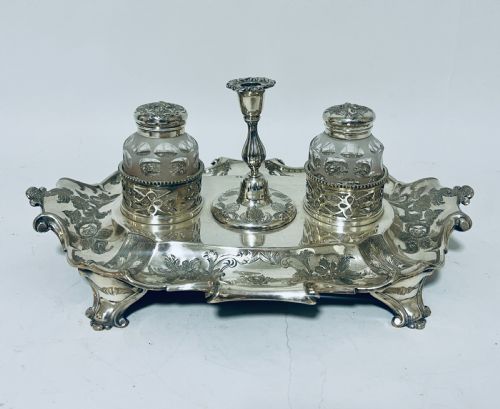


Cut Glass Desk Set
A cut glass desk set brings heavy crystal inkwells and fine metal mounts together for writing tables that demand permanence.
Cut Glass Desk Set
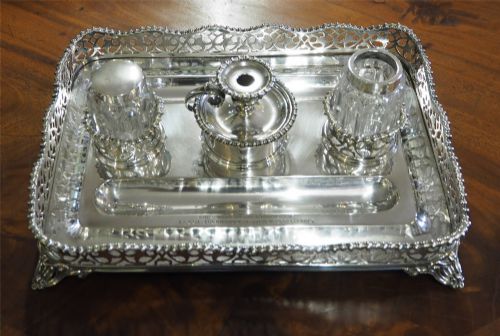
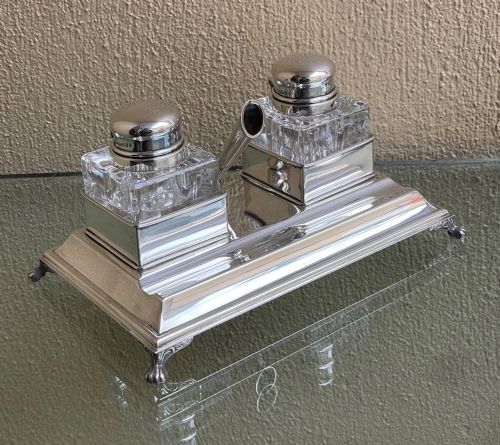
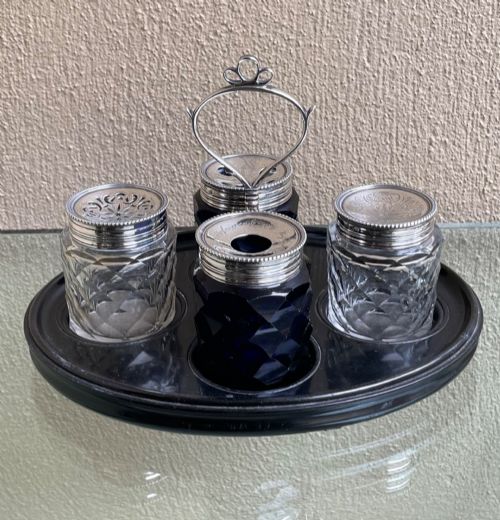
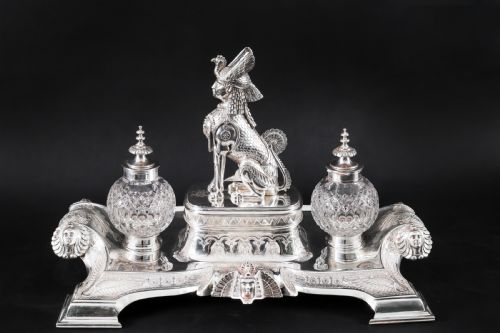
A cut glass desk set centres on heavy glass inkwells paired with a tray or stand made from wood, metal, or papier-mache, often designed to hold pens and stamps. You will frequently encounter Victorian and Edwardian examples featuring fitted cut glass bottles alongside sterling silver or silver plated mounts.
These functional desk accessories range from simple oak or walnut stands to elaborate brass, coromandel, and mahogany pieces housing glass inkwells with hinged metal lids. The form accommodates the daily writing needs of nineteenth-century studies and offices.
The selection includes specific standish designs, smoking compendiums, and multi-piece desk accessories incorporating cut glass bottles alongside pen trays and candlesticks. Surviving items span the Georgian, Victorian, and Edwardian periods.
Materials and construction
Cut glass inkwells are formed from heavy glass blanks that are wheel-cut with deep geometric patterns, producing sharp facets that catch the light. These glass vessels are then fitted with hinged sterling silver, silver plated, or brass collars and lids.
The accompanying trays utilise timbers such as coromandel, mahogany, oak, and walnut, frequently accented with brass inlay, mother of pearl, or satinwood stringing. Metal stands rely on cast brass, ormolu, or silver plating shaped into ornate frameworks.
One exceptional desk accessory takes the whimsical form of a fire carriage complete with rolling wheels.
Evaluating craftsmanship and execution
Quality rests upon the crispness of the glass cutting and the weight of the metal mounts, where deeper facets and thicker gauge silver separate superior pieces from standard production. The integration between the glass insert and its metal collar demonstrates the maker's precision.
The choice of cabinet timber and the complexity of the stand construction dictate the upper tier of the range, seen in figured coromandel or burl walnut fitted with substantial hallmarked silver mounts. Finer examples display meticulous attention to detail in the pen trays, stamp boxes, and hinges.
Wilkinson Co·James Cartland Sons·Daniel Holy
The Cut Glass Desk Set Glossary
- Cut Glass
- Glass shaped and decorated by holding the vessel against a revolving abrasive wheel to cut geometric facets. This technique creates brilliant light refraction across the inkwell surface.
- Standish
- A portable tray or stand fitted to hold writing implements, inkwells, and sanders. Such pieces formed the central writing equipment on a desk.
- Sterling Silver
- An alloy consisting of ninety-two point five percent silver by mass, with the remainder being other metals. Pieces utilise this material for hallmarked inkwell collars and mounts.
- Coromandel
- A dense, heavily figured timber imported from Asia, prized for its dark brown colour and contrasting black stripes. Cabinetmakers utilise it for luxury nineteenth-century desk stands.
- Smoking Compendium
- A fitted desk accessory combining inkwells or pen trays with matchholders, cigar cutters, or ash receptacles. These multifunctional pieces served gentlemen in Victorian studies.
Cut Glass Desk Set: Frequently Asked Questions
What is a cut glass desk set?
A cut glass desk set is a functional desk accessory comprising heavy faceted glass inkwells paired with a matching tray or stand. These pieces organise writing instruments and ink upon a desk.
They combine glass vessels with materials like silver, brass, and hardwoods such as oak and coromandel.
How do I date an inkstand?
Dating relies upon hallmarks on silver mounts, timber choices, and stylistic details such as Victorian Gothic Revival or Regency design motifs. Silver components often carry city marks and date letters.
Cabinet woods and construction methods further assist in narrowing the decade of manufacture.
How should I clean cut glass?
Clean cut glass inkwells using warm soapy water and a soft brush to remove dried ink residue from the interior corners. Avoid harsh abrasives that might scratch the surface.
Dry the glass thoroughly and polish the facets with a lint-free cloth to restore brilliance.
Were these sets used for writing?
These pieces served as the primary writing apparatus for correspondence before the invention of the fountain pen. Writers dipped steel or quill pens directly into the inkwells.
The accompanying trays held sanders for blotting wet ink and pen rests to protect the desk surface.