
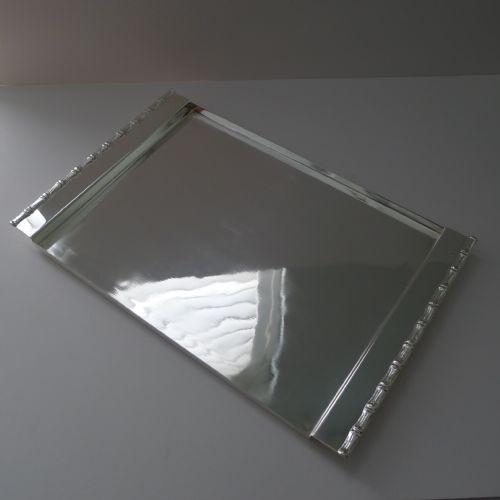
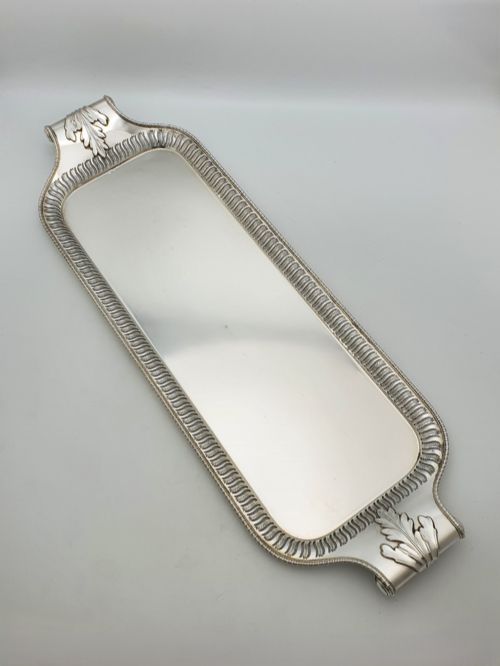
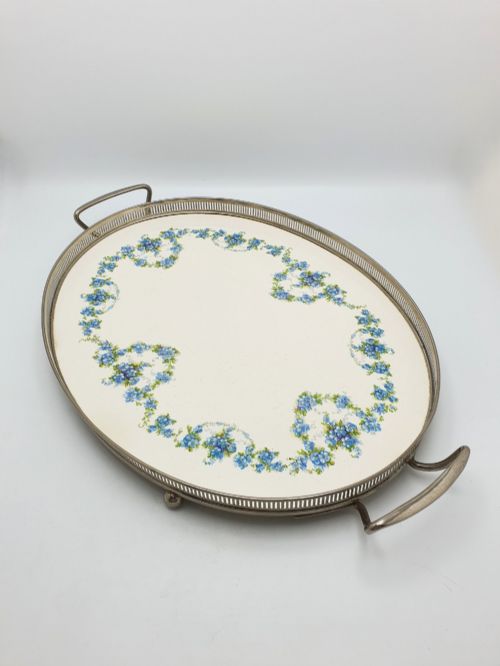


Silver Plate Vanity Tray
These silver plate vanity tray pieces bring refined surface polish and period elegance to a dressing table.
Silver Plate Vanity Tray
A silver plate vanity tray serves as an ornamental base for perfumes, brushes, and dressing table accessories. Buyers seeking a silver plate vanity tray encounter varied domestic forms ranging from compact mirror plates to large cocktail vessels.
The pieces span periods including Victorian, Edwardian, and Art Deco designs. Common configurations feature pierced borders, gallery rails, or etched mirror glass inserts.
Origins stretch across British, Continental, and mid-century Italian workshops. Forms often double as serving trays or sideboard mirror trays depending on their depth and handles.
Materials and construction
Construction relies heavily on a base metal foundation coated with a silver layer, alongside nickel silver and electroplated nickel silver. Many examples incorporate heavy mirror glass or ceramic centre panels.
Decorative details are achieved through intricate embossed scrolls, etched mirror surfaces, and applied bamboo handles. Pierced borders and gallery rails require precise metalworking and soldering techniques.
Some trays double happily as wine stations, proving Victorians took their sideboard presentation very seriously indeed.
Assessing quality and finish
Quality reveals itself in the crispness of embossed scrolls and the structural integrity of gallery rails. Superior examples maintain an even silver plate layer over the base metal without thinning.
The integration of glass or mirror inserts defines the tactile standard of the object. Heavy, unblemished mirror plate and secure mountings distinguish finer studio production from standard domestic wares.
Hukin & Heath·W M F
The Silver Plate Vanity Tray Glossary
- Silver Plate
- A base metal foundation coated with a thin layer of silver. This method allowed domestic households to own tableware and decorative items that resembled solid silver.
- Mirror Plateau
- A flat tray fitted with a mirrored glass base designed to reflect light and display glassware or dressing table items. These objects were popular centrepieces on Victorian and Edwardian sideboards.
- Gallery Tray
- A serving tray featuring an upright pierced metal gallery rim around the perimeter. The raised border prevented items from sliding off during transport.
- EPNS
- Electroplated nickel silver, a common base material used for durable metal wares. This technique became widely adopted for household goods during the nineteenth and twentieth centuries.
- Art Deco
- A design style characterised by sleek geometric lines, stylised motifs, and modern industrial materials. It dominated decorative arts during the interwar period.
Silver Plate Vanity Tray: Frequently Asked Questions
How do I clean a silver plate vanity tray?
Use a soft cloth and a gentle metal cleaner specifically formulated for silver plate. Avoid harsh abrasives that can wear away the thin silver layer.
Take care around mirrored glass inserts and ceramic centres to prevent moisture from seeping underneath the plate edging.
What is the difference between a vanity tray and a serving tray?
Vanity trays generally feature mirror glass bases designed for dressing table accessories like perfume bottles. Serving trays focus on metal or ceramic surfaces intended for food and drink presentation.
Many period items cross categories, functioning equally well as cocktail trays or sideboard display pieces.
How can I date an Edwardian silver plate tray?
Examine the style of decoration, such as pierced borders or floral embossing typical of the early twentieth century. Hallmarks and maker stamps on the underside also provide production eras.
Materials like nickel silver and EPNS frequently point toward manufacturing standards of the Edwardian period.
Are these trays suitable for everyday use?
Most pieces handle daily domestic placement of dry items without issue. Protective felt pads underneath help prevent surface scratching on furniture.
Avoid exposing vintage mirror glass and plated joints to prolonged moisture or chemical sprays to preserve the finish.