


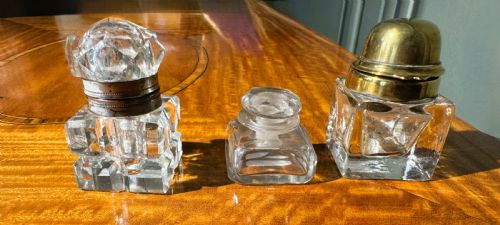


Cut Glass Desk Inkwell
A cut glass desk inkwell brings heavy, light-catching clarity to the writing desk.

Cut Glass Desk Inkwell
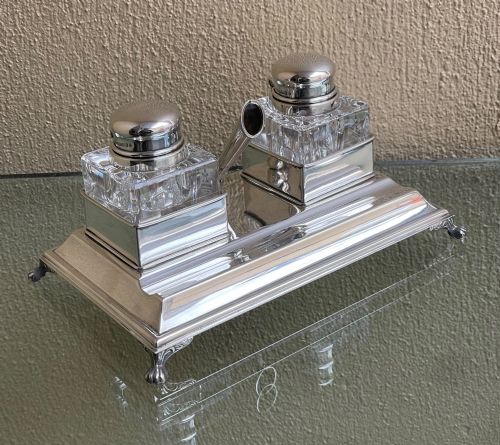
A cut glass desk inkwell combines thick, heavy glass reservoirs with fitted metal or wooden mounts designed to hold liquid ink securely in place. These items serve as functional writing accessories and decorative centrepieces for nineteenth and early twentieth-century desks.
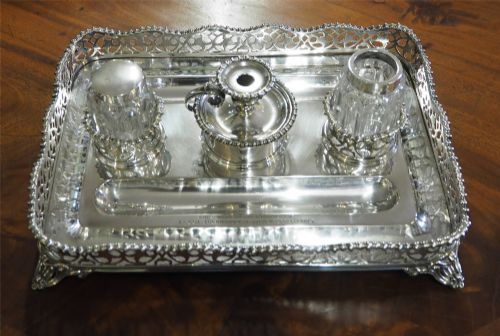
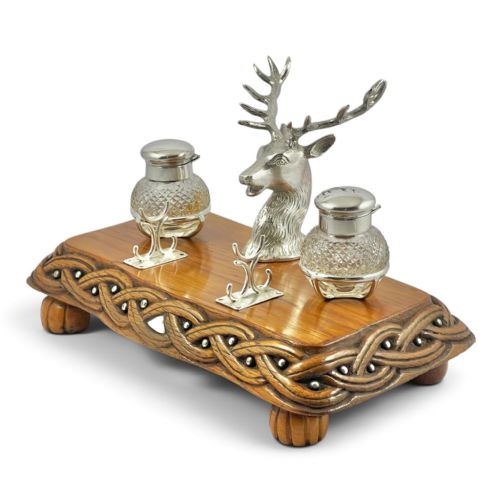
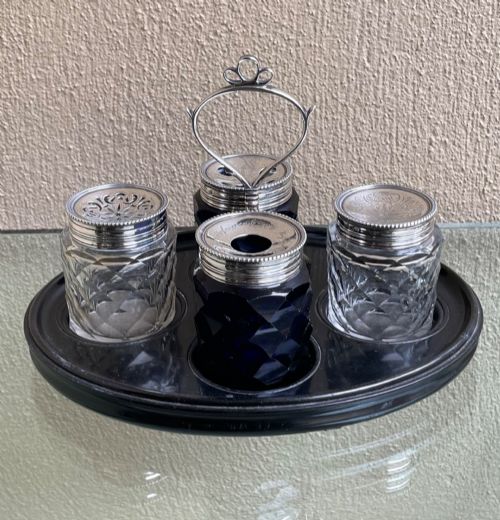
The pieces seen here range from simple single glass pots to elaborate multi-piece inkstands framed in sterling silver, brass, and exotic woods like coromandel and oak. The variant most commonly met is the Victorian or Edwardian cut glass inkwell mounted in silver plate or brass.
Makers paired heavy facet-cut crystal or glass bodies with hinged lids to prevent evaporation and spills during daily correspondence. The phrase encompasses both standalone vessels and larger desk stands holding matching ink pots.
What varies in quality
Quality rests upon the crispness of the glass cutting and the weight of the metal components used in the mounts and lids. Deeper, sharper facets and heavier gauge silver or brass distinguish finer workshop production from simpler moulded glass wares.
The integration between the glass reservoir and its metal collar dictates the overall execution. Superior pieces feature heavy hinged lids that close flush with precisely fitted bezels, whilst simpler examples rely on basic press-moulded glass and lighter plated fittings.
Cut Glass Desk Inkwell Retail Price Guide 2026
Typical asking prices for cut glass desk inkwell among the pieces listed under this phrase on Sellingantiques today, from the lower quarter to the upper quarter. They describe what is for sale here now, not the wider market.
A brass lizard climbs the side of one Victorian desk stand, keeping a permanent, unblinking watch over the ink.
Elkington·Wilkinson & Co·Tiffany & Co·James Cartland & Sons·W M F·Daniel Holy of Sheffield·William Hutton·Frederik Haberling
The Cut Glass Desk Inkwell Glossary
- Inkstand
- A complete desk tray holding inkwells, pen rests, and sometimes a sander or bell. It anchors the writing apparatus on the surface of the desk.
- Cut crystal
- High-lead glass that is deeply faceted to increase brilliance and weight. This material provides the substantial feel expected in better desk accessories.
- Sterling silver
- An alloy containing ninety-two point five per cent silver, used for hallmarked lids and mounts. It adds monetary and decorative weight to the glass body.
- Sheffield plate
- An early form of fused silver sheet over a copper base, common on Georgian and early nineteenth-century stands. It shows a warm metallic lustre as the copper subtly shows through high points.
- Bezel
- The metal collar or ring into which the hinged lid fits securely. A tight bezel keeps the ink from drying out prematurely.
Cut Glass Desk Inkwell: Frequently Asked Questions
How do I clean an old inkwell?
Warm water and a soft bottle brush remove dried ink residue safely from the interior without scratching the heavy glass surface.
Harsh chemical solvents and abrasive scourers must be avoided to protect antique metal collars and sterling silver hallmarks.
Are these inkwells safe for modern ink?
Most antique glass reservoirs hold modern fountain pen inks securely for daily writing use on a desk.
Checking the cork or washer lining inside the metal lid ensures the seal remains tight enough to prevent leaks.
How do I tell Victorian from Edwardian pieces?
Victorian examples often display heavier ornamentation, gothic revival motifs, or robust brass mountings typical of the nineteenth century.
Edwardian pieces tend toward lighter, brighter silver mounts and refined cut crystal reflecting changing aesthetic tastes after nineteen hundred.
What is the difference between an inkwell and an inkstand?
An inkwell is a single standalone vessel designed strictly to hold a supply of liquid writing ink.
An inkstand is a larger desk tray that incorporates one or more inkwells alongside dedicated rests for dip pens.