


Cut Glass Cruet Stand
A cut glass cruet stand brings symmetry and polish to a dining table, holding bottles and casters ready for service.

Cut Glass Cruet Stand
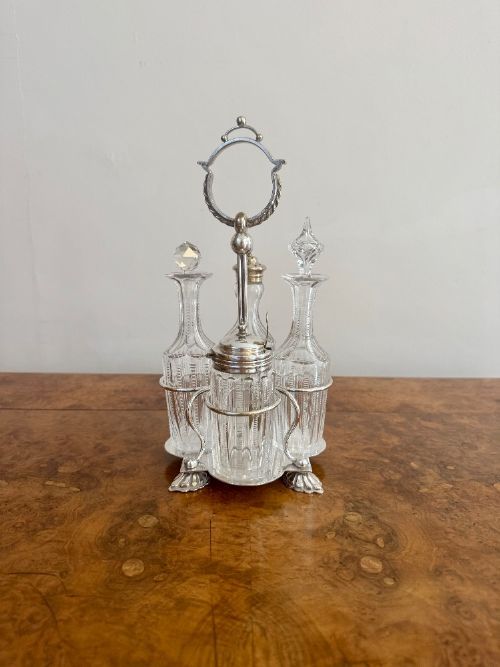
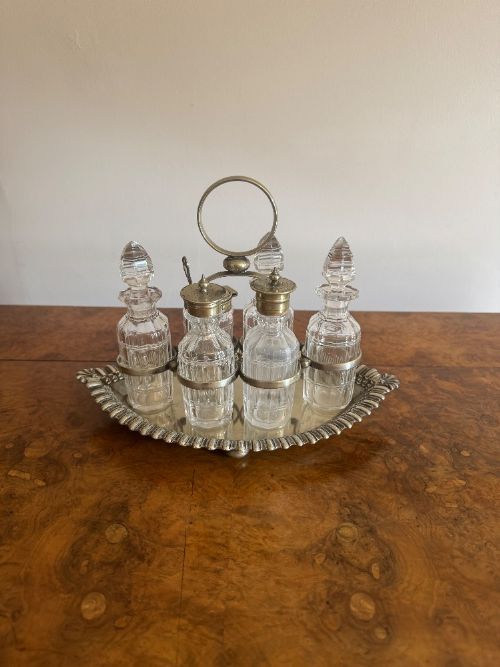
A cut glass cruet stand serves as a tabletop frame designed to hold condiment bottles and casters securely together for dining service. When searching for a cut glass cruet stand, buyers encounter pieces spanning the Georgian, Victorian, and Edwardian periods, alongside Art Deco examples.
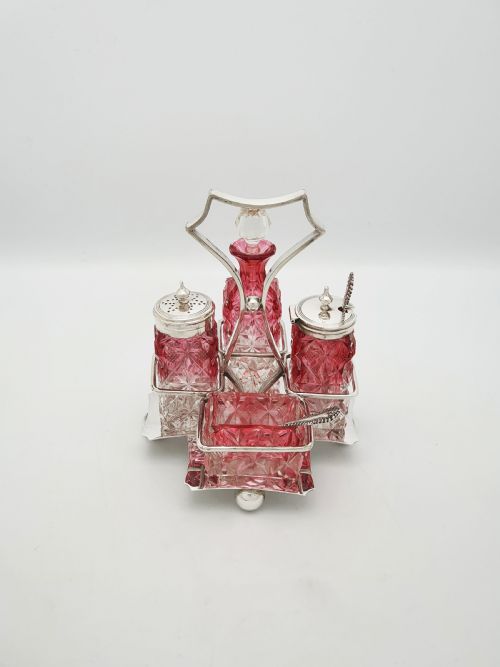
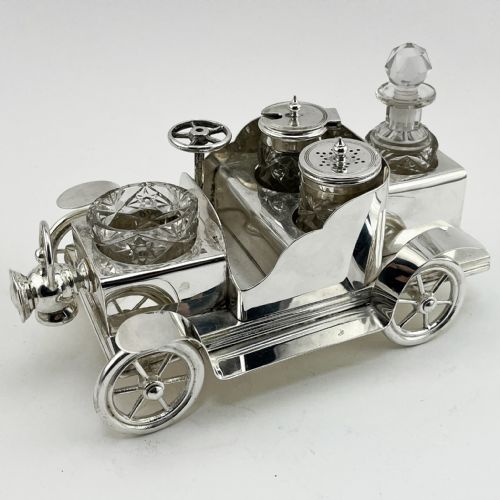
The objects appear in various formats, ranging from bachelor sets holding fewer bottles to large multi-bottle frames and novelty designs shaped like cars or carriages. Most examples combine glass containers with metal stands, originating from workshops operating across the eighteenth, nineteenth, and early twentieth centuries.
Materials and Construction
Makers shaped the vessels from clear glass, lead crystal, or cranberry glass, applying hand-cut facets to catch the light on the dining table. Frames combined sterling silver, Old Sheffield plate, or silver plate over a base metal, often fitted with carrying handles.
Craftspeople assembled the frames using cast and soldered components, pairing pierced or ornate metal galleries with fitted glass bottles and silver-mounted stoppers.
Assessing Quality and Execution
Quality rests in the precision of the glass cutting, the weight of the metal framework, and the harmony between the bottles and the stand. Finer pieces display crisp hand-cut facets on heavy crystal and substantial silver or silver-plated mounts with detailed casting.
The presence of matching original bottles and stoppers elevates an example, as does the integration of a sturdy, well-balanced frame that securely houses every component.
Mappin Brothers·Walker & Hall·Charles Thomas Fox·Elkington & Co·Hester Bateman·William Hutton & Sons·Heath And Middleton
The Cut Glass Cruet Stand Glossary
- Cruet stand
- A frame or stand designed to hold a set of condiment bottles, oil and vinegar cruets, or mustard pots.
- Cranberry glass
- A rich red glass produced by adding gold chloride to the molten batch during manufacturing.
- Old Sheffield plate
- A composite material formed by fusing a sheet of silver to a copper ingot, common in earlier pieces.
- Lead crystal
- Glass containing lead oxide, known for high refractive index and weight, suitable for deep hand-cutting.
Cut Glass Cruet Stand: Frequently Asked Questions
How do I date a cruet stand?
Dating relies on stylistic markers, hallmarks on silver elements, and manufacturing techniques visible in the frame and glass. Georgian and Victorian pieces carry distinct design motifs and structural traits.
Examining the depth of the glass cutting and the plating method on metal parts helps narrow down the period of production between the eighteenth and twentieth centuries.
Were these stands used daily?
Dining rooms of the Georgian and Victorian eras relied on these sets to keep oils, vinegars, and condiments within reach during formal meals. Servants placed them centrally on the table for guests.
Over time, changing dining habits shifted their role from active service pieces to decorative table accessories.
How should I clean the glass?
Washing glass bottles in warm soapy water with a soft brush preserves the surface. Harsh abrasives can scratch the clear material.
Careful drying prevents water spots on both the cut glass and any silver-mounted collars.