
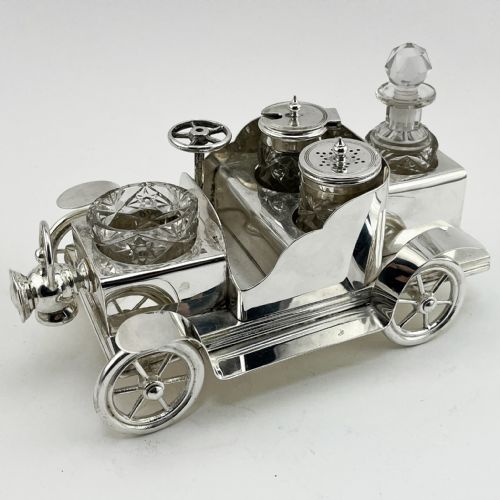


Cut Glass Cruet Set
A cut glass cruet set brings the formal dining table of the past together, holding oil, vinegar, and sauces within structured metal frames.

Cut Glass Cruet Set
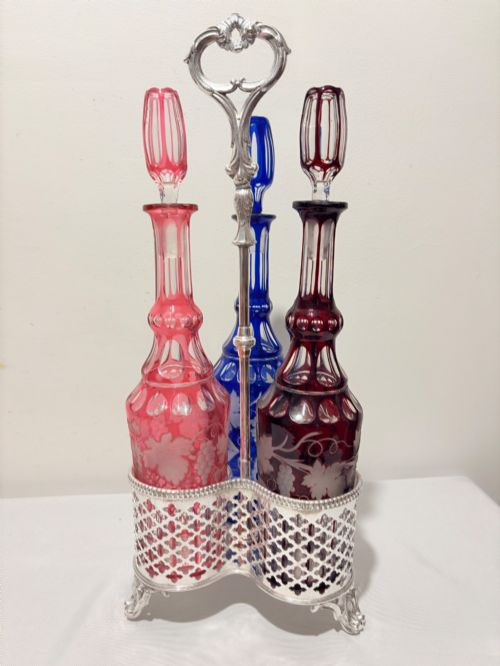
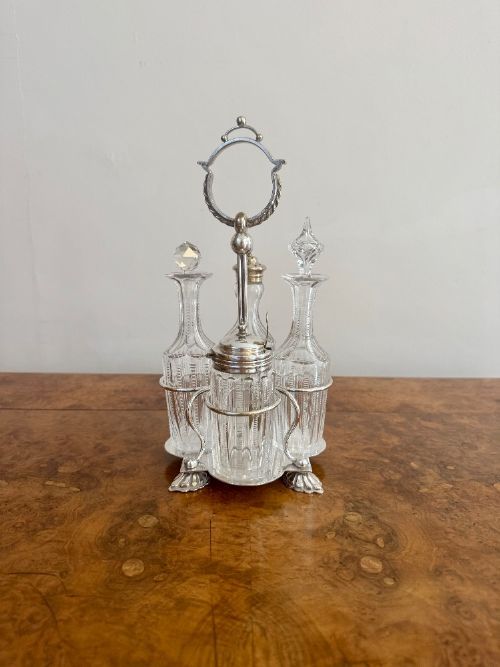
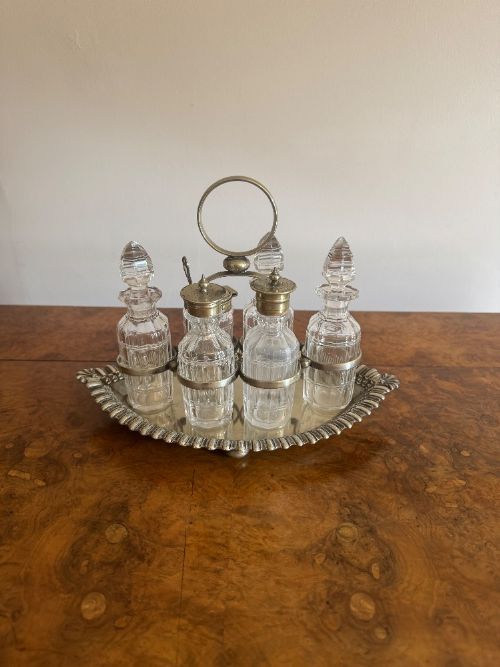
A cut glass cruet set comprises a collection of glass bottles or decanters fitted into a supporting stand, designed for the dining table. The most frequent examples found in these records hail from the Victorian and Edwardian eras, constructed with silver plate frames and cut glass bottles.
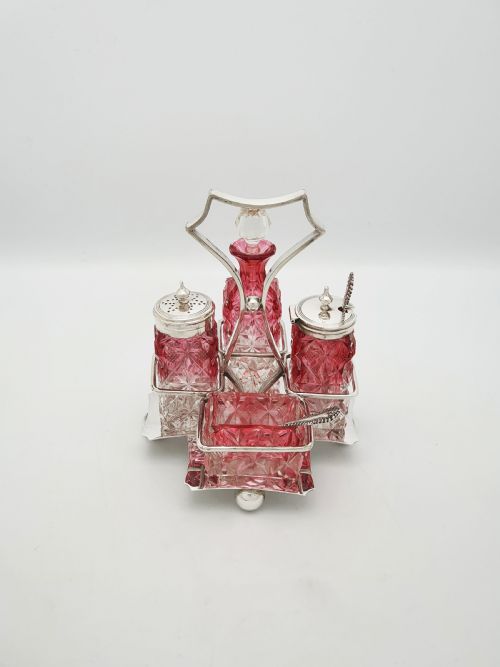
Beyond standard dining table configurations, the evidence includes smaller bachelor sets for fewer bottles, carriage or car variants, and larger Georgian pieces holding up to seven or eight items. Condiment sets and stands appear alongside traditional frames, offering varied arrangements for oil, vinegar, salt, and pepper.
Materials and Construction
The bottles are shaped from cut glass, crystal, lead crystal, or cranberry glass, displaying precise facets and geometric patterns that catch the light. These glass vessels sit within frames formed from sterling silver, Old Sheffield plate, or silver plate.
Stands incorporate handles and feet cast or soldered onto the metal framework, often holding mounts that match the silver collars or stoppers on the glass bottles. Ebonised wood occasionally appears for the stands during the Georgian period, paired with silver mounted glass.
The archive demonstrates configurations ranging from compact three-bottle decanter cruets up to grand seven and eight-bottle table stands.
Evaluating Distinction and Craft
Quality rests upon the depth and clarity of the glass cutting alongside the weight and finish of the metal stand. Finer pieces display crisp, sharp facets on the glass bottles and substantial silver plating or solid silver frames with intricate cast detailing.
Completeness dictates much of the standing; sets retaining their original matching bottles and matching stoppers sit above those assembled from mismatched parts over time. Maker attribution also separates standard domestic items from workshops known for high-grade silver and plate work.
Mappin Brothers·Walker & Hall·Charles Thomas Fox·Elkington & Co·Wade Wingfield Wilkins·William Hutton & Sons·Heath and Middleton
The Cut Glass Cruet Set Glossary
- Bachelor set
- A smaller scale cruet set intended for fewer bottles, designed for intimate dining or individual use. These compact arrangements frequently appear in Edwardian silver plate.
- Old Sheffield plate
- An early method of fusing a thin sheet of sterling silver to a thicker copper base before rolling into sheets. This technique is observed in eighteenth and nineteenth-century pieces.
- Cranberry glass
- A rich red glass created by adding gold chloride to the molten batch. It is seen flashed or cut across Edwardian and Victorian cruet bottles.
Cut Glass Cruet Set: Frequently Asked Questions
What is a cut glass cruet set?
A cut glass cruet set is a collection of small glass bottles designed to hold table condiments like oil, vinegar, and sauces, all arranged inside a supportive metal frame.
These sets were essential dining table accessories through the Georgian, Victorian, and Edwardian periods, combining functional storage with decorative display.
How were cruet sets used?
They were placed at the centre of the dining table during meals so guests could season their food with oils, vinegars, and sauces to taste.
Larger versions remained stationary on the dining board, while smaller bachelor or carriage formats were brought out for specific travel or intimate settings.
How do I care for silver plate and cut glass?
Silver plate frames require gentle cleaning with a specialised silver cloth to preserve the plating without abrasion. The cut glass bottles should be washed in warm soapy water using a bottle brush to clear old residue from the narrow necks.
How can I tell the period of a cruet set?
The period is often indicated by the style of the metal frame, hallmarks on the silver components, and manufacturing techniques like Old Sheffield plating. Georgian pieces tend to feature heavy fitted silver frames, whereas Edwardian examples frequently utilise bright silver plate and delicate cut glass.