


Cut Glass Cruet Bottle
A cut glass cruet bottle holds oil, vinegar or condiments at the dining table, combining practical glasswork with decorative metal mounts.
Cut Glass Cruet Bottle
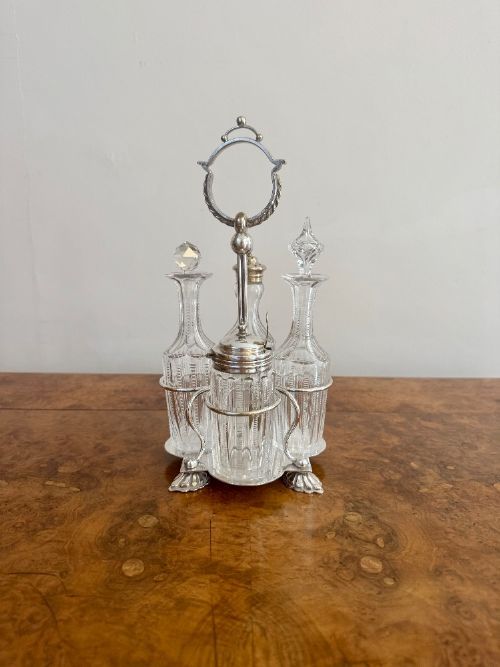
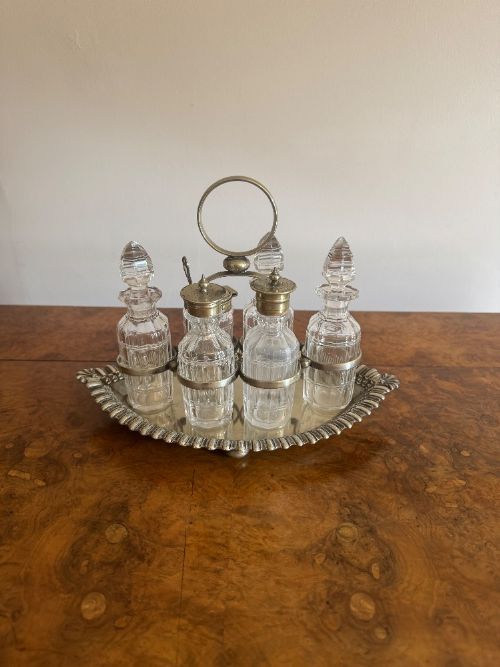
A cut glass cruet bottle is a small vessel designed to dispense table seasonings, most frequently encountered here as part of multi-bottle condiment sets or mounted in frames dating from the Georgian, Victorian and Edwardian periods. These bottles range from single oil and vinegar vessels to multi-piece arrangements housed in silver plate, sterling silver or Old Sheffield Plate stands.
The pieces appearing on this page span several stylistic eras, including Grand Regency, Victorian Gothic, Edwardian and Art Deco designs. Buyers will find individual oil and vinegar bottles alongside complete cruet sets containing anywhere from three to eight glass bottles fitted with silver mounts or stoppers.
What varies in quality
Quality in a cut glass cruet bottle rests upon the crispness and depth of the glass cutting, alongside the weight and clarity of the crystal material itself. Superior examples display sharp facets without chips, balanced proportions and heavier metal mounts.
The standard of the silver plating or the purity of the solid silver mounts also differentiates standard utility items from luxury dining wares, as does the survival of matching original stoppers and complete accompanying stands.
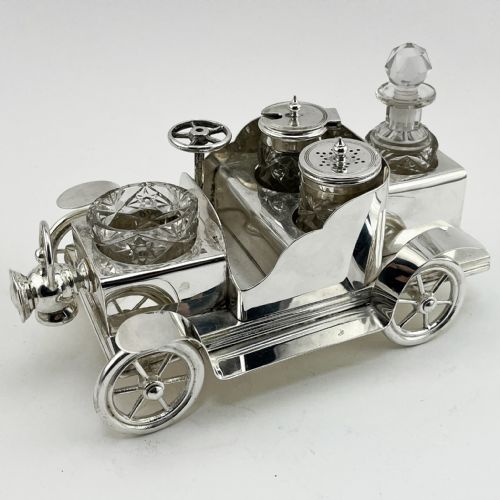
One remarkably niche automotive-themed creation reimagines the traditional dining accessory as a vintage car cruet set.
Walker & Hall·Charles Thomas Fox·Elkington & Co·Wade Wingfield Wilkins·Hester Bateman
The Cut Glass Cruet Bottle Glossary
- Cruet set
- A matched collection of glass bottles and jars held in a metal frame for holding table condiments such as oil, vinegar, mustard, salt and pepper.
- Old Sheffield plate
- A composite material made by fusing a thin sheet of silver to a copper base, utilised in Georgian and early Victorian metalware before electroplating.
- Lead crystal
- A type of glass containing lead oxide that increases weight, brilliance and refractive index, making it ideal for deep hand cutting.
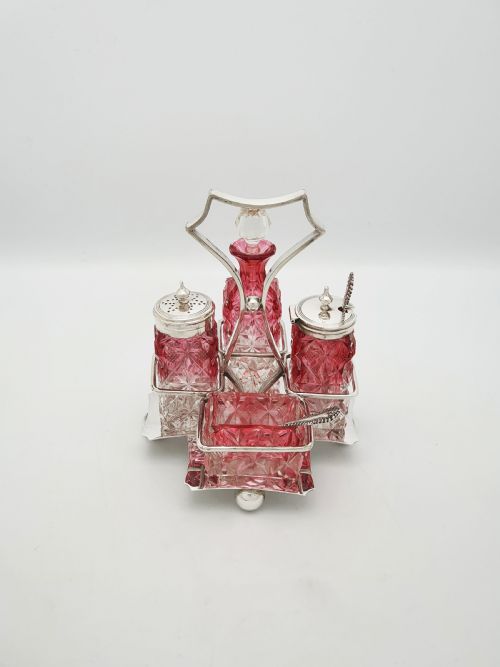
- Cranberry glass
- A rich red glass coloured with gold chloride, popular in Victorian decorative tablewares and glassware accessories.
- Cast mount
- A metal collar or fixture formed by pouring molten silver into a mould to create decorative borders and secure the glass bottle neck.
Cut Glass Cruet Bottle: Frequently Asked Questions
How do I clean an antique cruet bottle?
Wash the glass gently in warm soapy water using a soft bottle brush to protect any delicate cut facets and aged interior residue. Avoid submerging metal mounts for extended periods to preserve silver plate and soldered joints.
Dry the glass thoroughly with a lint-free cloth and polish silver elements separately with a suitable non-abrasive cloth to maintain the finish.
Were these bottles used for oil and vinegar?
Many larger bottles fitted with pourers served specifically for oil and vinegar dressings at the dining table during formal meals. Smaller bottles within the same set held dry condiments like mustard, pepper or specialty sauces.
Sets varied in bottle count depending on the dining customs of the Georgian, Victorian or Edwardian eras.
How can I tell the period of a cruet?
Examine the style of the metal frame, hallmarks on the silver elements, and the manufacturing technique of the glass body. Georgian pieces typically feature simpler hand-cut lines and heavier frames, while Edwardian examples often showcase lighter silver plate and elaborate floral or geometric cutting.
Matching hallmarks to official records provides a precise date for solid silver mounts and stands.
Can I use these bottles on my dining table?
These antique bottles remain entirely functional for serving oils, vinegars or dressings during modern meals provided the glass and stoppers are intact. Check the interior for any stubborn historic staining before filling them with liquids.
Hand washing is essential to protect both the old glass and any delicate silver-plated mounts from deterioration.