




Cut Glass Caster
A cut glass caster delivers fine dining history to the modern table, combining heavy crystal bodies with pierced metal tops for sugar or spices.
Cut Glass Caster
When you search for a cut glass caster, you encounter versatile table vessels created to dispense sugar, mustard, pepper, or salt during formal meals. These objects range from standalone single shakers to individual bottles housed within larger cruet sets and stands.
The selections available span multiple eras, encompassing 18th-century screw-foot designs, robust Georgian and Victorian silver-mounted vessels, and streamlined Art Deco silhouettes. Most examples unite faceted glass bodies with pierced silver, silver-plated, or pewter tops designed for controlled sprinkling.
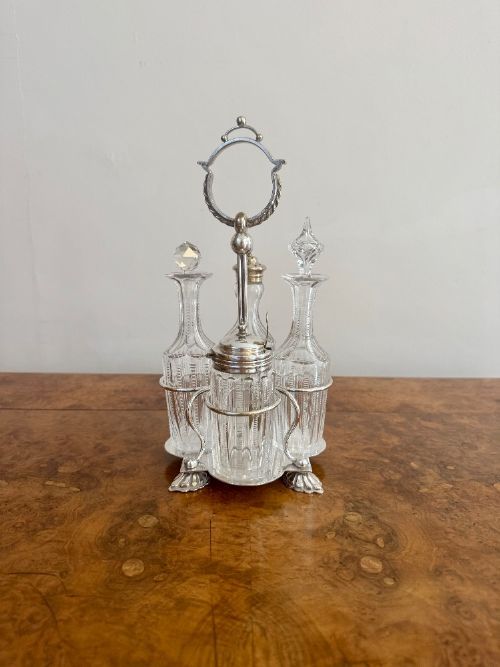
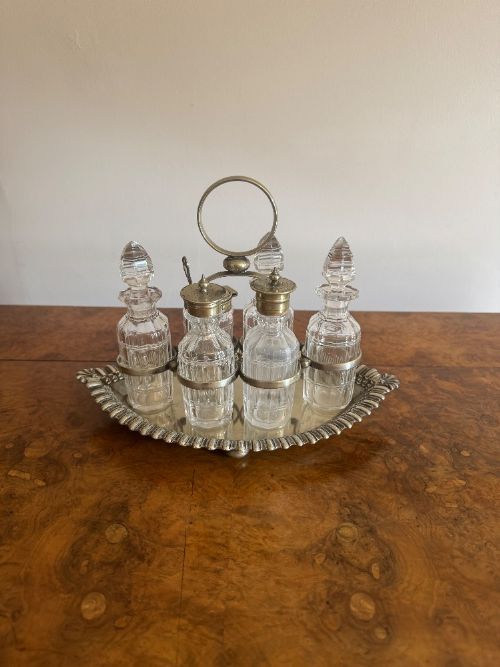
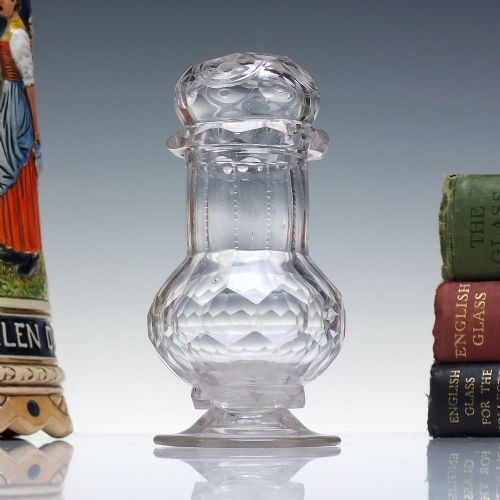
Standout forms include tall lighthouse sugar sifters, multi-bottle condiment frames, and whimsical novelty cruet sets shaped like figures or trays. These pieces reflect formal dining traditions where guests seasoned dishes at the table using matching sets of glass and metalware.
How they were made
Makers produced the glass components using lead crystal or flint glass, shaped by blowing into moulds or pressing molten metal before cutting deep geometric patterns by hand. These facets scatter light and provide a secure grip when handling the vessel at the table.
Metal components, including screw-on tops, collars, and stands, typically consist of sterling silver or silver plate over a base metal, often shaped using stamping, spinning, or casting techniques. Artisans then pierced the metal lids with intricate floral or geometric patterns to allow the contents to sift evenly.
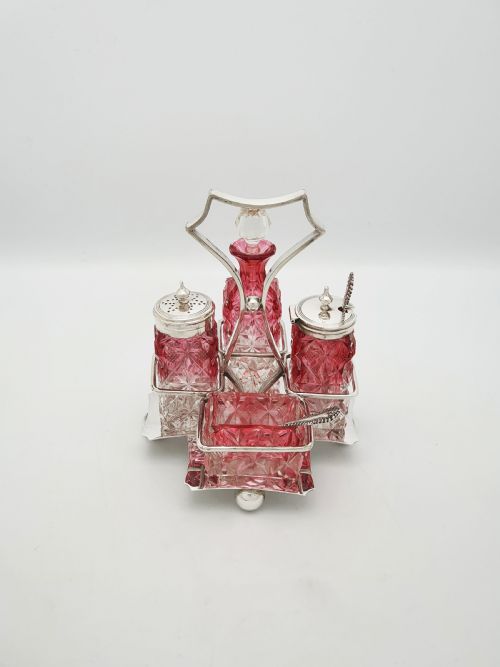
Materials recorded across the archive include cranberry glass, lead crystal, sterling silver, and silver plate.
What varies in quality
Quality reveals itself in the crispness of the glass cutting and the weight of the metal mountings, where deeper facets and heavier gauge silver indicate superior craftsmanship. Finer examples retain tight, original threads on their screw-on caps and feature fully legible hallmarking on the silver components.
The overall harmony of the set dictates desirability, particularly in multi-bottle cruet frames where matching glass bottles must fit snugly into their dedicated silver-plated or ebonised wooden stands without wobble or mismatch.
Mappin Brothers·Walker & Hall·Charles Thomas Fox·Elkington & Co·Preece & Willicombe
The Cut Glass Caster Glossary
- Cruet set
- A matched collection of glass bottles and jars holding condiments like oil, vinegar, pepper, and mustard, housed within a portable metal or wooden frame.
- Sugar caster
- A tall container with a pierced dome top used for sprinkling castor sugar over desserts, pastries, or fruit.
- Silver plate
- A manufacturing method where a thin layer of pure silver is fused to a base metal such as copper or Britannia metal, popularised during the 19th century.
- Lead crystal
- A high-clarity glass containing metal oxide that increases weight, brilliance, and the depth achievable through wheel-cutting.
- Sifter
- An alternative term for a caster, describing a vessel with a perforated lid designed to prevent lumps from reaching the plate.
Cut Glass Caster: Frequently Asked Questions
How do I clean an antique glass caster?
Wash the glass body gently in warm soapy water using a soft bottle brush to remove old residue without scratching the surface. Keep silver-plated or sterling metal tops away from harsh abrasives and dry them thoroughly immediately after washing.
Avoid submerging capped glass vessels if the cement or cork lining inside the metal screw top has aged. Gentle spot-cleaning preserves the original patina on both the crystal facets and the historic metalwork.
What is the difference between a caster and a shaker?
A caster traditionally refers to a taller, footed vessel with a secure screw-on pierced top intended specifically for fine sugar. Shakers often describe shorter, wider condiment pots meant for salt or pepper.
Many antique sets use these terms interchangeably, but historical sugar sifters tend to feature more elaborate finials and taller profiles suited to pastry service.
How do I date an unmarked silver-plated caster?
Examine the style of the glass cutting, the shape of the metal mounts, and the manufacturing technique used on the base frame. Edwardian and Victorian pieces often display distinct aesthetic traits like cranberry flashing or heavily stamped novelty stands.
Maker's marks or registration numbers stamped onto the metal plating provide the most reliable clues for narrowing down the decade of production.
Can I still use these for dining today?
Many antique glass casters function perfectly for serving fine sugars, dried herbs, or specialty salts at modern dinner tables. Ensure the interior is completely clean and check that any metal components show no signs of degrading plate before adding food.
Hand washing remains essential to protect fragile glass and historic silver plating from the harsh detergents used in modern dishwashers.