


.JPG)
London Silver Sifter
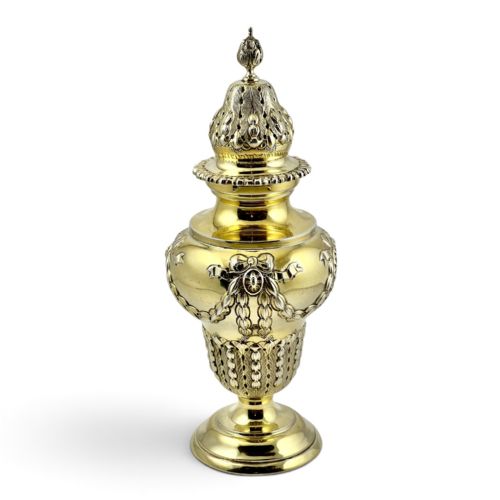
A London silver sifter brings elegance to the table, taking the form of castors, dredgers, and pierced spoons designed for dusting sugar.
London Silver Sifter
When searching for a london silver sifter, you encounter pieces spanning the Georgian, Victorian, and Edwardian periods, alongside later twentieth-century examples. The selection encompasses individual sugar casters, muffleiners, and dedicated sifter spoons designed for tea and dessert service.
You are most likely to meet silver spoons and upright castors bearing hallmarks from London workshops, often accompanied by matching sugar bowls or fitted glass liners. Forms range from classical Georgian silhouettes to ornate Victorian cornucopia designs and geometric Art Deco shapes.
How they were made
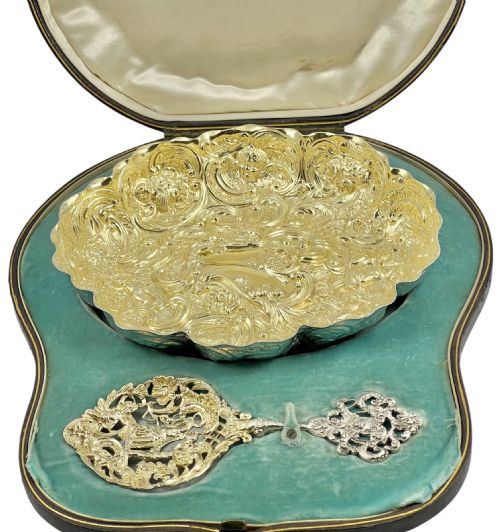
These items rely on sterling silver and silver gilt, frequently paired with cut glass or blue glass liners. Goldsmiths shaped the metal through casting and hammering, while spoons often feature pierced bowls for scattering sugar evenly.
Makers utilised techniques such as etching on glass bodies and gilding interior surfaces for decorative contrast. Hallmarks stamped directly into the metal record the assay office and year of production in London.
Some Victorian casters take the shape of a cornucopia, bringing an abundance of mythological flair straight to the afternoon tea table.
What varies in quality
The distinction between standard items and superior examples lies in the crispness of the piercing on spoon bowls and caster lids. Heavier gauge silver provides a more substantial feel in the hand, while refined chasing and well-defined maker marks elevate a piece.
Design ambition separates basic utility wares from exceptional decorative objects, such as cornucopia or lighthouse forms. The integration of quality cut glass and secure silver fittings further distinguishes the better pieces.
STEPHEN ADAMS·Horace Woodward & CO LTD·Preece & Willicombe·Berthold Muller Hanau·John Lambe·Richard Crossley·Chawner & Co·J & A SAVORY·Mappin & Webb·GEORGE UNITE·Haseler Brothers·WILLIAM HUTTON AND SONS
The London Silver Sifter Glossary
- Sifter spoon
- A spoon with a pierced bowl used for sprinkling sugar over food. These appear frequently alongside caster sets.
- Caster
- A small container with a perforated lid for sprinkling sugar or spices. They often take a pear or lighthouse shape.
- Muffineer
- An alternative term for a sugar caster or dredger. It was traditionally used at the breakfast or tea table for muffins.
- Silver-gilt
- Sterling silver that has been coated with a thin layer of gold on the surface. This technique provides a rich yellow sheen.
- Incuse duty mark
- A monarch's head hallmark stamped into the metal in relief rather than raised. This specific mark helps date Georgian silver accurately.
London Silver Sifter: Frequently Asked Questions
What is a london silver sifter used for?
These pieces were created for dispensing fine sugar over fruit, desserts, or pastries at the dining table. The pierced bowls and perforated lids allowed diners to scatter sugar evenly without clumping.
Over time, they became staple accessories for tea service and formal dining. Today, collectors value them both as functional tableware and as examples of period silversmithing.
How do I identify a Georgian sifter?
Georgian pieces display the restrained classical lines typical of the eighteenth and early nineteenth centuries. Look for crisp hallmarks, simpler pierced patterns on spoons, and hallmarks that include duty marks for the reigning monarch.
Later Victorian and Edwardian examples often adopted more exuberant styles, such as rococo revival or cornucopia motifs. Comparing the decorative weight and hallmark date letters clarifies the exact era.
Can I use antique silver sifters daily?
Sterling silver handles regular use well provided it is washed by hand with mild soap and dried promptly. Avoid abrasive cleaners that can wear away crisp engraving or delicate piercing on the metal.
Pieces incorporating glass liners or velvet cases require extra care during cleaning. Storing them properly prevents tarnish from building up too quickly between uses.