
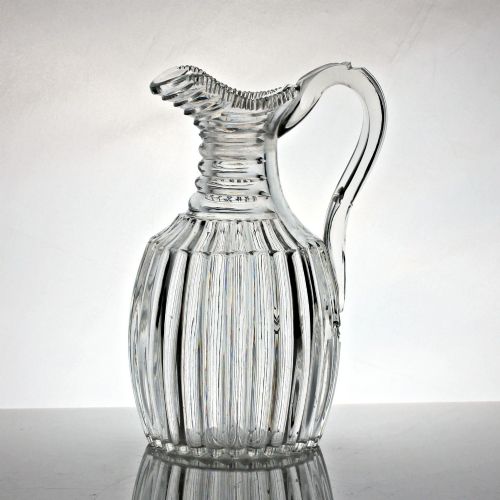
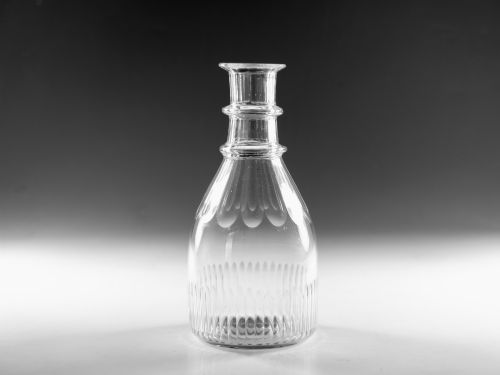
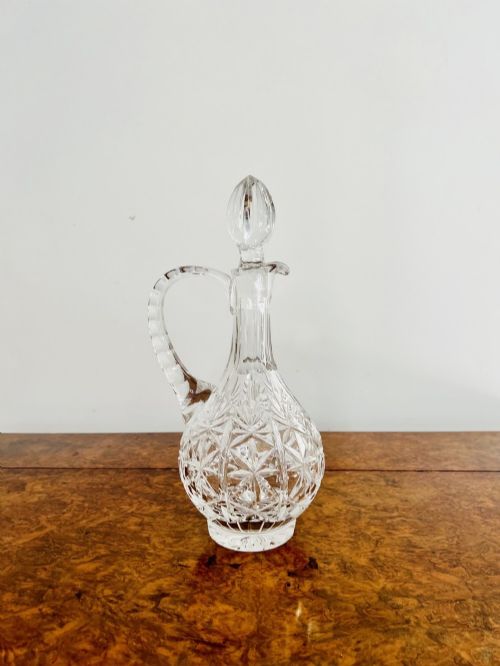
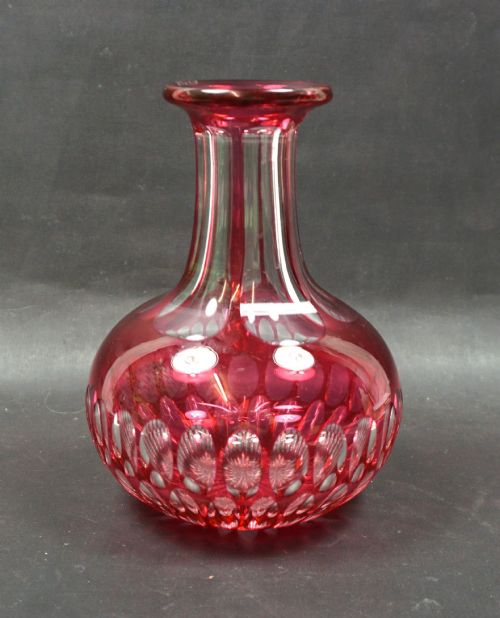
Cut Crystal Wine Carafe
A cut crystal wine carafe brings bright refraction and weight to the table, uniting practical service with decorative depth.
Cut Crystal Wine Carafe
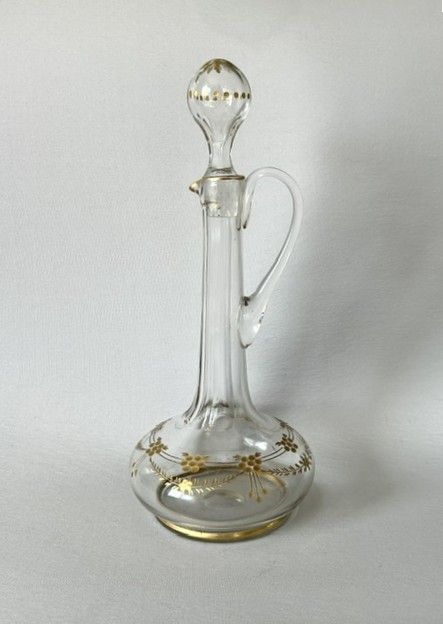
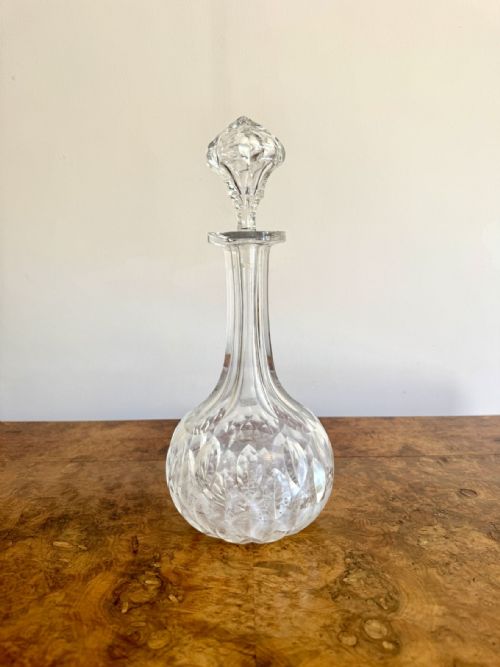
When you search for a cut crystal wine carafe, you encounter heavily faceted vessels designed to hold and aerate wine.
The pieces appearing on this page span Georgian, Victorian, Regency, and Edwardian periods, alongside styles such as Bohemian.
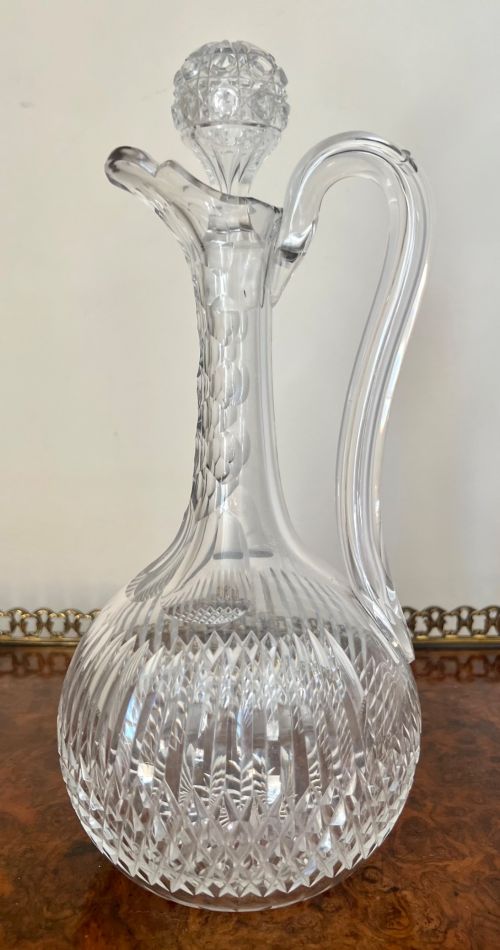
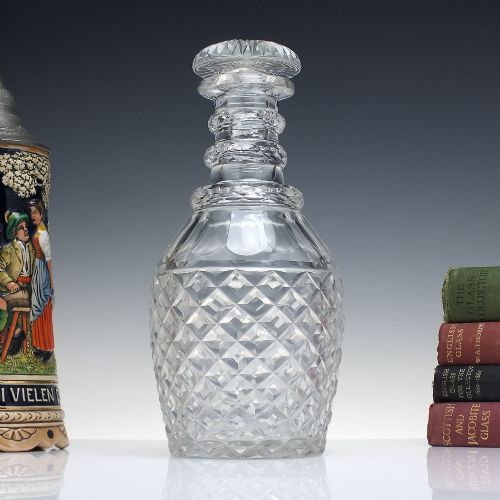
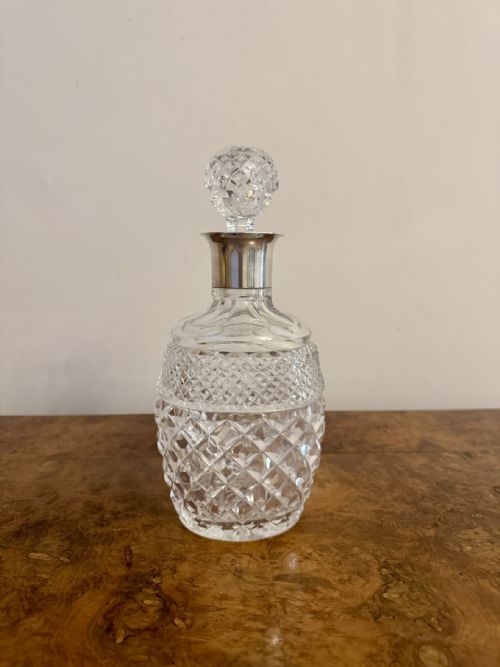
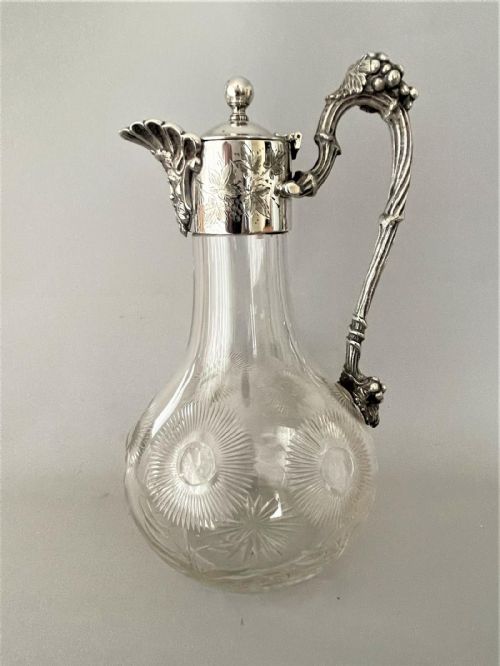
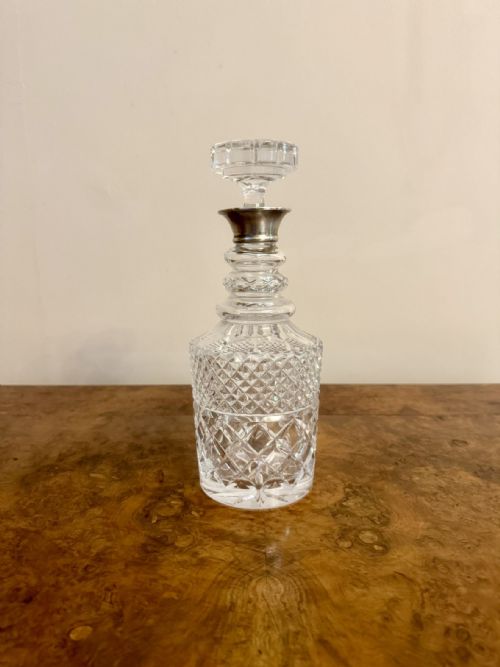
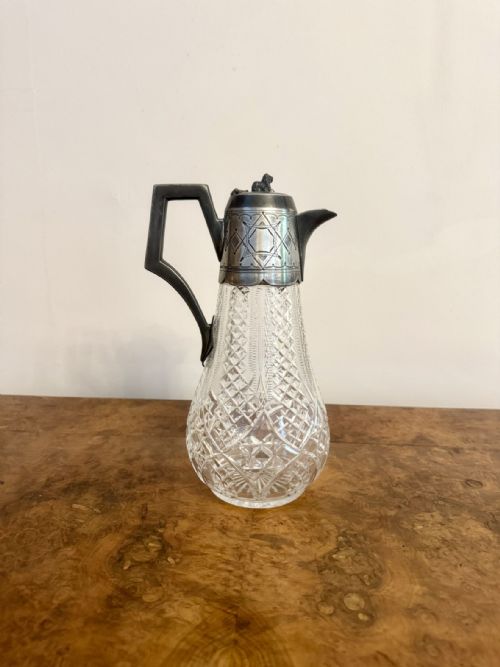
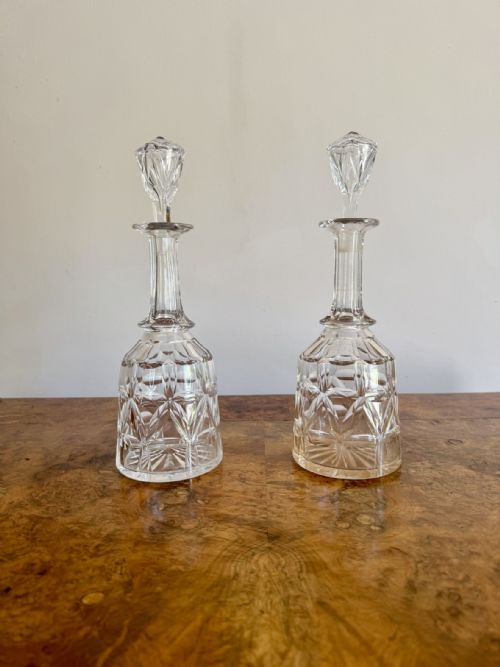
Forms include traditional decanters, claret jugs, bell-shaped vessels, and ewers, often paired with silver plate or sterling silver collars.
Materials and cutting techniques
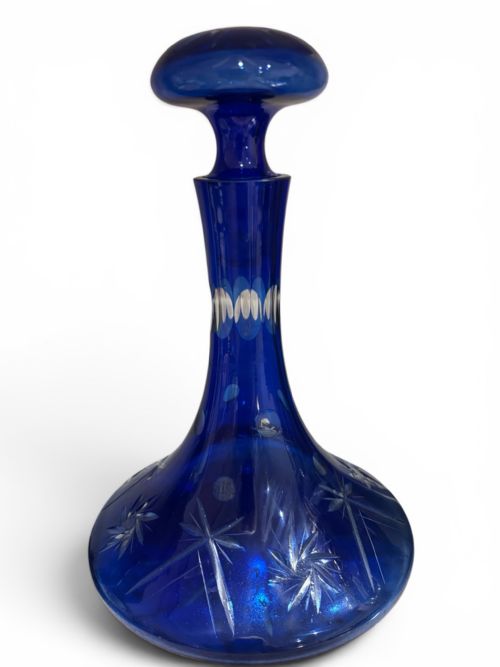
Master craftsmen shaped these vessels using clear glass, lead crystal, and cut crystal, occasionally incorporating cranberry or cobalt overlays.
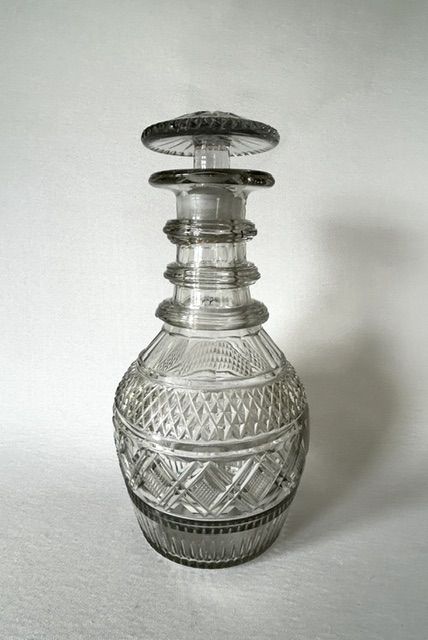
Deep wheel-cut facets, pillar and prism patterns, and engraved decorations define the surface texture and catch the light.
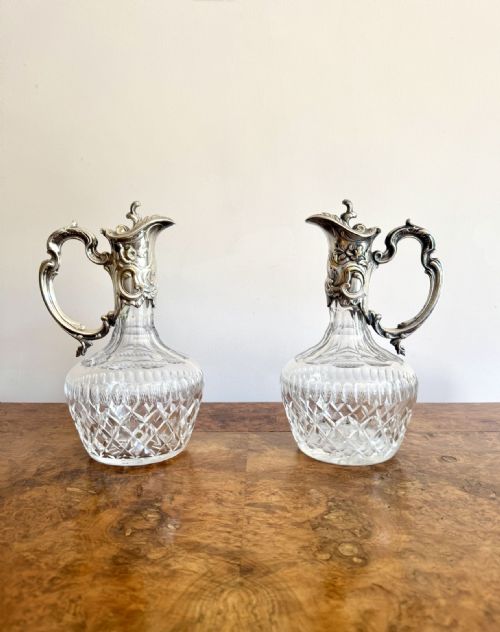
Mounts of sterling silver and silver plate provide fitted collars and handles on select Victorian and Edwardian examples.
Ship's decanters wear wide flared skirts so they stay upright when the dining room floor rolls beneath the waves.
Judging depth and execution
The sharpness and precision of the wheel-cut facets separate superior examples from softer, more generic moulded glass.
Weight and clarity of the crystal contribute significantly to the tactile presence of the vessel.
The integration of metal mounts, such as silver plate or sterling silver collars, reflects the overall ambition of the piece.
The Cut Crystal Wine Carafe Glossary
- Lead crystal
- Glass containing metal oxides that increases weight, brilliance, and the refraction of light. This material allows for deeper and sharper facet cutting.
- Claret jug
- A specialised pouring vessel with a handle and spout, frequently mounted with silver plate. These items were designed specifically for serving red wine at the Victorian table.
- Ship's decanter
- A vessel featuring a wide base that prevents tipping during maritime travel. The characteristic low centre of gravity made them practical on rolling seas.
- Pillar and prism cut
- A linear cutting style that creates parallel vertical facets. This technique produces strong geometric reflections along the body of the decanter.
- Ewer
- A large jug with a wide spout and looped handle. They often appear in Edwardian collections with decorative wheel-cut patterns.
Cut Crystal Wine Carafe: Frequently Asked Questions
How do I clean an old decanter?
Residue inside can be gently dissolved using warm water and specialised cleaning beads without scratching the interior glass surface.
Avoid sudden temperature changes to prevent thermal shock to heavy lead crystal walls.
Are these vessels safe for wine?
Most antique pieces are suitable for serving wine during meals or gatherings.
Check individual pieces for condition if you intend to store liquids for extended periods.
How do I date a cut glass decanter?
Look at the cutting style, shape, and any associated metal collars like sterling silver or silver plate.
Georgian and Regency examples often feature heavier lead content and distinct geometric pillar cuts compared to later Edwardian forms.
What is the difference between a carafe and a decanter?
Decanters typically include a fitted stopper and served as formal vessels on dining tables.
Carafes often function as open-topped pitchers or jugs for direct pouring.