

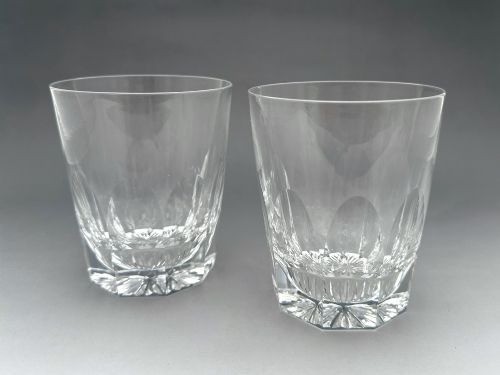
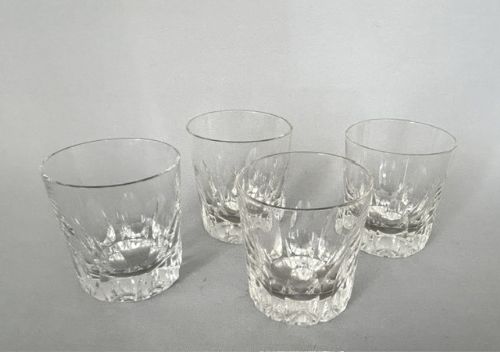


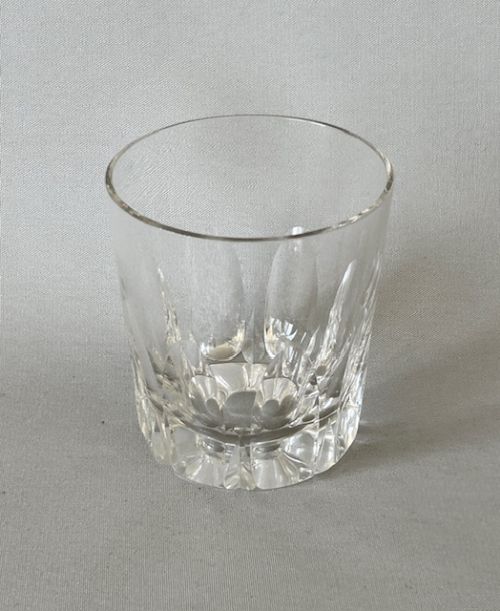


Cut Crystal Rocks Glass
These cut crystal rocks glass selections offer a heavy hand and sharp brilliance for your table, spanning the Victorian and Edwardian eras.
Cut Crystal Rocks Glass
When you search for cut crystal rocks glass, you are looking at drinking vessels and related serving pieces designed for spirits and water. The listings on this page include Victorian and Edwardian whisky tumblers, stemmed goblets, and drinking services alongside related items such as a potpourri basket and a chandelier.
You are most likely to meet small and large whisky tumblers in pairs, sets, or single examples from the late nineteenth and early twentieth centuries. These sturdy glass forms originate from English makers and workshops adhering to Victorian, Edwardian, and French Neoclassical styles.
How they were made
The pieces on this page are formed from heavy lead glass, crystal, and cut crystal, shaped to provide substantial weight in the hand. Artisans utilised deep cutting and intaglio engraving techniques to carve geometric and pictorial patterns directly into the clear material.
Selected items incorporate additional structural elements such as sterling silver mounts and swing handles, or wrought iron framing seen in heavier decorative lighting fixtures. The combination of brilliant cut glass and precious metal or iron hardware defines the construction of these period objects.
Cut Crystal Rocks Glass Retail Price Guide 2026
Typical asking prices for cut crystal rocks glass among the pieces listed under this phrase on Sellingantiques today, from the lower quarter to the upper quarter. They describe what is for sale here now, not the wider market.
Among the heavy drinking glasses sit a swing-handle potpourri basket and a grand chandelier, proving that cut crystal could light a room as well as fill a tumbler.
What varies in quality
The distinction between standard and superior pieces rests on the depth and crispness of the cutting across the surface. Finer examples display precise, sharp facets that catch the light cleanly, whereas lesser items show softer edges from hurried finishing.
Weight and clarity also separate the grades, with better lead crystal vessels offering a resonant ring and greater material density. The presence of documented makers and integrated silver work elevates the standing of an individual piece within its period.
William Comyns·Webb Corbett·La Maison Bagues
The Cut Crystal Rocks Glass Glossary
- Cut glass
- Glassware shaped and decorated by holding the vessel against a rotating abrasive wheel. This process produces deep geometric facets and brilliant light refraction.
- Intaglio engraving
- A technique where the design is carved into the surface of the glass rather than left in relief. It creates a sunken, detailed picture.
- Lead crystal
- Glass containing a significant proportion of lead oxide, which increases weight, clarity, and brilliance. It is the standard material for fine vintage drinking vessels.
- Tumbler
- A flat-bottomed drinking glass without a stem or handle. Period examples are typically heavy and sized specifically for spirits.
- Potpourri basket
- An open container designed to hold dried scented plant material, often featuring pierced or decorated metal elements. Examples in this category combine silver work with cut glass.
Cut Crystal Rocks Glass: Frequently Asked Questions
What is a cut crystal rocks glass?
A cut crystal rocks glass is a heavy, flat-bottomed drinking vessel featuring geometric or decorative facets carved into lead glass. These pieces are traditionally used for serving spirits straight or on the ice.
The listings on this page showcase period examples from the Victorian and Edwardian eras, ranging from individual whisky tumblers to complete drinking services.
How do I date an old whisky tumbler?
Dating requires looking at the weight of the material, the style of the cutting, and any accompanying hallmarks on silver mounts. Victorian examples often feature charmingly thick walls and hand-polished facets.
Twentieth-century pieces tend toward standardised proportions and sharper mechanical cutting, while Edwardian sets often include matching pitchers or intaglio engraving.
Are these glasses safe for daily use?
Most antique crystal and lead glass vessels are durable enough for regular service if handled with reasonable care. Hand washing is essential to protect the surface brilliance and prevent thermal shock.
Avoid using modern dishwashers, which can cloud the heavy lead crystal over time and damage older intaglio engravings.
What is the difference between glass and crystal?
Crystal contains lead oxide, which adds substantial weight, brilliance, and a clear musical ring when struck. Standard glass lacks this specific mineral content and is lighter in the hand.
The pieces recorded in this category rely primarily on heavy lead crystal to achieve their characteristic sparkle and depth.