
Cut Crystal Glass Decanter
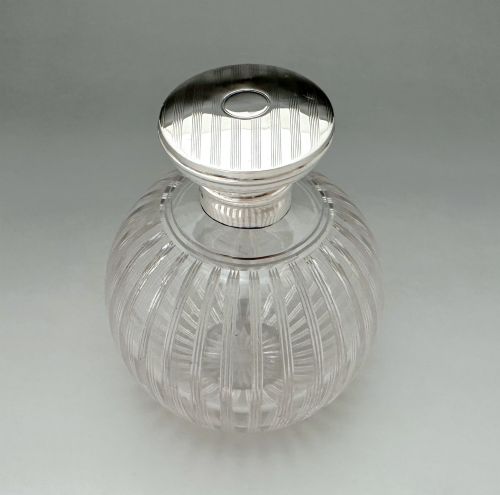
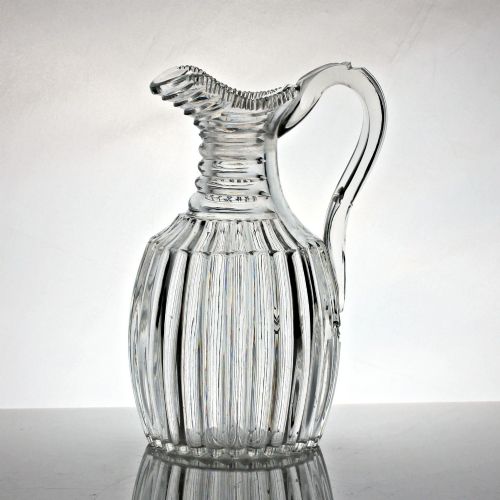
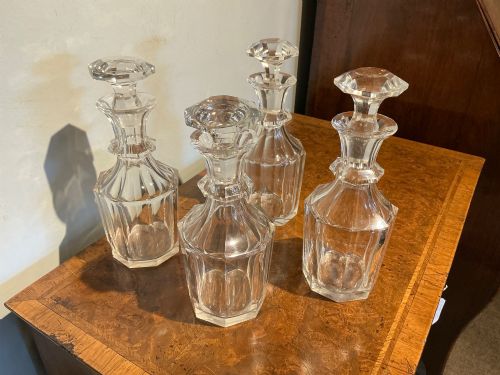
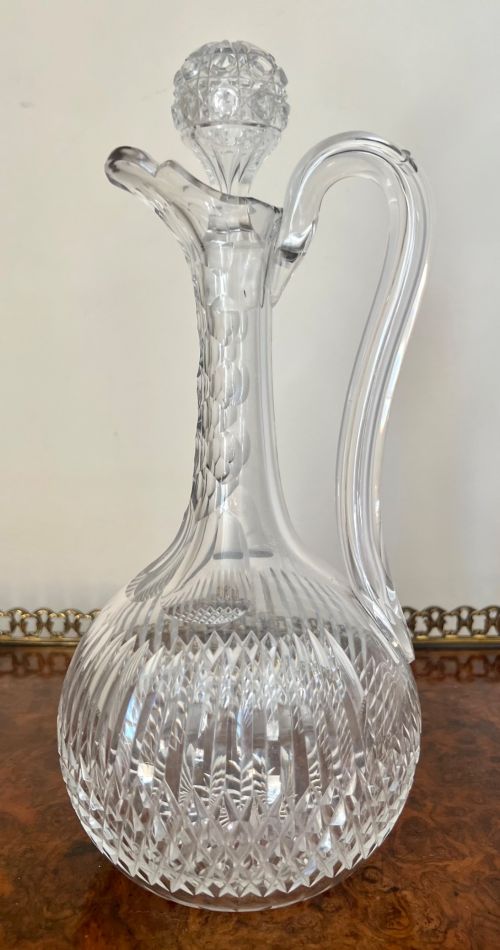
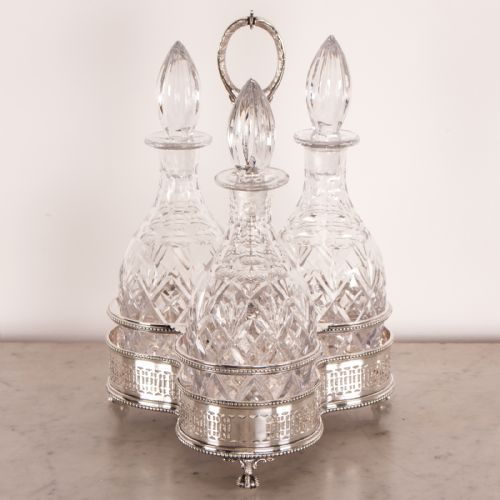
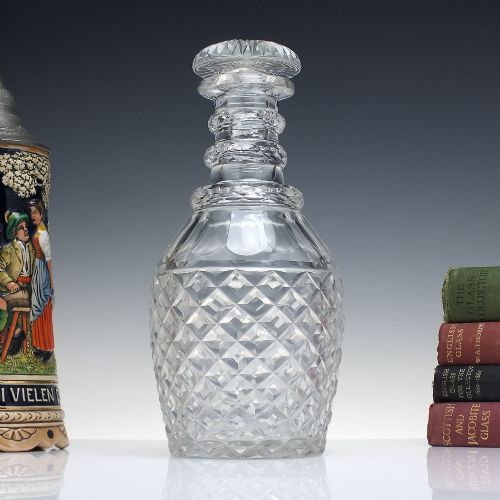
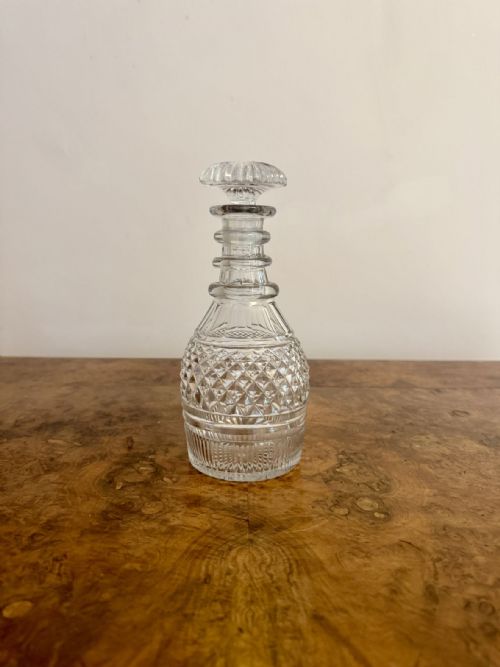
These cut crystal glass decanter pieces bring heavy refraction and bright sparkle to the sideboard, built to hold spirits and wine with weight and presence.
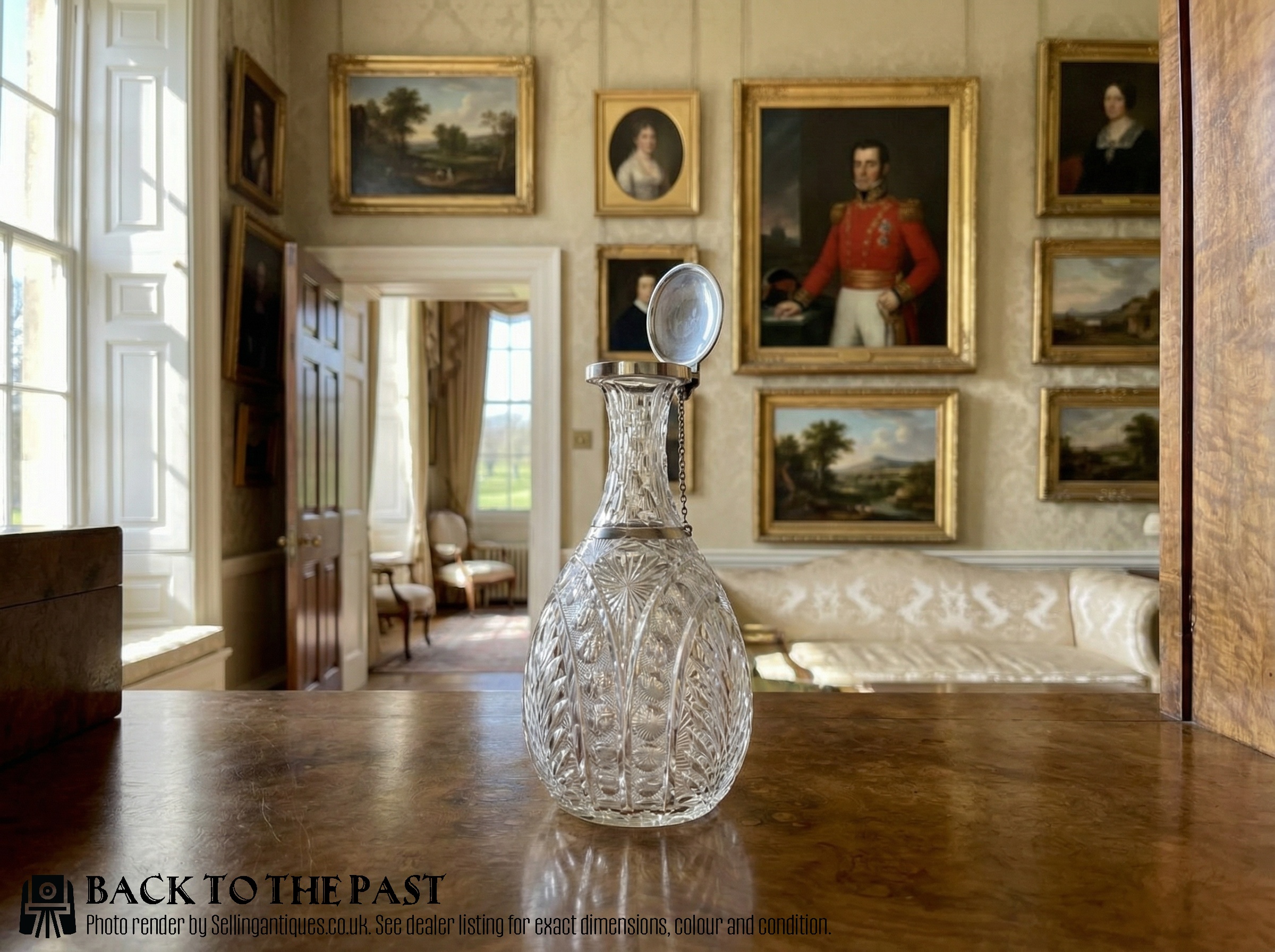
Cut Crystal Glass Decanter
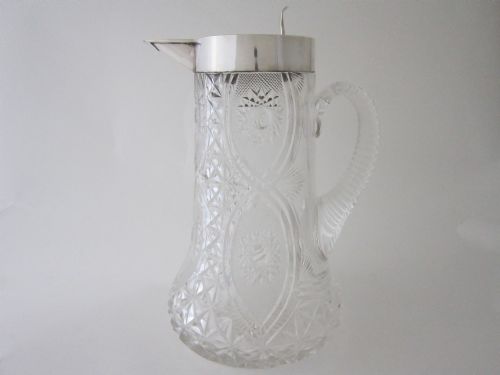
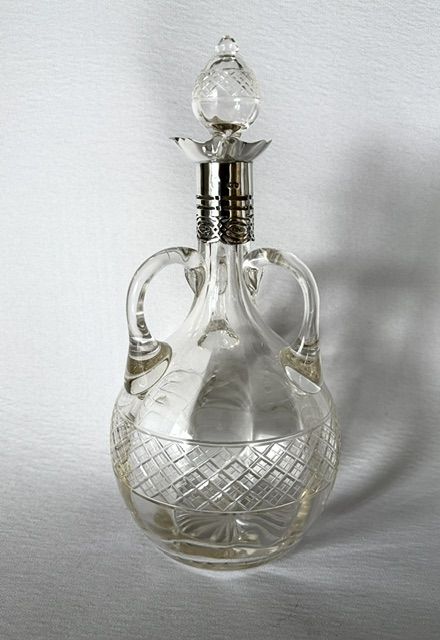
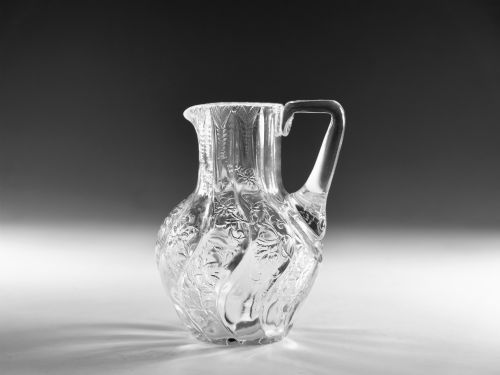
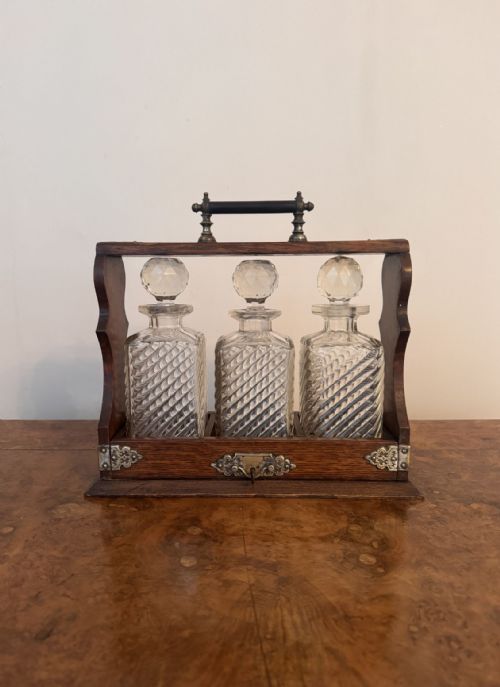
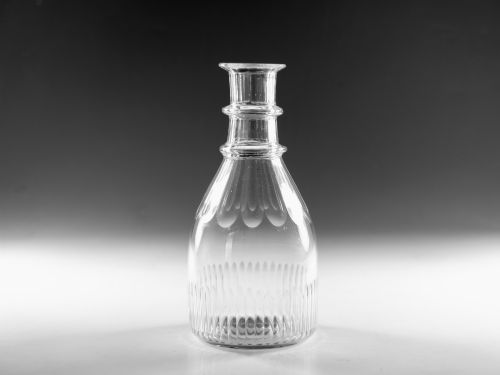
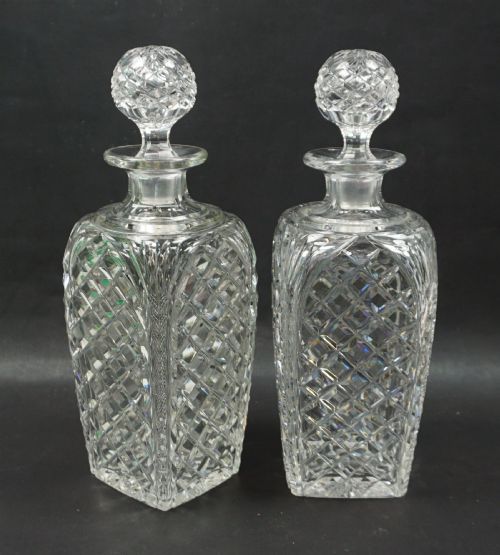
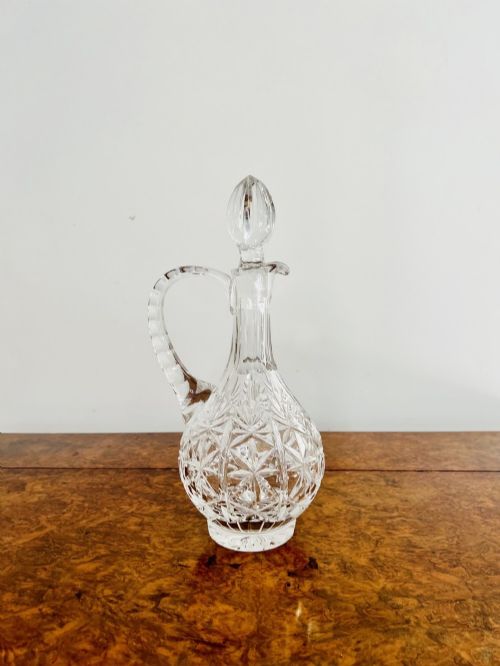
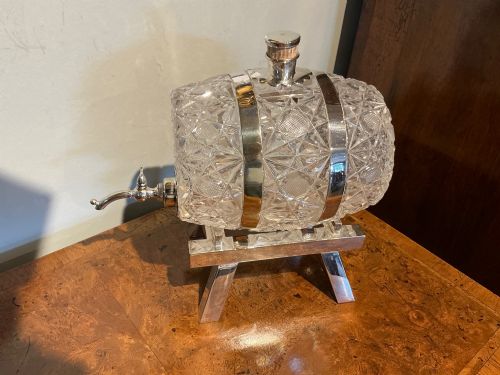
When you search for a cut crystal glass decanter, you find vessel forms spanning the nineteenth century through the Edwardian era and into the Art Deco period. The selections here include single square section spirit bottles, tall claret jugs, cruet sets, and complete sets housed in mahogany or satinwood tantalus frames.
Victorian and Edwardian examples dominate the offerings, often mounted with sterling silver collars, silver plate handles, or brass hardware. You will frequently encounter heavy lead crystal bodies shaped with deep prismatic cutting, pillar panels, and star bases designed to catch the light.
How they were made
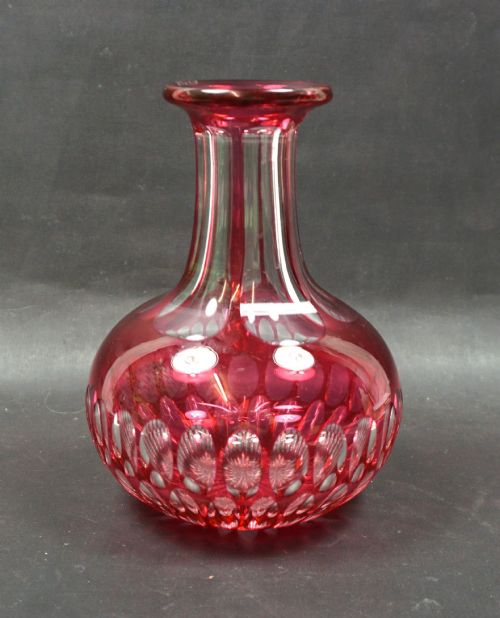
The makers formed these vessels using heavy lead crystal and glass, often layering colours such as cranberry or cobalt over clear crystal before wheel cutting the facets. This subtractive method required immense skill to grind deep geometric patterns through the coloured exterior layer to reveal the clear metal beneath.
Metal mounts in sterling silver and silver plate were shaped to fit the necks and shoulders, frequently bearing hallmarks that date the piece precisely. Wooden tantalus frames utilised mahogany, satinwood, and coromandel, fitted with locking mechanisms to secure the decanters safely inside.
Listings feature lead crystal, sterling silver, and brass across Victorian and Edwardian periods.
What varies in quality
Quality rests primarily in the crispness and depth of the wheel cutting on the crystal body. Sharp, well-defined facets with a resonant ring indicate superior lead content and expert craftsmanship, whereas soft, rounded edges suggest a lesser grade of pressed or mould-blown glass.
The substance of the accompanying metal mounts and fitted boxes distinguishes standard production from exceptional pieces. Heavy gauge sterling silver collars, intact stoppers matching the body pattern, and robust timber frames with working locks elevate the status of a piece significantly.
Stevens and Williams·Walker and Hall
The Cut Crystal Glass Decanter Glossary
- Tantalus
- A locking wooden frame designed to hold decanters securely while displaying their contents through a barred front. This invention prevented unauthorized access to spirits while keeping the bottles visible.
- Lead crystal
- Glass containing a high proportion of lead oxide, which increases the weight, refractive index, and clarity of the material. It produces a clear, lingering ring when struck.
- Claret jug
- A tall pouring vessel specifically shaped for serving red wine, typically featuring a hinged metal lid and handle attached to a glass body. Many examples pair cut crystal bodies with elaborate silver-plated mounts.
- Pillar and prism cut
- A decorative cutting style featuring vertical flat planes and geometric wedge cuts that split light into distinct beams. This technique was widely utilised during the Georgian and Victorian periods.
- Cranberry glass
- A rich red glass created by adding gold chloride to the molten batch, frequently utilised for overlay decanters. The outer red layer was partially cut away to expose clear crystal underneath.
Cut Crystal Glass Decanter: Frequently Asked Questions
How do I clean inside a decanter?
Residue and staining inside narrow-necked vessels respond best to warm water combined with non-abrasive cleaning beads or rice, swirled gently to reach the base.
Avoid using harsh chemical detergents or extreme temperature changes, which can stress antique lead crystal and cause internal cracking.
Are stoppers original to the decanter?
Original stoppers were ground to fit a specific neck during production, meaning they often bear matching cut patterns and corresponding numbers etched into the base.
Inspect the ground glass peg and the interior of the neck for identical wear patterns and matching tint to confirm authenticity.
How do I identify a Victorian tantalus?
Victorian tantalus units typically feature robust mahogany, coromandel, or oak frames fitted with locking brass or silver-plated mechanisms that secure the decanter stoppers in place.
Opening the mechanism requires a working key, which lifts the locking bar to release the bottles from their fitted compartments.
What is the difference between glass and crystal?
True crystal contains a significant percentage of metallic oxide, which grants the material a heavier feel, a brilliant sparkle, and a distinct musical ring when tapped.
Standard glass is lighter, softer to the touch, and lacks the high refractive index found in lead crystal pieces.