

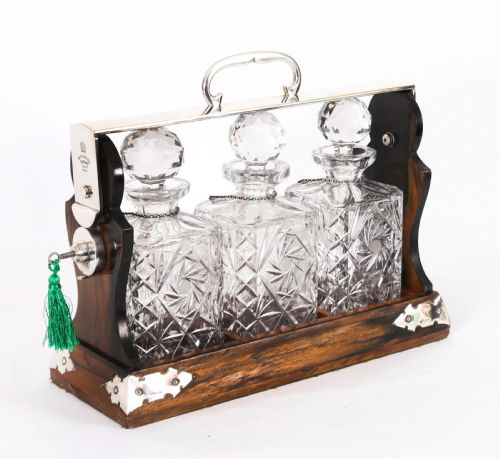


Vintage Crystal Liquor Bottle
A vintage crystal liquor bottle brings functional clarity to a sideboard, holding spirits behind cut facets and bright mounts.
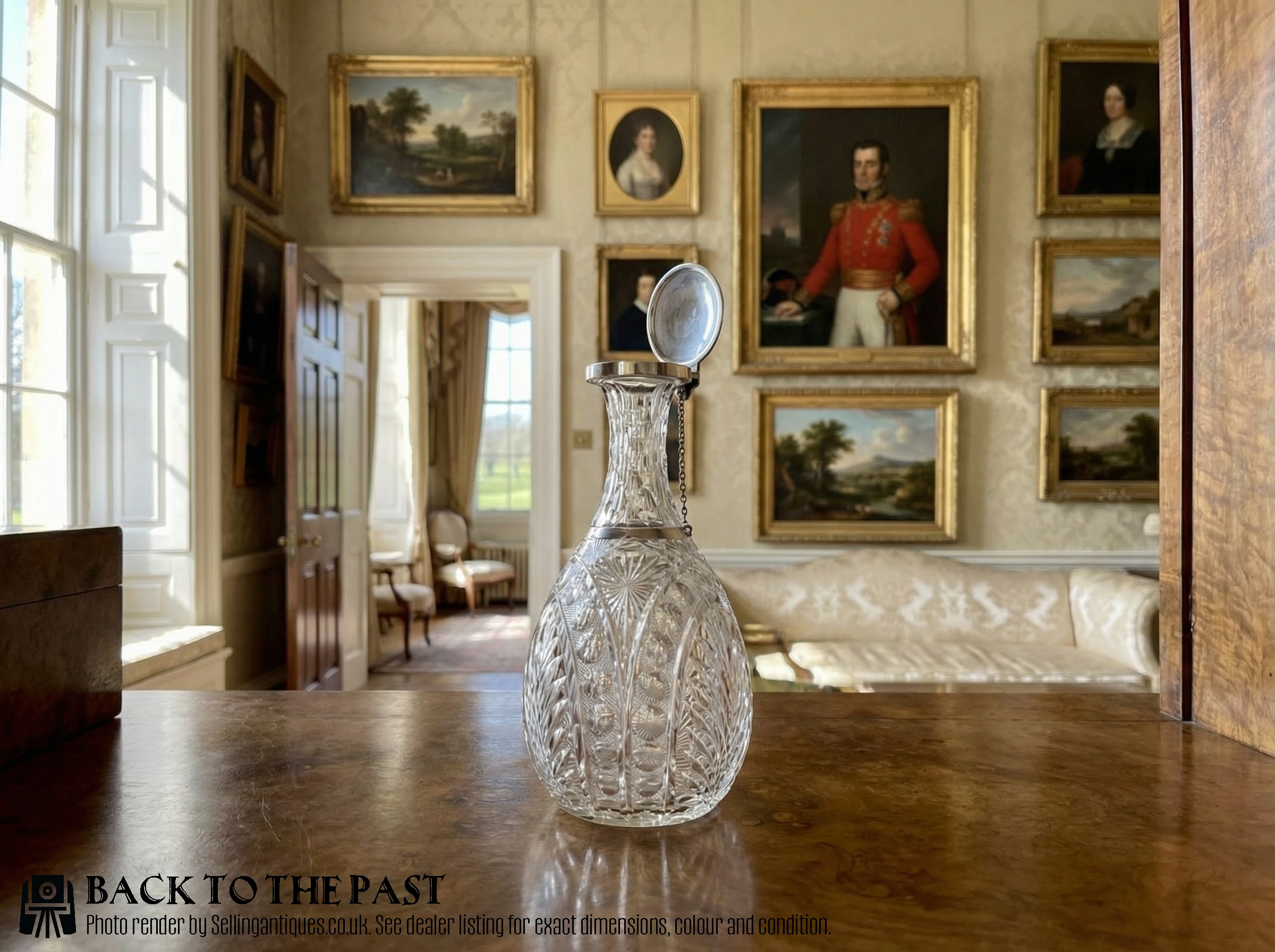
Vintage Crystal Liquor Bottle
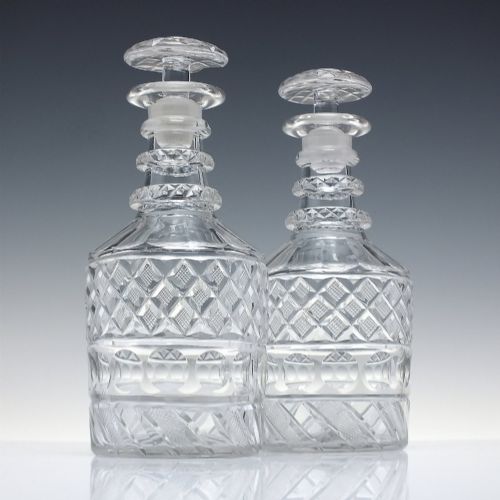
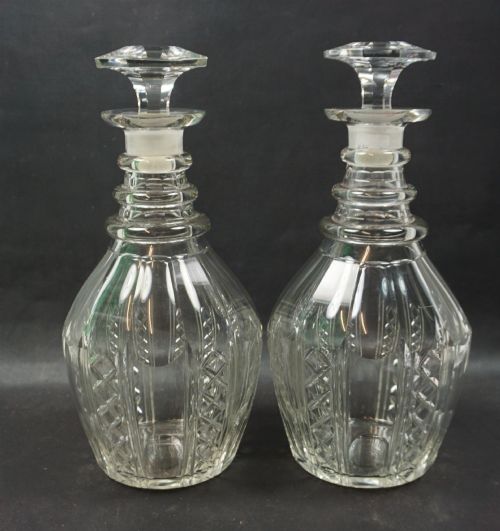
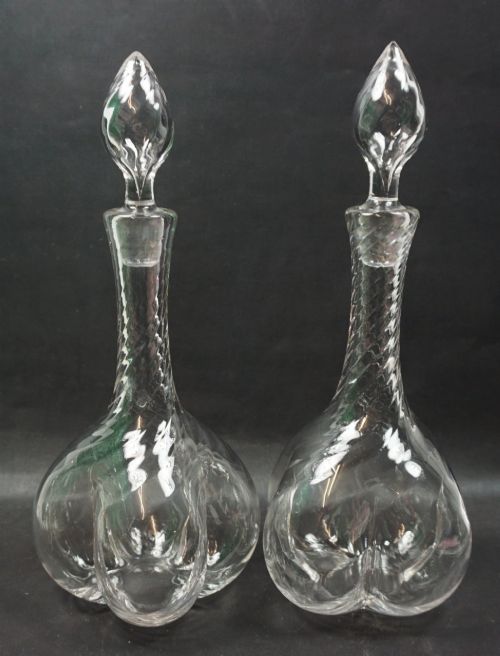
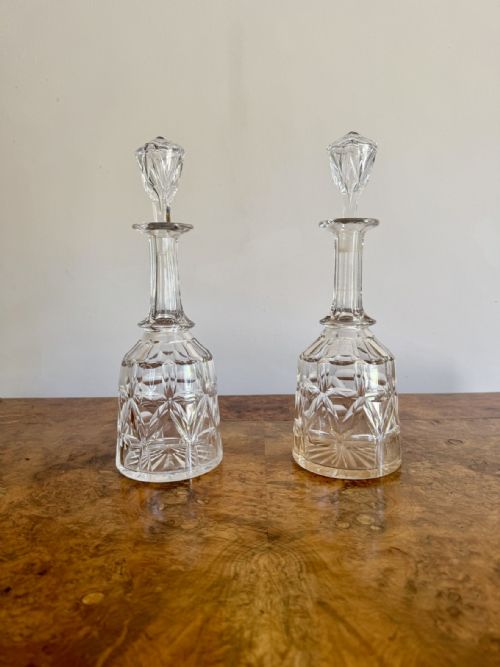
A vintage crystal liquor bottle generally takes the form of a decanter, tantalus, or decanter stand, serving to store and pour spirits. The selections available span periods from the Victorian era and the Edwardian years through to Art Deco and mid-century modern designs.
Most examples originate from English workshops and present specific shapes like the bell-shaped decanter, spirit bottles with silver collars, and matched pairs or sets of three in frames. These vessels range from simple blown glass to heavy cut crystal mounted in silver, silver-plate, brass, oak, and coromandel wood.
How they were made
Makers shaped the vessels using lead crystal, cut glass, and optically blown glass, often applying deep geometric or fluted facets across the body. Artisans then fitted many of the bottles with hallmarked sterling silver collars, silver-gilt mounts, or silver-plated stands.
Support structures combine cabinet timbers such as oak and coromandel with brass locking hardware, creating secure housings for multiple bottles in tantalus sets.
Vintage Crystal Liquor Bottle Retail Price Guide 2026
Typical asking prices for vintage crystal liquor bottle among the pieces listed under this phrase on Sellingantiques today, from the lower quarter to the upper quarter. They describe what is for sale here now, not the wider market.
The selection includes Edwardian, Victorian, and Art Deco styles alongside mid-century silver-mounted spirit sets.
What varies in quality
The weight and clarity of the lead crystal set the baseline, with heavier, deeply cut facets reflecting light more sharply than plain blown glass. Superior examples feature crisp engraving, such as labeled spirit titles, paired with substantial precious metal collars bearing clear hallmarks.
Mounting hardware also differentiates the pieces, where heavy brass or silver-plated frames with functioning locks and fitted timber bases demonstrate higher manufacturing ambition than standalone bottles.
Betjemann·James Powell·Elkington·Freeman & Son Ltd·Mappin & Webb·Hukin and Heath
The Vintage Crystal Liquor Bottle Glossary
- Tantalus
- A locking wooden cabinet or metal frame that secures decanters to prevent unauthorized access to the contents while displaying the bottles.
- Hallmark
- An official stamp applied to precious metals like sterling silver, indicating the standard of purity, the assay office, and the date of assay.
- Optically blown
- A glassblowing technique that introduces a subtle ribbed or patterned texture into the body of the vessel as it expands in the mould.
- Silver gilt
- Sterling silver that has been coated with a thin layer of gold, providing a rich yellow-gold finish to mounts and collars.
- Coromandel
- A dense, dark exotic hardwood prized for its contrasting grain patterns and utilised in high-end nineteenth-century tantalus frames.
Vintage Crystal Liquor Bottle: Frequently Asked Questions
What is a tantalus?
A tantalus is a locking stand or cabinet that holds spirit bottles securely in place. The frame blocks the stoppers from being removed until the lock is opened with a key.
This clever mechanism allowed hosts to display expensive liquor while restricting access to household staff or guests during the Victorian and Edwardian periods.
How do I identify an Edwardian decanter?
Edwardian decanters typically date from the early years of the twentieth century and often feature bright cut crystal patterns. They frequently include hallmarked sterling silver collars around the neck.
Compared to earlier Victorian designs, these pieces lean towards lighter, refined silhouettes while maintaining substantial lead crystal weight.
Can I use these bottles for serving liquor?
These vessels were designed specifically to hold and pour spirits like whisky, brandy, and rum. The glass is suitable for modern dining and entertaining.
Care should be taken when washing antique crystal and silver mounts by hand to preserve the stoppers and hallmarks.
What does a silver collar indicate?
A silver collar fitted to the neck of a bottle usually bears hallmarks that reveal the town of assay and the year of manufacture. It adds structural reinforcement and a decorative accent to the opening.
These collars are commonly found on English spirit bottles spanning the Victorian, Edwardian, and Art Deco eras.