
Cut Clear Lead Crystal
Cut clear lead crystal comprises heavy glassware carrying deep geometric wheel cuts from periods spanning the Georgian era to the mid-twentieth century.
Cut Clear Lead Crystal
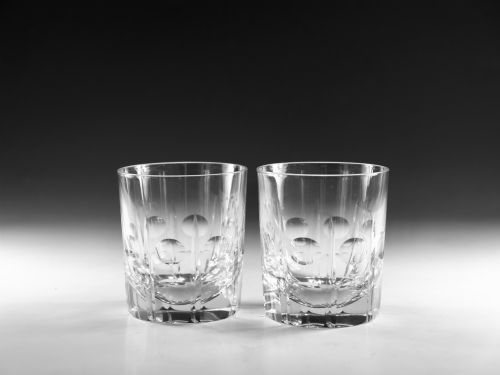
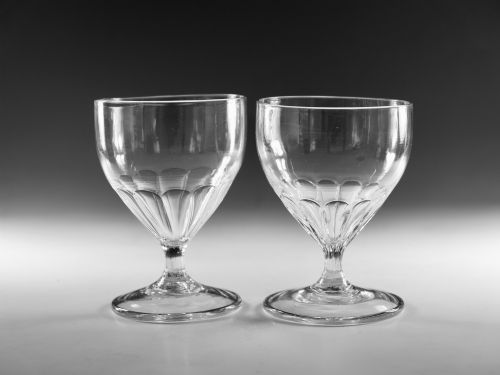
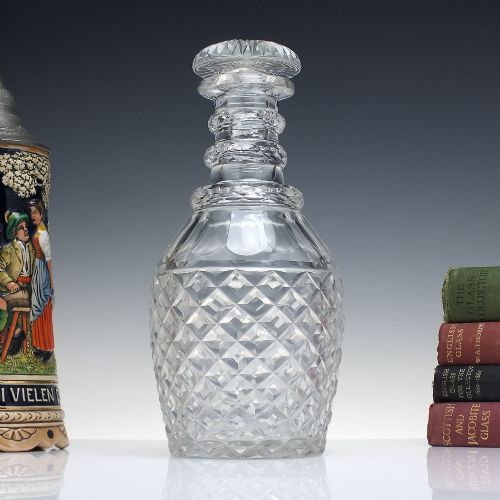
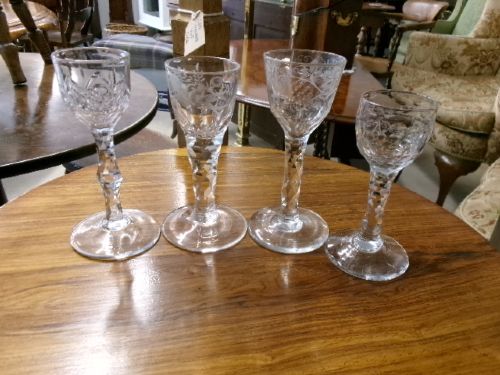
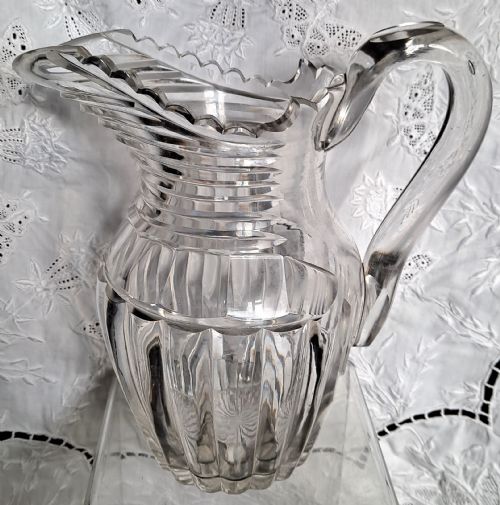
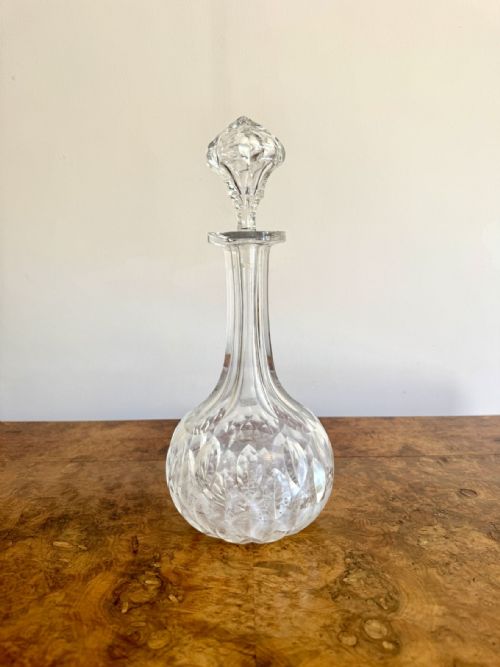
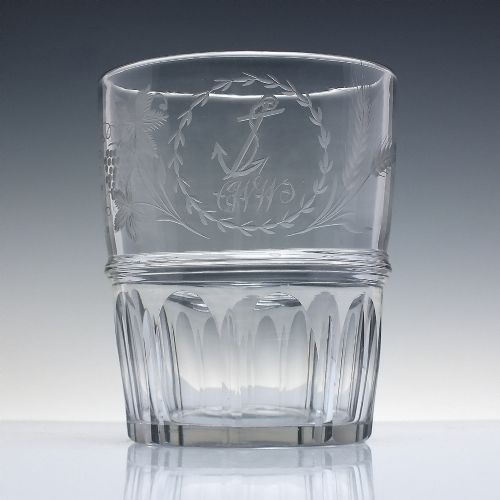
When you search for cut clear lead crystal, you meet functional and decorative objects designed for the dining table and the drawing room. The selection here leans heavily toward decanters, rummers, tumblers, and water jugs originating from English, Irish, and continental workshops.
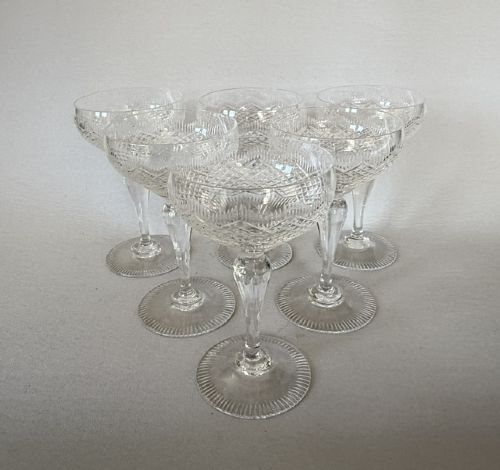
Earlier examples date from the Georgian and Regency periods, characterised by heavy metal and hand-cut facets that catch the candle or gas light. Later Victorian and Edwardian pieces continue these traditional forms alongside table lamps and champagne coupes.
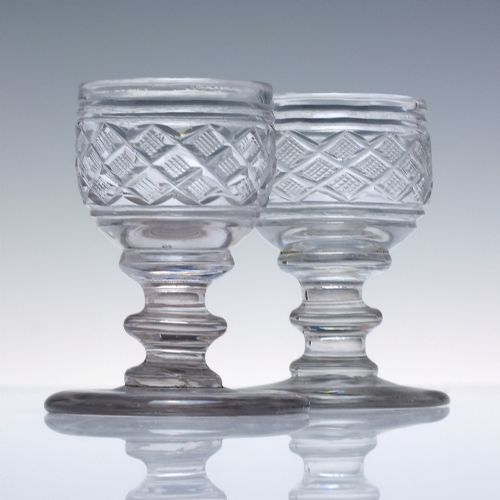
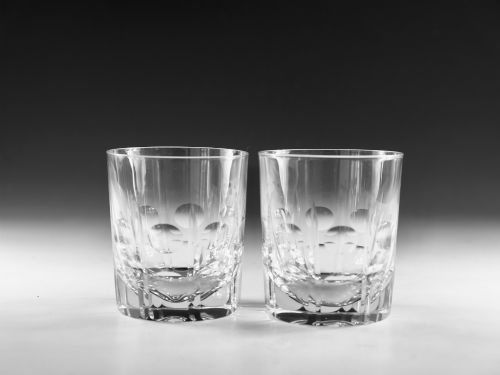
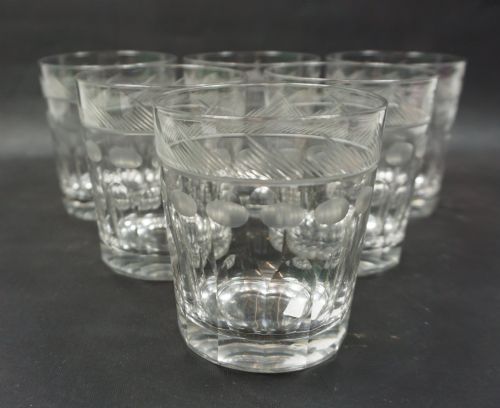
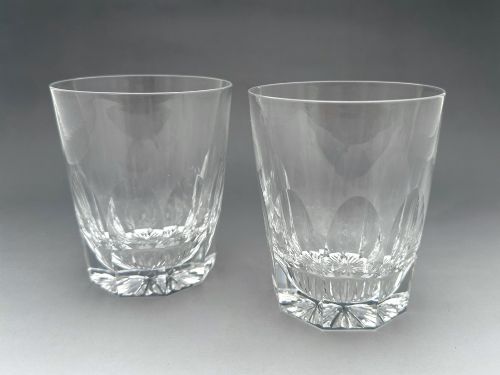
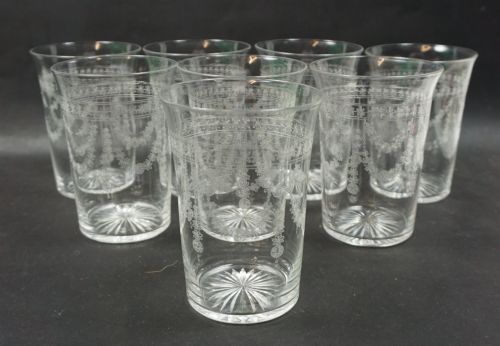
The assortment ranges from small whiskey dram glasses and salts to substantial centrepieces and matched sets of drinking vessels. Each piece demonstrates the heavy weight and high refractive index characteristic of lead glass.
Materials and Techniques
The manufacture of these objects relies on heavy lead glass, which contains a substantial proportion of lead oxide to increase the weight, clarity, and brilliance of the material. Molten metal is blown or pressed into initial shapes before artisans apply surface decoration.
Workmen cut patterns into the cooled surface using rotating stone or iron wheels fed with abrasive grit and water. Subsequent polishing on wooden or cork wheels with putty powder restores the brilliant lustre to the freshly cut facets.
Object forms range from small whiskey dram glasses and salts to large water jugs, decanters, champagne coupes, and electric mushroom lamps.
Distinctions in Standard
Standard varies according to the crispness of the cutting and the weight of the metal. Superior pieces display deep, sharply defined facets with smooth polished troughs, whereas lesser examples show shallow, rounded cuts that blur the geometric precision.
The brilliance of the material itself dictates the grade of the piece, determined by the purity of the lead mix and the absence of internal cloudiness or manufacturing bubbles. Matched sets with uniform thickness and consistent colour across every item represent a higher tier of production.
Val St. Lambert·Stuart Crystal
The Cut Clear Lead Crystal Glossary
- Rummer
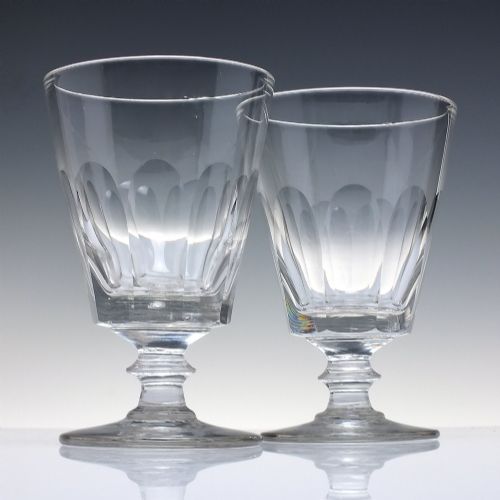
- A large, sturdy drinking glass popular in the eighteenth and nineteenth centuries, typically used for ale, wine, or punch. These vessels usually feature short stems and capacious bowls with heavy cut decoration.
- Pillar and prism cut
- A decorative scheme employing broad vertical facets that resemble architectural pillars, combined with sharp prismatic cuts. This technique maximises the refraction of light through heavy lead glass.
- Hobnail cut
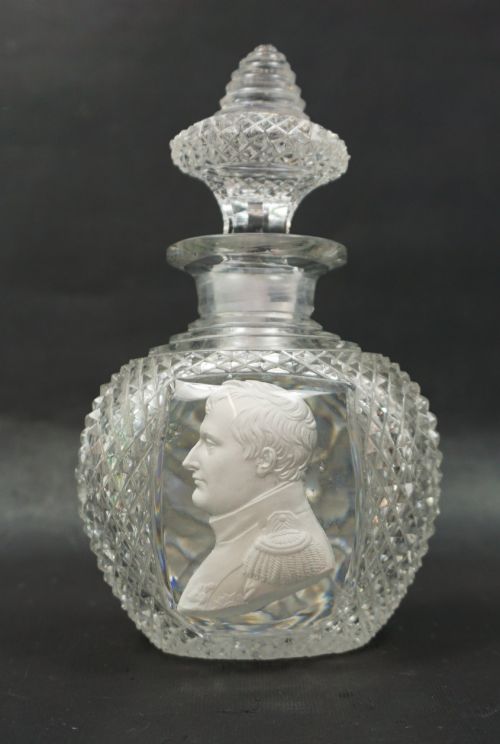
- A raised surface pattern of sharp, close-set pyramids that resembles the hobnails found on heavy boots. It creates a highly tactile texture across the body of decanters and tumblers.
- Sulphide
- A small white cameo made of ceramic paste embedded within the clear glass body. These medallions frequently depict notable figures or portraits from the early nineteenth century.
- Lustre
- A decorative table ornament hung with long glass prisms designed to catch and refract light. Victorian examples often incorporate hand-painted enamel details alongside cut crystal bodies.
Cut Clear Lead Crystal: Frequently Asked Questions
Can I use these glasses daily?
These robust vessels are durable enough for regular use, particularly sturdy rummers and heavy tumblers intended for daily dining. Their thick lead glass walls withstand careful handling during regular meals.
Hand washing remains essential to preserve the sharp edges of the wheel-cut patterns and prevent clouding. Store pieces with adequate space between rims to avoid accidental impact.
What makes Georgian glass different?
Georgian lead glass contains a high percentage of lead oxide, giving the metal a characteristic dark greyish tone and substantial weight. The cutting on these early pieces is frequently hand-wrought with slightly irregular facets that distinguish them from later mechanical production.
Pontil marks on the base of Georgian tableware remain unpolished and rough to the touch, unlike the smooth ground bases common on Victorian and Edwardian items.
How do I date a cut glass decanter?
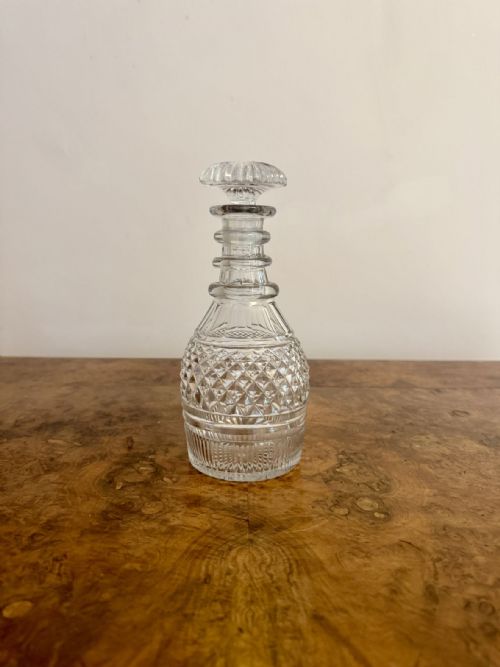
Examine the shape of the body, the style of the stopper, and the base of the decanter for period characteristics. Georgian and Regency decanters often feature three heavy-cut neck rings and heavy kick-up bases with rough pontil marks.
Victorian and Edwardian versions tend to display more uniform machine-polished surfaces, finer star-cut bases, and mushroom or facet-cut stoppers that fit flush against the pourer rim.