


Cushion Cut Dress Ring
A cushion cut dress ring unites soft, pillowed gemstone geometry with historic metalwork from the Victorian era through the mid-century.
Cushion Cut Dress Ring
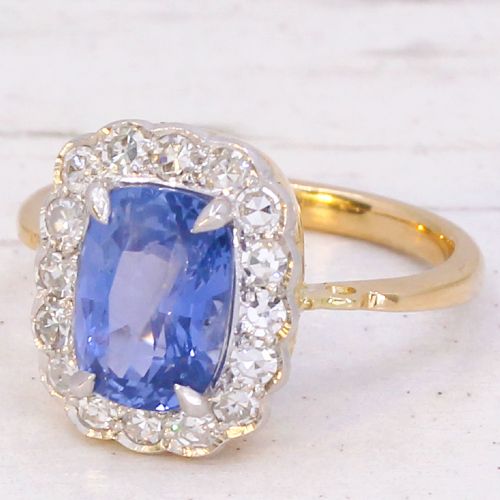
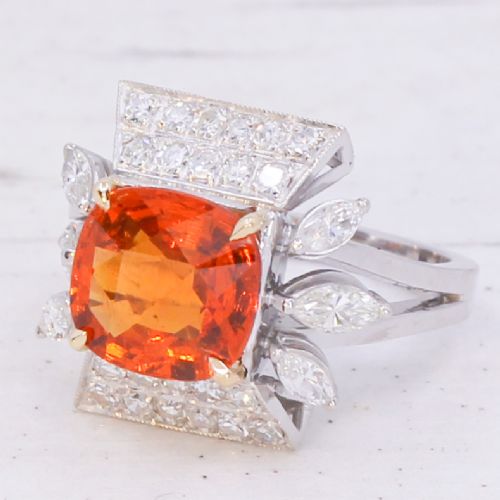
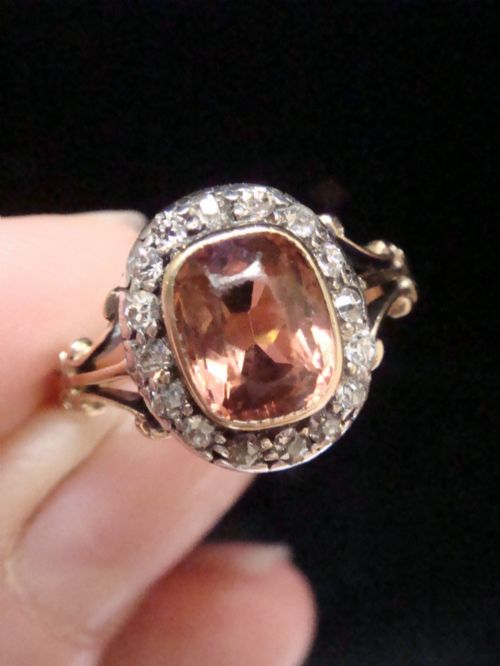
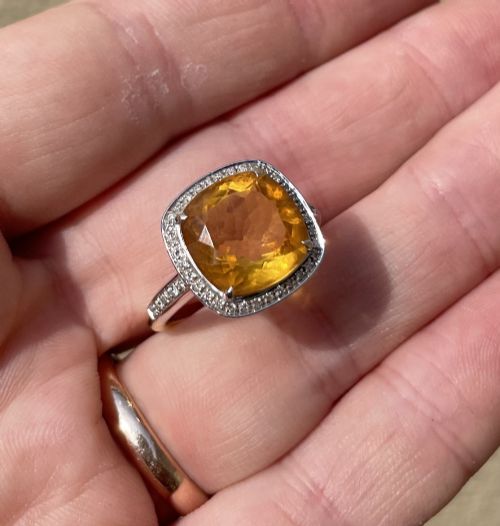
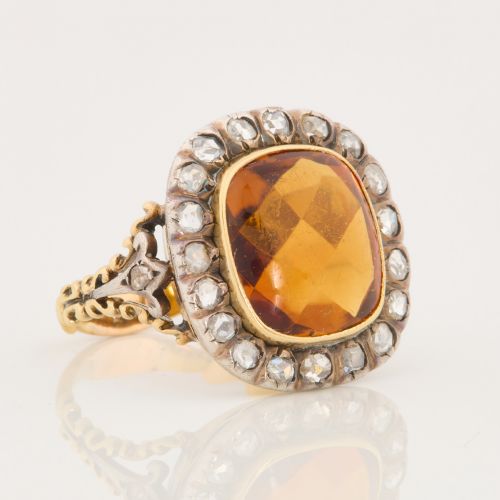
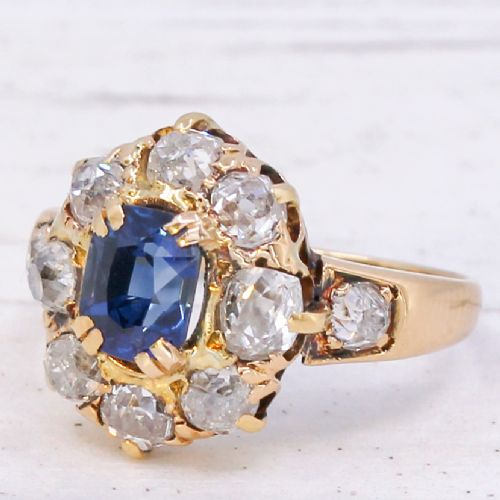
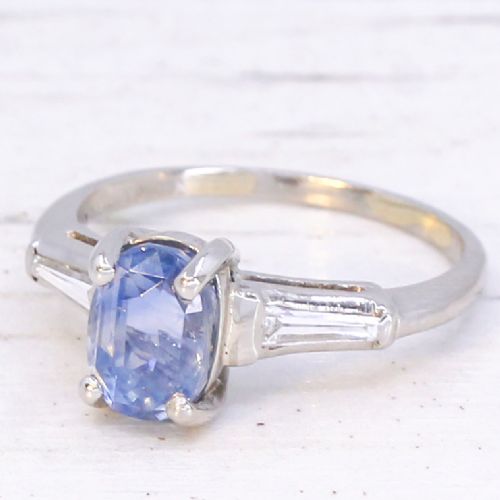
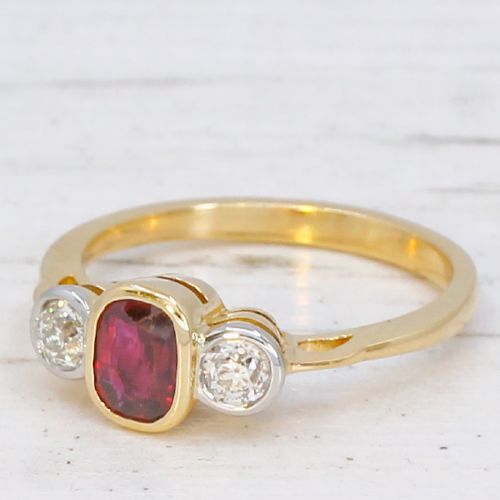
A cushion cut dress ring showcases a distinctive stone shape that bridges the gap between a modern round and a rectangle, softened by rounded corners and generous facets. These pieces primarily span the Victorian, Edwardian, Art Deco, and mid-century periods, capturing shifting tastes across decades of jewellery design.
Buyers searching for a cushion cut dress ring encounter various configurations, from single-stone solitaires to elaborate cluster arrangements and three-stone trilogy formats. Sapphires, rubies, and diamonds dominate the selection, often accompanied by citrines, amethysts, and aquamarines.
The aesthetic leans heavily toward the geometric precision of the Art Deco movement and the romantic floral motifs of earlier Victorian and Edwardian examples. Platinum and various carats of yellow and white gold provide the structural foundation for these varied gemstone settings.
Materials and construction methods
Goldsmiths utilised platinum and multiple purities of gold, including 9ct, 15ct, and 18ct yellow and white gold, to secure prominent centre stones. Platinum gained favour during the Edwardian and Art Deco periods for its strength in delicate, lace-like settings that maximised light exposure.
Stones were shaped by hand into cushion profiles, old mine cuts, and transitional cuts, displaying open culets and distinctive facet patterns unique to pre-modern lapidary work. Settings commonly incorporate intricate claw mounts, millegrain edges, and cluster frames designed to enhance the visual weight of the central gems.
Listings span multiple decades, incorporating Victorian, Edwardian, Art Deco, and mid-century periods executed in platinum and gold.
Assessing overall quality and character
Quality rests in the harmony between stone proportions and the integrity of the surrounding metalwork, where hand-cut facets interact naturally with ambient light. Original settings that retain crisp millegrain detail and uncompromised metal thickness represent superior craftsmanship.
Natural gemstone origin, untreated clarity, and significant carat weight distinguish exceptional examples, alongside documented provenance from distinct eras like the 1920s or 1930s. The cohesion of the design, whether a restrained solitaire or a dense cluster, dictates the enduring appeal of each piece.
The Cushion Cut Dress Ring Glossary
- Cushion cut
- A square or rectangular gemstone shape featuring rounded corners and larger facets designed to increase brilliance.
- Millegrain
- A decorative technique involving a line of tiny raised metal beads along the edges of a setting.
- Old mine cut
- An early diamond cut characterised by a nearly square girdle, high crown, and large open culet.
- Cluster ring
- A ring design featuring a prominent central stone surrounded by a border of smaller accent stones.
- Transitional cut
- A diamond cut used primarily between 1920 and 1930 that bridges old mine cuts and modern round brilliants.
Cushion Cut Dress Ring: Frequently Asked Questions
How do I care for antique rings?
Antique rings require gentle handling, regular checks on claw settings by a professional jeweller, and removal during rigorous physical activities.
Cleaning should involve mild soapy water and a soft brush, avoiding harsh ultrasonic cleaners on treated or softer gemstones.
Can these rings be resized?
Most gold and platinum rings can be altered by a skilled jeweller, though intricate gallery work or continuous gemstone channels require specialist care.
Consulting a professional ensures the structural integrity and historic shank are preserved during any adjustment.
What periods do these rings represent?
The available selection spans from the late Victorian and Edwardian eras through Art Deco designs and mid-century modern pieces.
Each era brings distinct metal choices, such as platinum for Art Deco and yellow gold for Victorian clusters.