

Curved Wood Chest
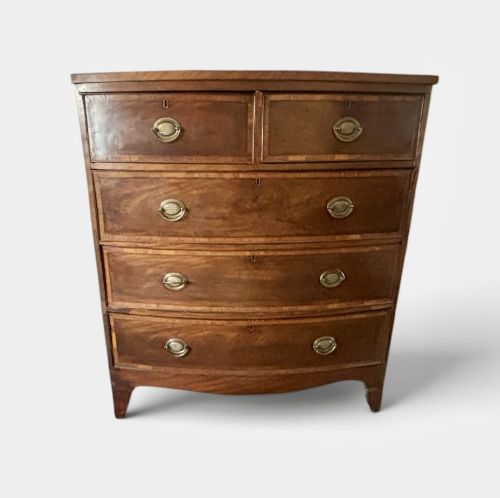
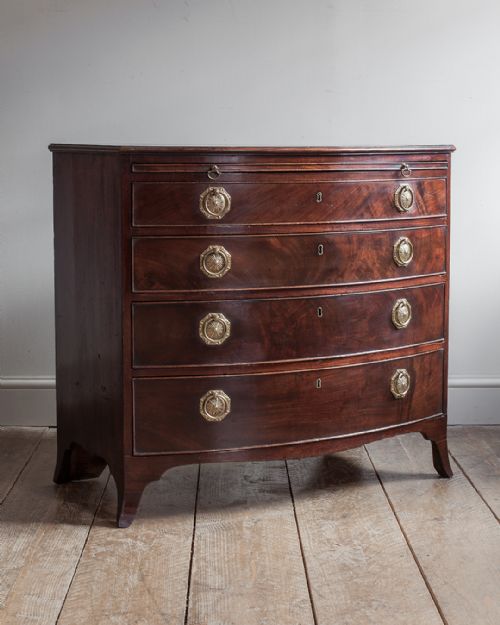
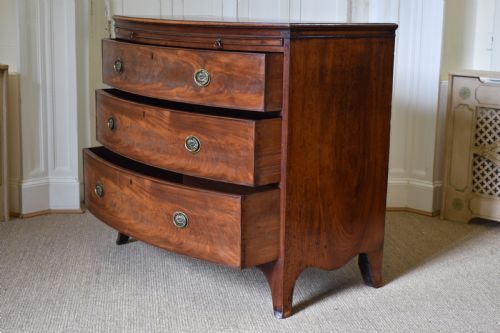
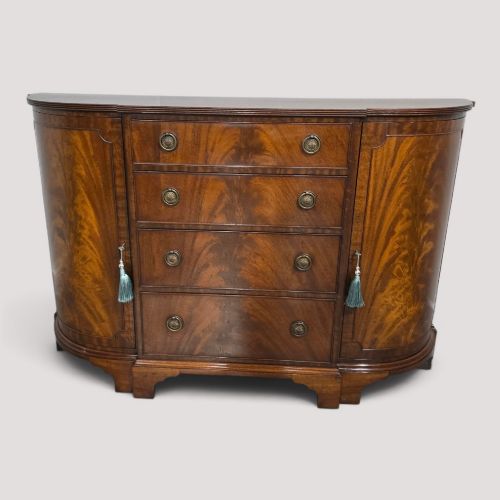
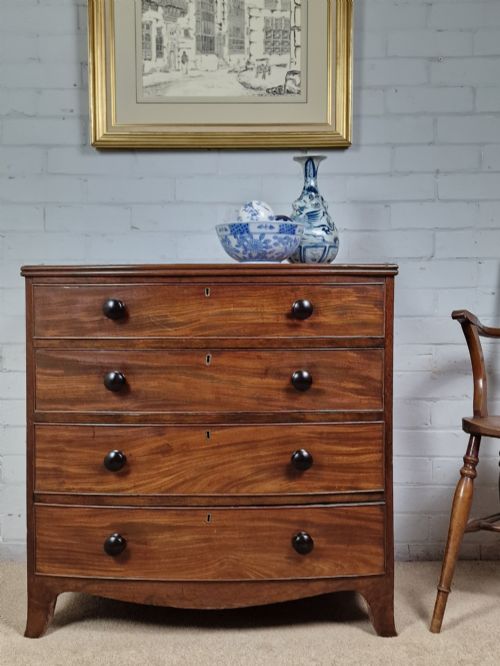
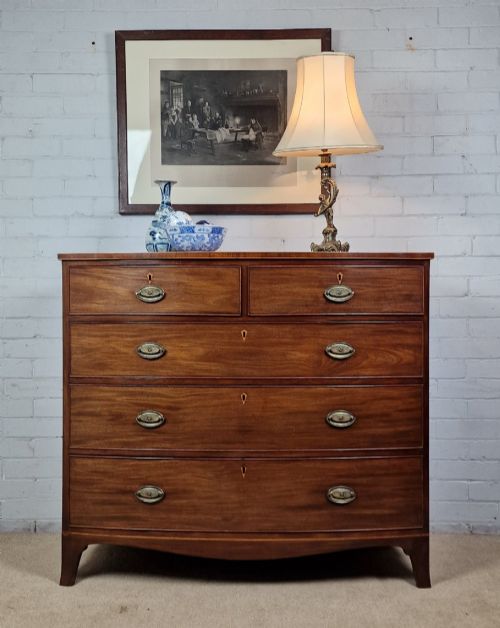
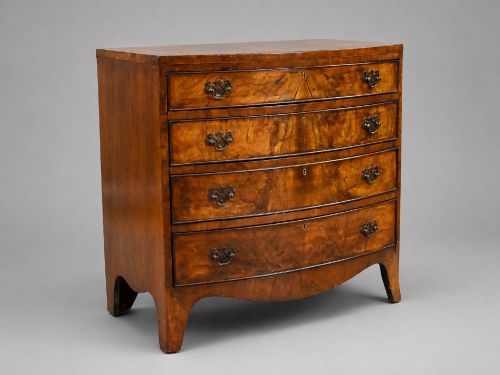
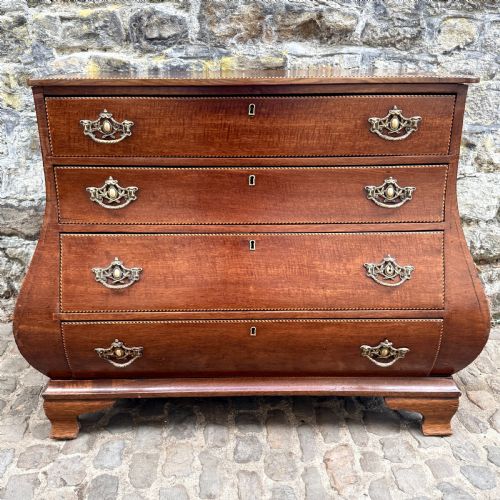
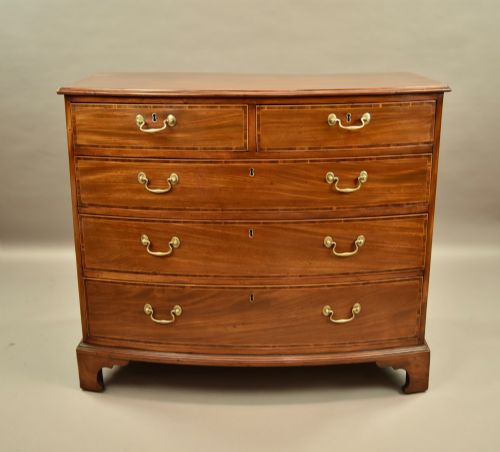
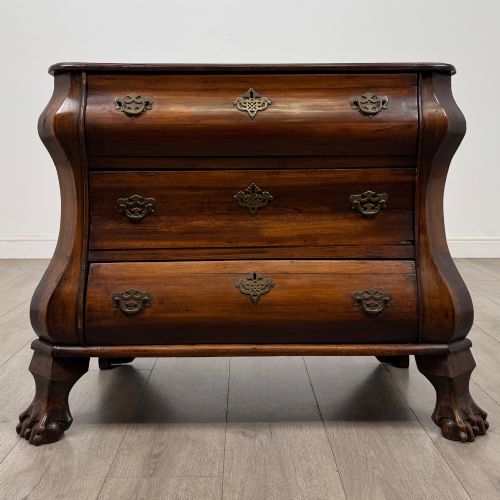
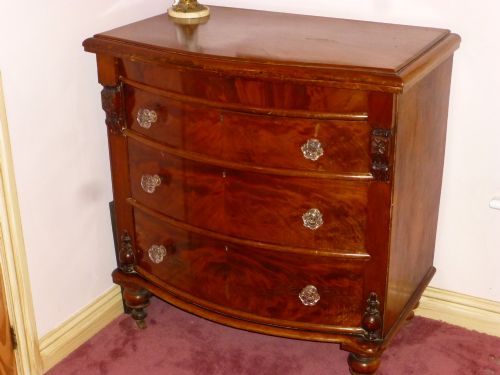
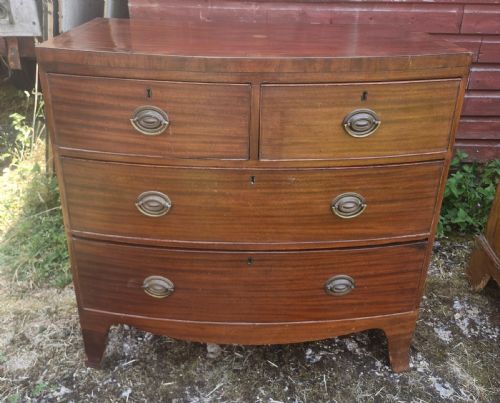
These curved wood chest examples bring together bow fronts and swelling bombes in mahogany, walnut and satinwood.
Curved Wood Chest
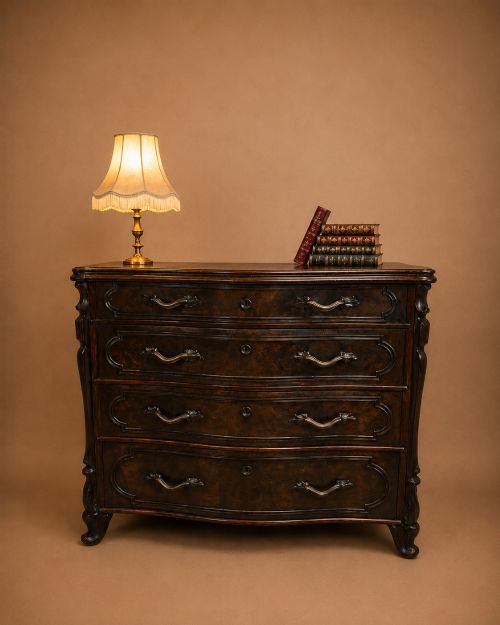
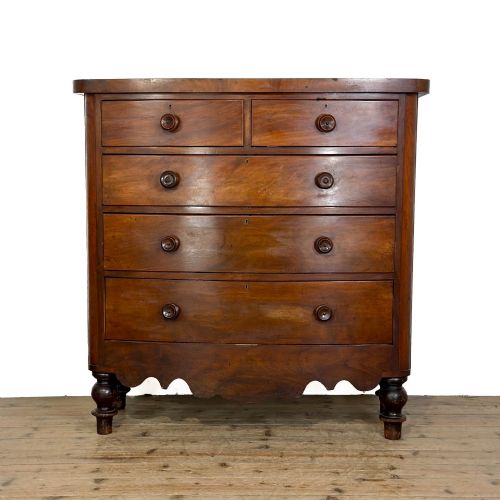
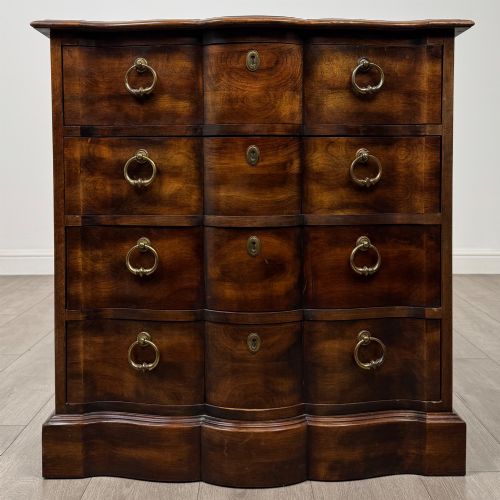
A curved wood chest takes several forms across this selection, most commonly seen as mahogany bow front chests of drawers from the Georgian, Regency and Victorian periods. Buyers also encounter serpentine fronts, Dutch bombe commodes, and later Art Deco interpretations.
The objects span centuries of cabinet making, ranging from late eighteenth century George III designs to early twentieth century walnut and maple pieces. Sideboards, tallboys, bedside cabinets and dressing tables appear alongside standard drawer configurations.
What varies in quality
Quality rests upon the selection of timber figures, such as highly grained mahogany or figured walnut veneer, matched carefully across the curved drawer fronts. Finer examples display precise banding and well-proportioned cornices that maintain structural integrity along the radius.
The crispness of the secondary details, including the joinery of the drawers and the retention of original brass hardware, elevates certain pieces above standard workshop production. The skill required to bend timber and veneer curved surfaces dictates the standing of each cabinet.
Materials documented across these furniture forms include solid mahogany, satinwood, kingwood, walnut, marble and brass.
Betty Joel·Heal's
The Curved Wood Chest Glossary
- Bow front
- A convex curved cabinet front that projects outward in a smooth arc. This shape gained popularity during the Georgian and Regency periods to soften room corners.
- Serpentine
- A furniture front characterised by a concave central section flanked by two convex ends, or the reverse. The undulating line requires skilled woodworking.
- Bombé
- A swelling, bulging contour found on continental European furniture, particularly Dutch and French commodes. The sides and front curve outward in convex profiles.
- Banding
- A narrow strip of contrasting veneer framing the perimeter of a drawer front or top. It creates a decorative border that highlights the wood grain.
- Tallboy
- A tall chest of drawers standing upon another chest or a low base. These pieces maximise vertical storage capacity while retaining compact floor footprints.
Curved Wood Chest: Frequently Asked Questions
How do I identify a Georgian chest?
Georgian chests typically display dense mahogany timbers, hand-cut dovetails on the drawer linings, and understated brass pull handles. The proportions remain balanced and architectural.
Later Victorian interpretations often feature heavier framing, bolder mahogany grain, and machine-cut elements hidden within the internal carcass.
Where were bombe chests made?
Bombé chests originated on the continent, with Dutch and French workshops producing the characteristic swelling profiles during the eighteenth century. These pieces rely on curved stiles and shaped panels.
Makers used exotic timbers such as kingwood and walnut to wrap around the bulging sides and serpentine drawer fronts.
How do I care for wood veneer?
Wood veneer requires stable room humidity and protection from direct sunlight to prevent the timber from drying and lifting away from the substrate. Regular dusting with a dry cloth maintains the polished surface.
Avoid placing damp items or heavy heat sources directly onto the antique marble or wooden tops of these cabinets.