




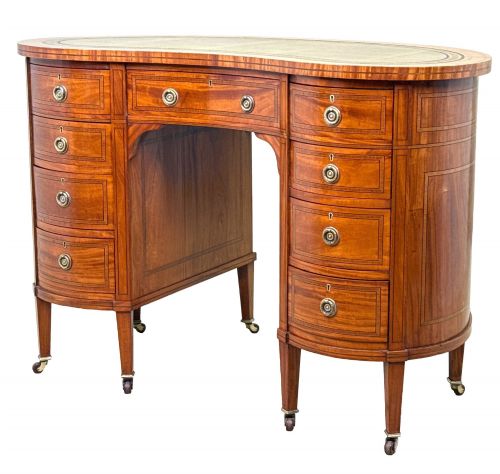
Curved Top Desk
A curved top desk brings architectural elegance to a study, offering enclosed writing surfaces and hidden compartments built from rich timbers.
Curved Top Desk
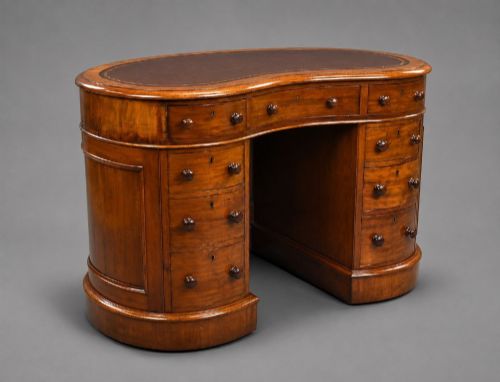
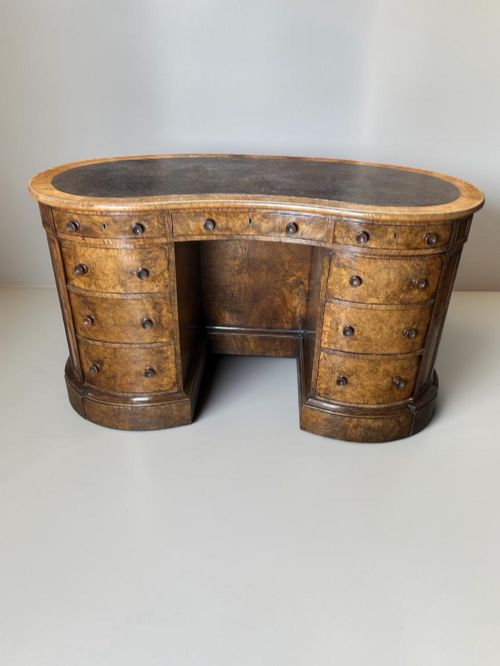
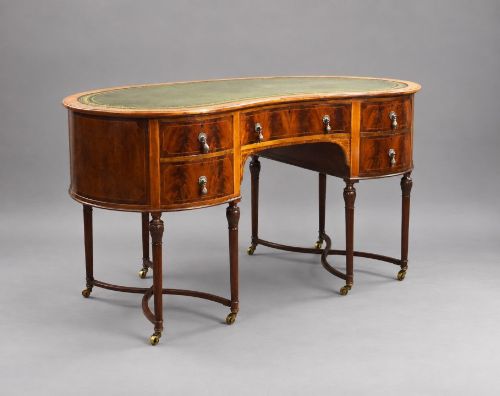
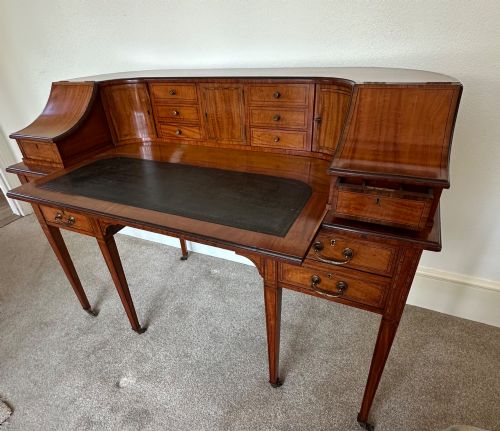
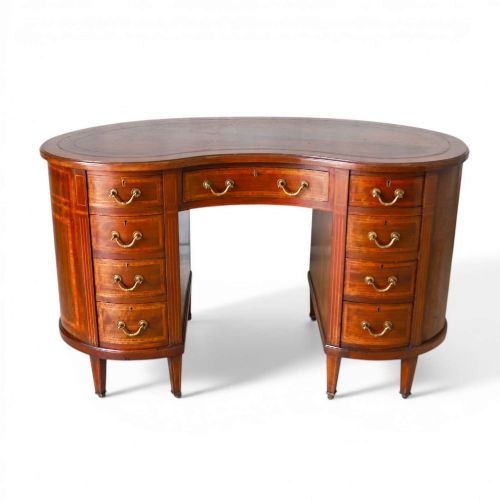
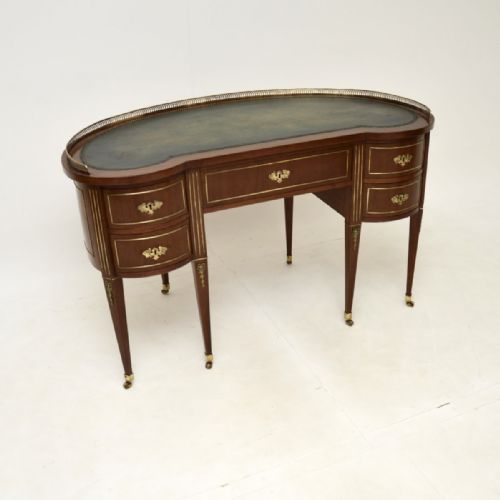
A curved top desk encompasses various writing furniture featuring rounded profiles, such as cylinder desks, Carlton House desks, and kidney-shaped writing tables. These pieces emerge predominantly from the Victorian and Edwardian eras, alongside pieces dating through the nineteenth century and into the nineteen-thirties.
Buyers encountering this search phrase will frequently find kidney-shaped desks constructed from mahogany or satinwood, often decorated with inlay. Cylinder desks and bureau bookcases also appear, housing internal compartments beneath their rolling or curved wooden lids.
Origins span English workshops of the Georgian and Victorian periods through to continental examples, including French marquetry pieces and Austrian Empire writing tables. Makers such as Gillows and Collinson and Lock contribute to the breadth of these workspace forms.
Materials and Construction
Cabinet makers utilised dense hardwoods including mahogany, rosewood, walnut, and oak as the foundational structure for these writing surfaces. Satinwood and flame mahogany veneer provide decorative grain patterns, frequently enhanced by satinwood inlay and marquetry.
Writing surfaces frequently integrate inset leather panels, while drawer pulls and mounts incorporate cast brass elements. Cylinder mechanisms and curved roll tops demand precise joinery to ensure smooth movement along integrated tracks.
Curved Top Desk Retail Price Guide 2026
Typical asking prices for curved top desk among the pieces listed under this phrase on Sellingantiques today, from the lower quarter to the upper quarter. They describe what is for sale here now, not the wider market.
Listings feature woods including mahogany, rosewood, satinwood, oak, walnut, and gonçalo Alves, alongside leather and brass.
Craftsmanship and Distinction
Superior examples demonstrate meticulous timber selection, where flame mahogany or figured walnut veneer is matched symmetrically across curved drawer fronts and cylinder lids. The integration of fine satinwood inlay and complex marquetry separates standard workshop production from master cabinet work.
Internal complexity dictates distinction within this category, evidenced by intricate arrangements of pigeonholes, small drawers, and secret compartments housed beneath curved upper sections. The execution of mechanical roll tops and cylinder mechanisms reflects the technical capability invested in the piece.
Wolfe and Hollander·Collinson and Lock·Gillows
The Curved Top Desk Glossary
- Cylinder desk
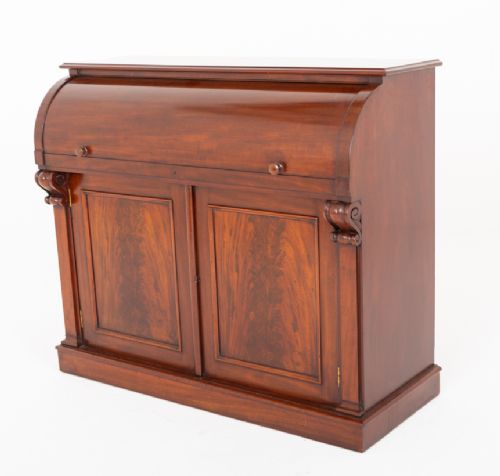
- A writing desk featuring a horizontal half-cylinder of wood that rolls backward to reveal the writing surface and interior drawers. This mechanism conceals correspondence and writing materials when closed.
- Carlton House desk
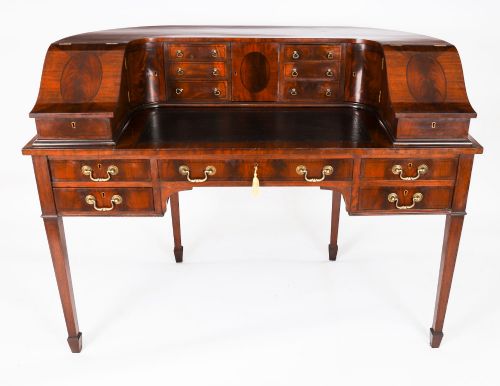
- A form of writing desk with a curved superstructure of small drawers and compartments enclosing the back and sides of the writing surface. The design is traditionally attributed to the residence of the Prince Regent.
- Kidney shape
- A curved desk profile resembling the outline of a kidney bean, allowing the user to sit within the concave curve. This design became particularly popular during the Sheraton Revival and Edwardian periods.
- Marquetry
- Decorative veneer work formed by fitting together small pieces of wood, shell, or ivory to create pictorial or geometric patterns. Artisans apply these designs to the curved surfaces and tabletops of fine desks.
- Escritoire
- A writing cabinet or desk containing drawers and pigeonholes behind a fall front or curved lid. The term derives from the French word for writing.
Curved Top Desk: Frequently Asked Questions
What is a cylinder desk?
A cylinder desk uses a quarter-circle or half-cylinder wooden shutter that rolls back into the body of the furniture to open. This movement uncovers the leather-lined writing surface and internal pigeonholes.
When closed, the solid curved wood protects the contents of the desk from dust and prying eyes while displaying decorative timber grain across the top.
How do I use a Carlton House desk?
The curved superstructure of drawers and compartments places reference materials and stationery within arm's reach while seated at the central writing flap. The layout encourages organised correspondence.
These desks work best positioned away from the wall so the finished back and curved profile remain visible within the room.
Are kidney desks comfortable for daily writing?
The concave curve allows the user to sit closer to the centre of the desk, keeping side drawers and working materials within easy reach. The compact footprint suits smaller studies.
Most examples provide a generous leather writing surface framed by raised mahogany or satinwood borders.
How can I tell Victorian from Edwardian desks?
Victorian examples generally employ heavier proportions, dark mahogany, and robust construction with functional brass hardware. The nineteenth-century pieces often feature simpler mahogany or walnut surfaces.
Edwardian interpretations tend toward lighter satinwood, delicate inlay work, and Sheraton Revival influences, producing a brighter appearance in the room.