





Curved Overmantel Mirror
A curved overmantel mirror brings architectural weight to a chimney breast, commanding the room with its sweeping arched crest.
Curved Overmantel Mirror
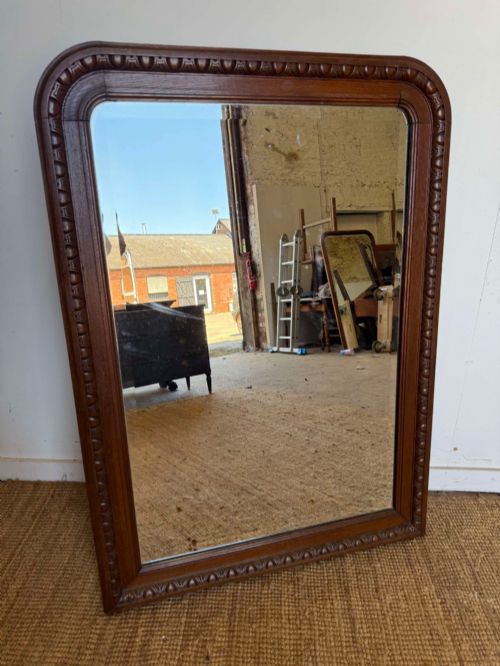
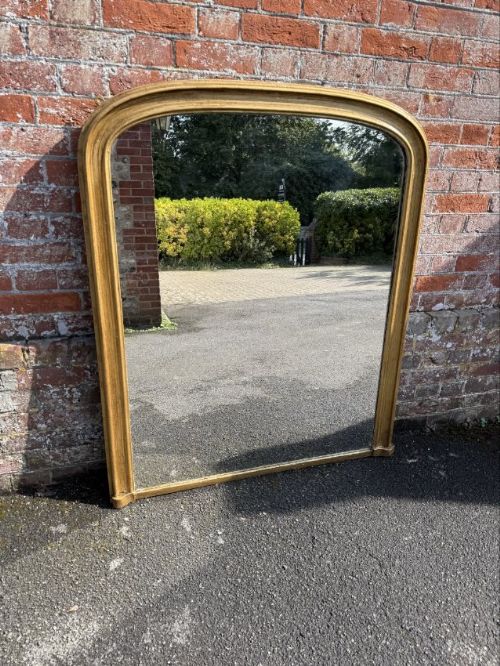
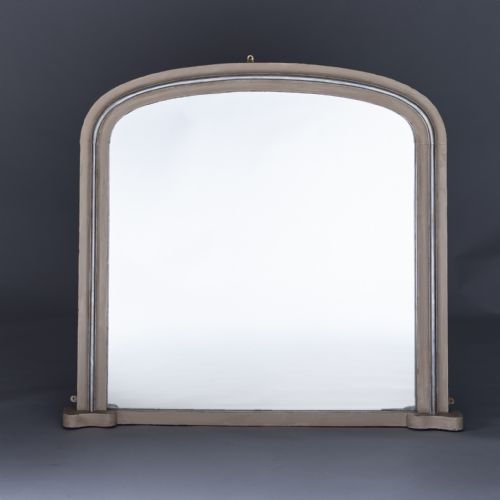
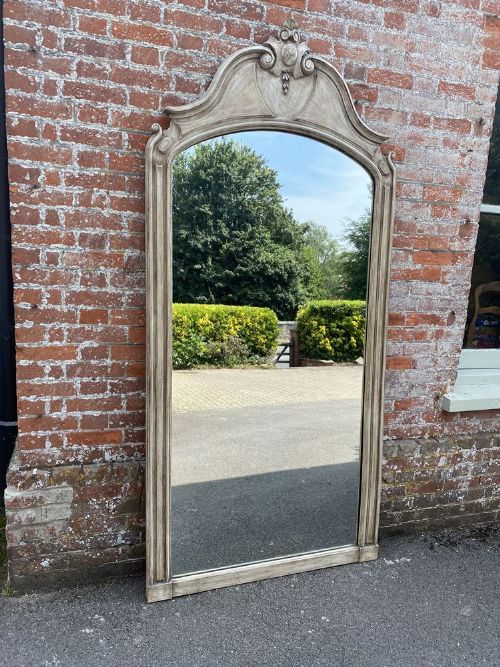
A curved overmantel mirror spans the mantelpiece with an arched, shaped, or hour-glass frame designed to reflect light above a fireplace. The pieces gathered here predominantly date from the nineteenth century through the art deco period, originating from English and French workshops.
Most examples on this page take the form of large wall mirrors shaped with an arched or domed top, constructed to sit low and wide. English traditional and Victorian designs sit alongside French chateau and provincial variants, incorporating carved woodwork and painted finishes.
Buyers encounter oak, gesso, and giltwood frames spanning simple painted arches to elaborate carved forms. The selection captures both the grand proportions of mid-Victorian parlours and the cleaner geometric lines of later twentieth-century decorative pieces.
How they were made
Makers built these frames primarily from wood such as oak, applying layers of gesso and plaster to build up sculptural details before applying gold or silver leaf. Carved wooden elements required skilled handwork to shape the distinctive arches and hour-glass profiles.
Surfaces received either a rich giltwood finish, traditional paint, or parcel-silvering to highlight the decorative moulding. The heavy glass plates were then set securely within the timber rebates behind the arched crests.
Curved Overmantel Mirror Retail Price Guide 2026
Typical asking prices for curved overmantel mirror among the pieces listed under this phrase on Sellingantiques today, from the lower quarter to the upper quarter. They describe what is for sale here now, not the wider market.
Listings demonstrate that wood, gesso, and gold leaf dominate the construction of these arched frames across nineteenth-century periods.
What varies in quality
The distinction between ordinary and exceptional pieces lies in the depth and crispness of the hand-carved wood and gesso ornamentation. Superior examples show confident, fluid lines along the arched crest rather than mechanical repetition.
The quality of the finish dictates the visual presence of the frame, with genuine gold leaf and layered paintwork ageing with a soft lustre compared to flat, uniform modern coatings. Original glass plates with authentic foxing also distinguish untouched period items from later replacements.
The Curved Overmantel Mirror Glossary
- Overmantel mirror
- A large wall glass specifically proportioned to hang on the wall directly above a fireplace mantelpiece. These pieces often feature horizontal or arched formats designed to echo the hearth below.
- Gesso
- A mixture of gypsum and binder applied to wooden mirror frames to create a smooth surface for carving or gilding. It allows for crisp relief details along the arched top.
- Giltwood
- Timber that has been coated with thin sheets of gold leaf over a prepared bole and gesso ground. It provides a warm, reflective metallic sheen across the frame.
- Parcel-gilt
- A decorative treatment where only specific carved portions of a painted or stained wooden frame are highlighted in gold leaf. This technique creates a subtle contrast between the base colour and the gilded highlights.
- Arch top
- A frame profile featuring a curved upper section that sweeps upward to a central point or gentle dome. It softens the rigidity of standard rectangular wall mirrors.
Curved Overmantel Mirror: Frequently Asked Questions
How do I identify a Victorian period mirror?
Victorian examples frequently display heavy carved wood and gesso frames finished in giltwood or dark oak, often featuring pronounced arch tops or hour-glass silhouettes. The construction methods typically involve traditional joinery and heavy timber backboards appropriate for nineteenth-century workshops.
Examining the silvering on the glass and the composition of the underlying gesso helps confirm the period of manufacture.
What is the difference between giltwood and painted finishes?
Giltwood involves applying gold leaf over a prepared gesso layer, producing a brilliant metallic finish that catches and reflects ambient room light. Painted finishes rely on pigments applied directly to the wood or gesso, offering a softer, more subdued aesthetic suited to provincial or chateau interiors.
Both finishes were utilised across the nineteenth century depending on the desired formality of the room.
Are these mirrors suitable for smaller rooms?
The expansive glass plates and wide proportions of these pieces naturally amplify light and create an illusion of depth in compact spaces. However, their heavy carved frames require careful placement to avoid overwhelming a small chimney breast or narrow wall.
Selecting a simpler painted or parcel-silvered version can help a large-scale arched frame blend more easily into modest interiors.