




Curved Outdoor Bench
A curved outdoor bench brings a sweeping line to terrace or lawn, offering a seat shaped to follow the curve of a wall or border.
Curved Outdoor Bench
A curved outdoor bench is a garden seat designed with an arc, formed to wrap around a tree or sit neatly into a rounded garden bay. When people search for a curved outdoor bench, they find forms ranging from traditional seats to garden arbours and low garden seats.
The versions most commonly met on this page span the nineteenth century up to nineteen thirty, drawing on Regency, Victorian, and Edwardian design traditions. These include English country garden styles and formal strapwork ironwork.
Makers fashioned these pieces as garden benches, garden seats, and garden arbours for placement upon lawns and terraces. Their curved profiles allow them to integrate into landscaped grounds and intimate garden corners.
How they were made
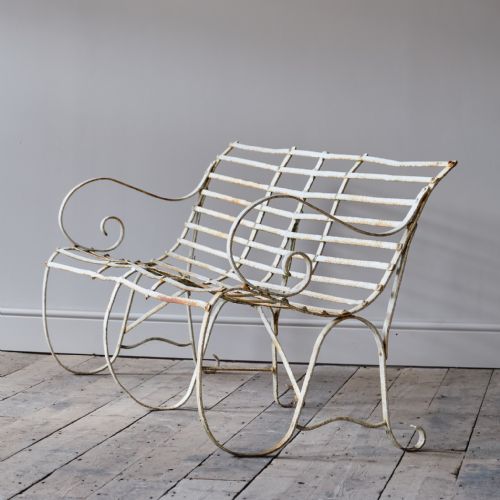
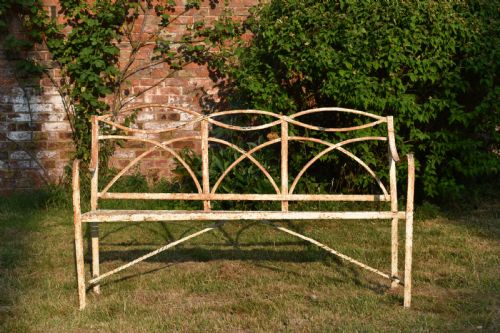
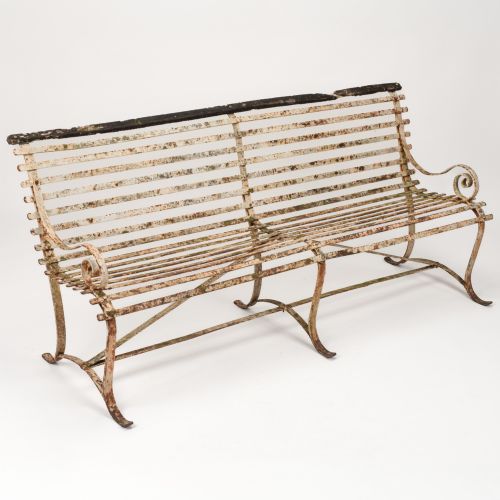
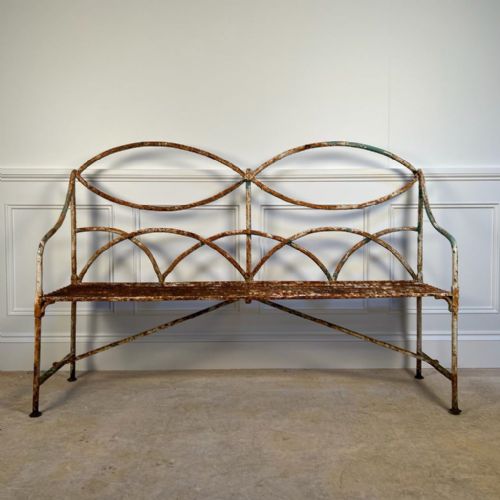
Craftsmen shaped wrought iron and steel wire into open strapwork frames, utilising sturdy metal bars to form the curving structural lines. Paint provided a protective surface finish over the metal elements.
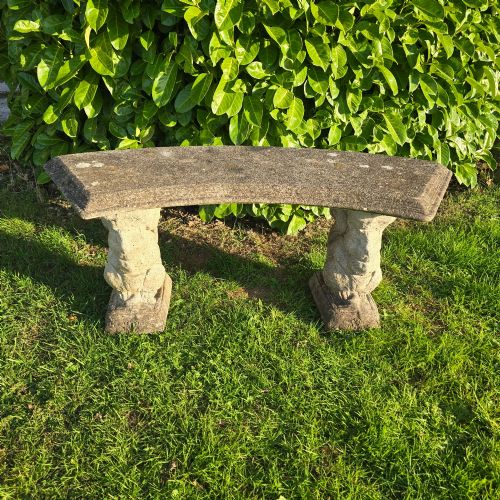
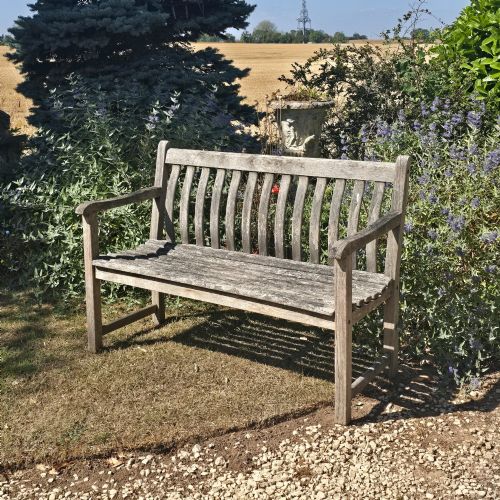
Timbers such as teak were joined to create slatted seats and wooden framework, while reconstituted stone was moulded to form solid structural bases and weathered benches.
Curved Outdoor Bench Retail Price Guide 2026
Typical asking prices for curved outdoor bench among the pieces listed under this phrase on Sellingantiques today, from the lower quarter to the upper quarter. They describe what is for sale here now, not the wider market.
One clever nineteenth century wirework arbour spent its youth plotting how to swallow a climbing rose whole.
What varies in quality
Quality rests in the precision of the curved iron strapwork and the integrity of the timber joinery. Pieces displaying refined Regency strapwork demonstrate a higher degree of metalworking skill than simpler utilitarian forms.
The depth of weathering on teak and stone influences the character of the piece, where natural patination enhances the surface texture without compromising the structure.
The Curved Outdoor Bench Glossary
- Regency
- A British design period spanning the early nineteenth century, known for classical restraint and elegant metal strapwork. Pieces from this era often feature curved iron frames.
- Strapwork
- Ornamental metalwork formed from flat strips of iron arranged in geometric or curved patterns. It provides both structural support and decorative detail on garden seats.
- Wirework
- A technique using intertwined metal wires to create open, airy structures such as garden arbours. This method became popular in late nineteenth and early twentieth century garden design.
- Tree bench
- A garden seat built with a circular or curved profile designed to encircle the trunk of a mature tree. Wooden slatted versions allow the seat to follow the natural contours of the timber.
Curved Outdoor Bench: Frequently Asked Questions
Where should a curved outdoor bench be placed?
These benches fit naturally against curved garden walls, around circular lawn borders, or nestled beneath mature trees. Their sweeping lines soften hard architectural corners in a garden.
Positioning them away from direct lawn moisture helps preserve timber and painted metal surfaces through changing seasons.
How do I identify a Regency style bench?
Regency style garden benches typically feature delicate wrought iron strapwork and classical proportions. They reflect the design motifs popular during the early nineteenth century.
Later reproductions from the nineteen thirties often borrow these same strapwork patterns while using twentieth century manufacturing methods.
What maintenance do iron garden benches need?
Wrought iron benches benefit from regular checks for surface wear and protective paint touch-ups. Keeping the metal sealed prevents moisture from causing deeper corrosion.
Natural weathering on stone and teak requires less intervention, though gentle cleaning helps preserve the surface character.
How do wirework arbours differ from standard benches?
Wirework arbours combine a curved seating area with an overhead framework designed to support climbing plants. They create a sheltered, sculptural focal point within garden landscaping.
Standard benches focus purely on the seating surface and its structural connection to the ground.