




Curved Garden Bench
A curved garden bench brings architecture and lingering conversation to a lawn, shaping space in the way straight timber never quite manages.
Curved Garden Bench
A curved garden bench turns an empty corner or a circular lawn into a destination, offering a place to sit that follows the natural arcs of a garden path or planting bed. When searching for a curved garden bench, you encounter pieces that range from traditional timber slats to heavy stone and scrolled iron.
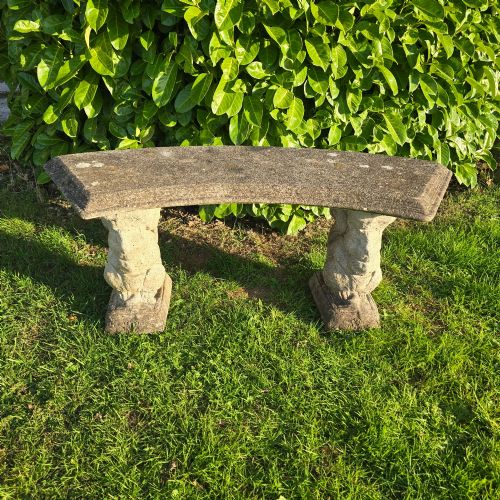
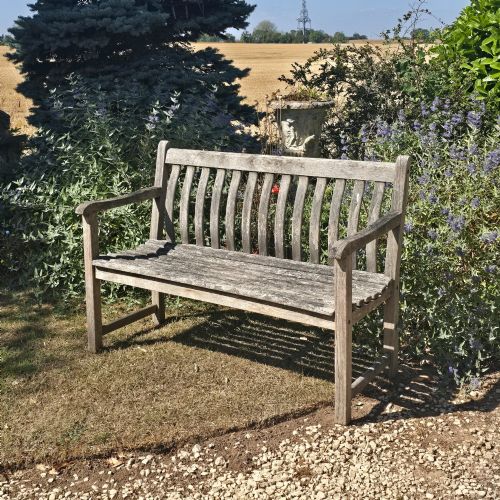
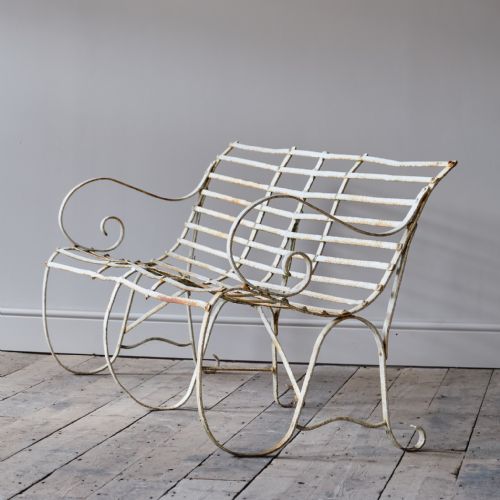
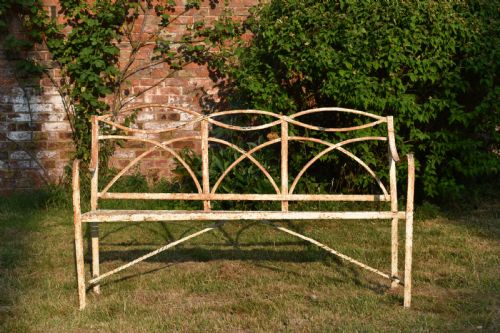
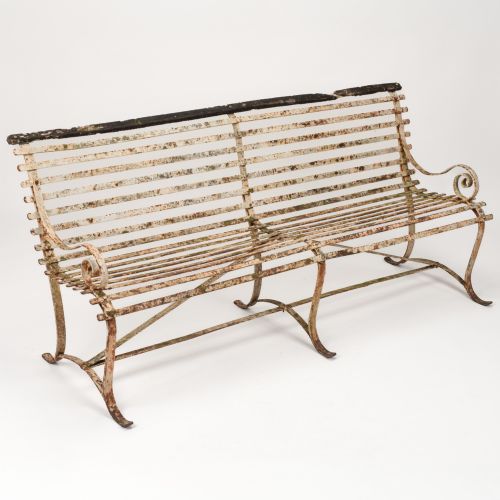
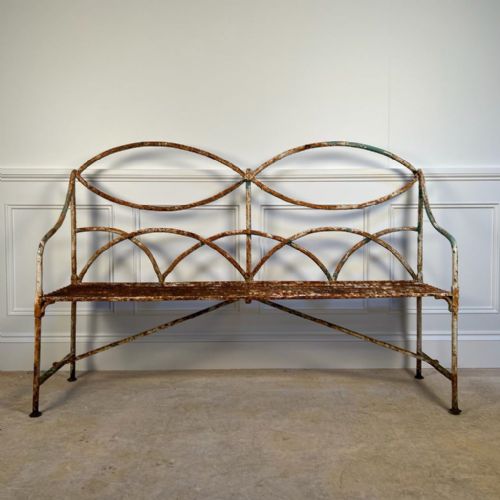
The versions most commonly met on this page span several distinct periods, including Regency examples with strapwork, 19th Century wrought iron designs, and later 20th century teak or reconstituted stone editions. Makers configured these seats as standalone garden benches, circular tree seats, or even garden arbours designed to shelter a corner.
English country garden aesthetics dominate the grouping, blending utilitarian outdoor seating with decorative ironwork or weathered wood. Each format serves the practical purpose of resting outdoors while establishing a focal point that breaks up the linear boundaries of walls and hedges.
How they were made
Wrought iron and steel wire feature heavily in the construction of these seats, often shaped into strapwork patterns that give rigid metal a visual lightness. Blacksmiths heated and hammered iron bars to form the sweeping curves required for a circular or semi-circular seat frame.
Teak and other timbers provide the slatted surfaces for wooden versions, selected for their natural resilience to weather. Carpenters joined these wooden slats to curved rails, allowing rainwater to drain easily between the boards while maintaining structural integrity.
Reconstituted stone offers an alternative medium, cast in moulds to replicate carved masonry without the excessive weight of solid quarried block. Paint finishes frequently coat the metal surfaces, applied across decades to protect the underlying iron from corrosion.
Curved Garden Bench Retail Price Guide 2026
Typical asking prices for curved garden bench among the pieces listed under this phrase on Sellingantiques today, from the lower quarter to the upper quarter. They describe what is for sale here now, not the wider market.
Wirework arbours were designed so gardeners could abandon all dignity while coaxing stubborn climbing roses into submission overhead.
What varies in quality
The finesse of the metalwork or the joinery dictates the distinction between standard utilitarian seating and finer examples. Regency style strapwork exhibits careful symmetry and proportion in the scrolled iron, whereas ordinary production relies on simpler, heavier bars.
Material longevity separates the pieces, particularly in how well timber has weathered or how securely iron joints hold together after generations outdoors. Original patination on painted surfaces or naturally silvered teak demonstrates authentic age rather than artificial distress.
The Curved Garden Bench Glossary
- Strapwork
- Flat metal strips interwoven or joined to create decorative geometric patterns on the backrests and frames of iron seats. This technique provides both structural support and visual ornamentation.
- Tree bench
- A circular seat built in sections to enclose the trunk of a mature tree, providing shade and a 360-degree view of the grounds. These structures require precise radius measurements to fit the living timber.
- Wirework
- Light metal rods and heavy wire bent and welded into airy frames, popular for Edwardian garden arbours and seats. It creates a semi-transparent structure that climbing plants can easily weave through.
- Reconstituted stone
- Aggregate stone fragments mixed with a binder and cast into moulds to form architectural garden ornaments and benches. It provides the appearance of carved stone at a more manageable weight.
- Regency
- An English design period characterised by classical restraint, graceful curves, and ancient Greek or Roman influences. Ironwork from this era often incorporates delicate scrolls and strap motifs.
Curved Garden Bench: Frequently Asked Questions
Where should a curved garden bench go?
These seats suit the bend of a gravel pathway, the perimeter of a circular lawn, or the curve of a deep herbaceous border. Placing one in a corner creates a sheltered spot that invites you to pause.
Because the footprint is curved rather than straight, positioning requires careful thought about sightlines and how the piece interacts with surrounding shrubs or trees.
How do I maintain an iron garden bench?
Metal frames benefit from periodic inspection for rust, particularly where the legs meet damp earth or stone paving. Applying a suitable protective paint finish helps preserve the iron through winter weather.
Wooden components require less intervention if left to weather naturally, though teak oil can be applied if you prefer to maintain a richer colour.
Are stone benches too heavy to move?
Reconstituted stone pieces possess considerable weight, which helps keep them stable on uneven ground without permanent fixings. This mass means they stay firmly in place once positioned on a lawn or terrace.
Moving them usually requires two people or lifting equipment to avoid damaging the sections or injuring yourself during relocation.
How do I date an antique garden seat?
Dating relies on observing the combination of materials, construction techniques, and stylistic markers such as Regency strapwork or Edwardian wirework. Tool marks on iron or the weathering patterns on timber offer further clues to age.
Comparing the form to documented garden furniture from the nineteenth and early twentieth centuries helps narrow down the period of manufacture.