

Curved Mahogany Tallboy
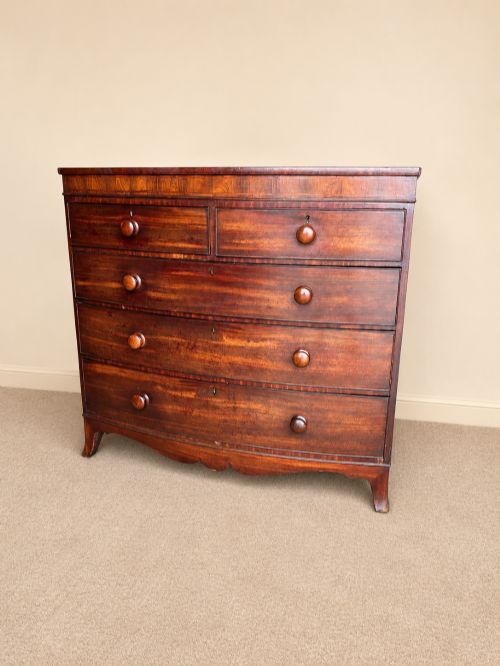
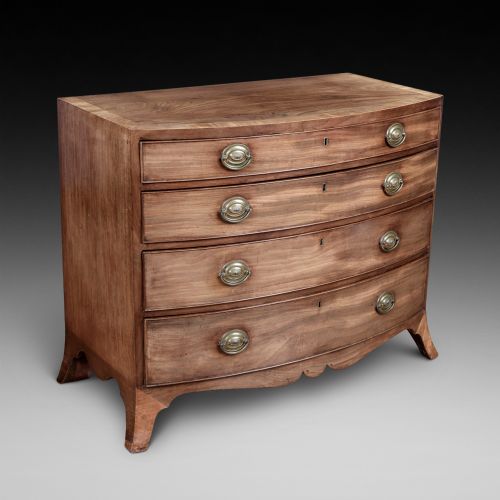
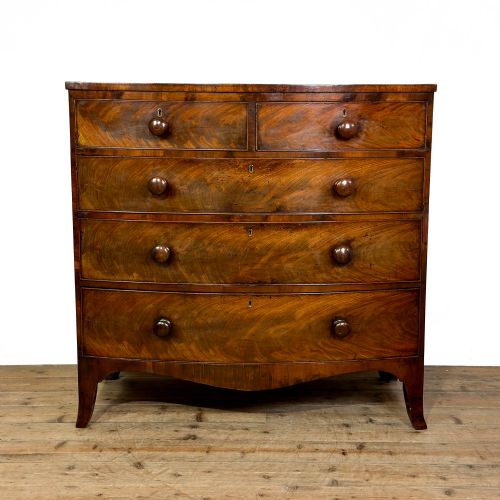
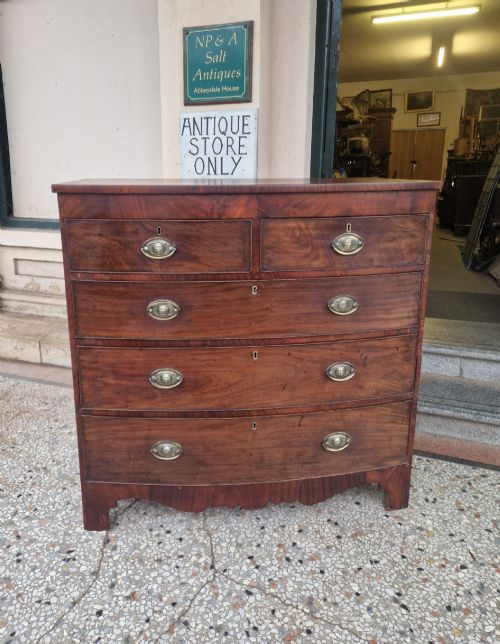
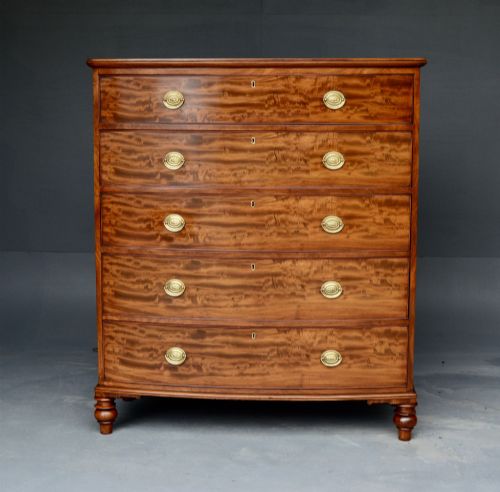
A curved mahogany tallboy is a commanding storage piece uniting generous proportions with graceful rounded lines.
Curved Mahogany Tallboy
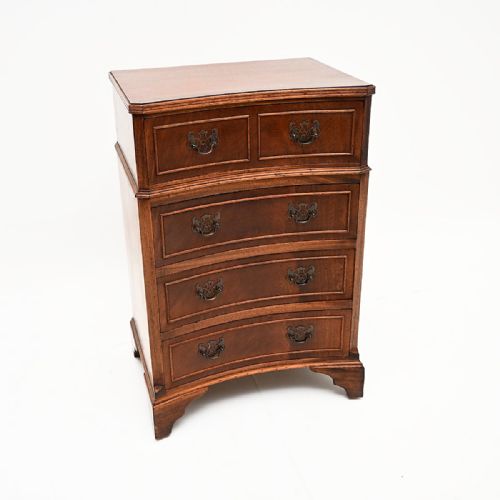
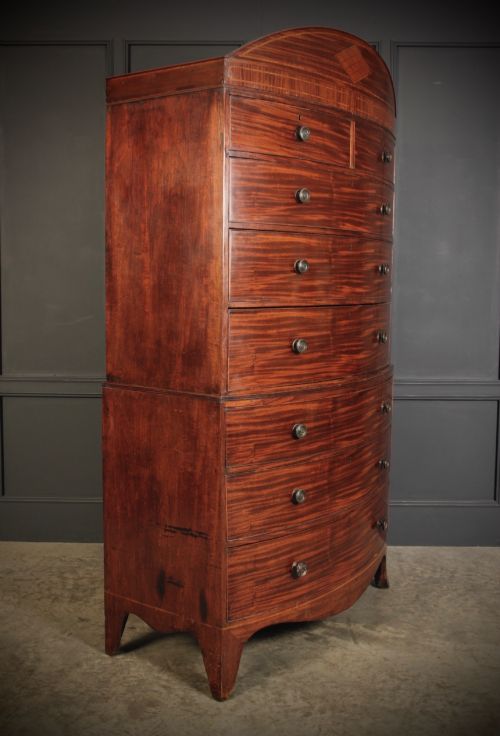
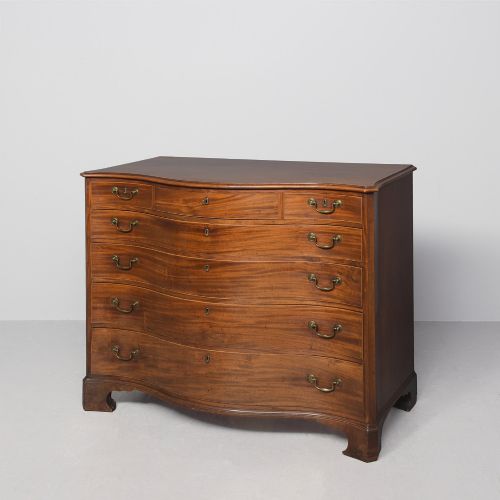
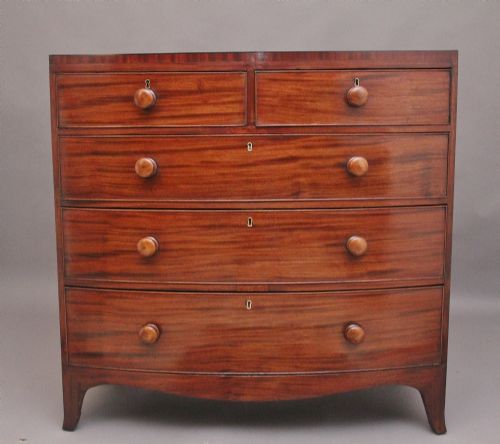
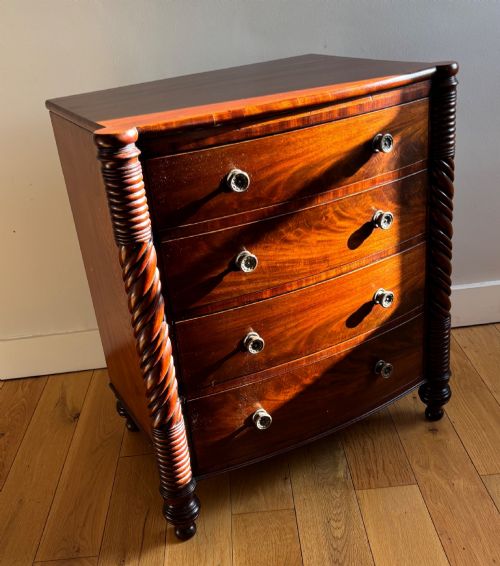
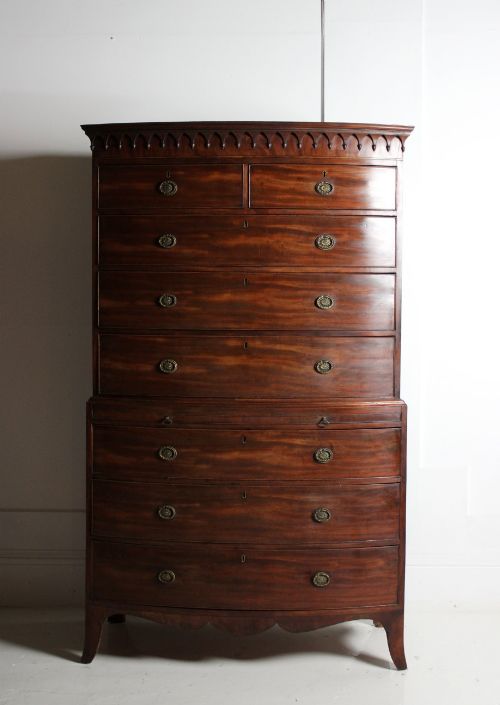
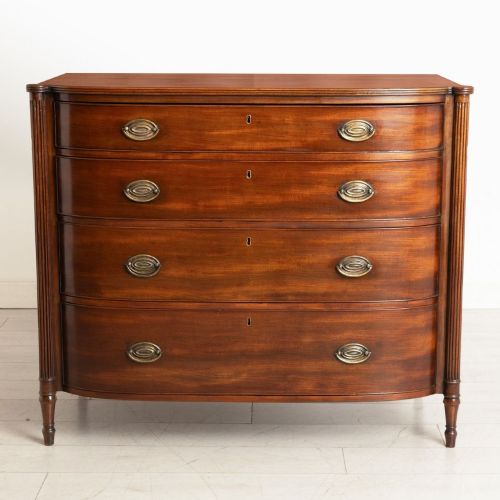
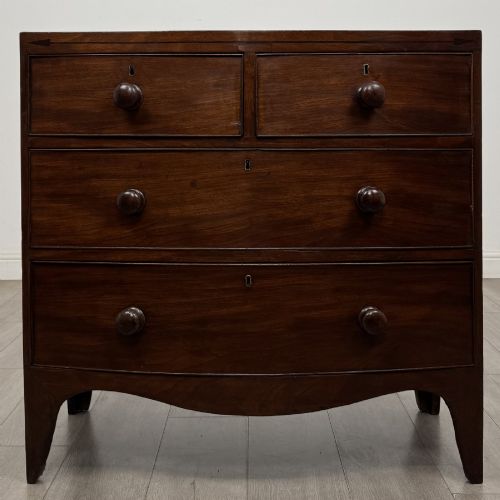
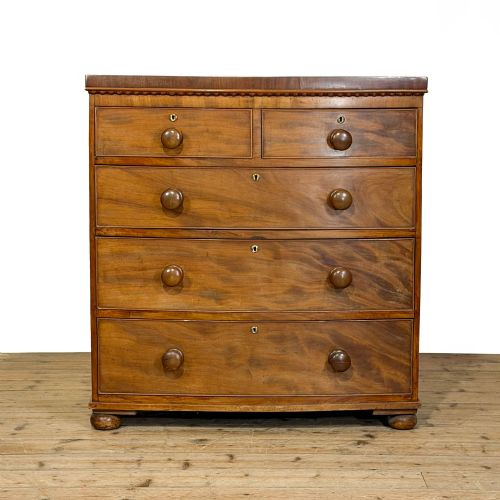
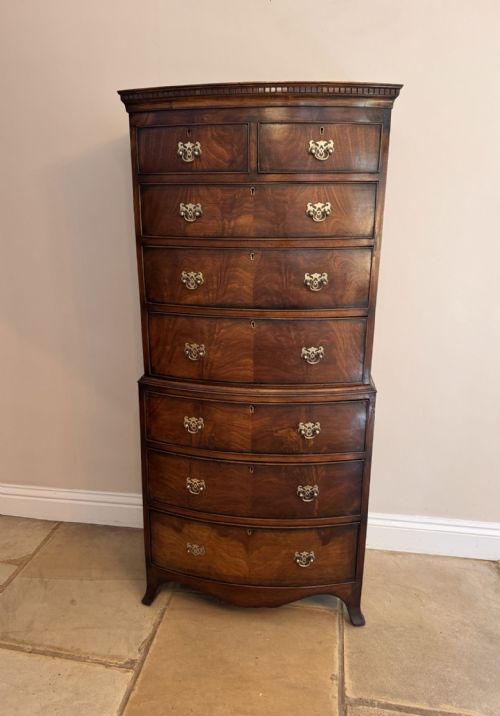
When searching for a curved mahogany tallboy, a buyer examines substantial case furniture built to maximise storage while softening room geometry. These pieces emerge primarily from the Georgian, Regency, and Victorian periods, taking forms such as chest on chest structures and bowfront chests of drawers.
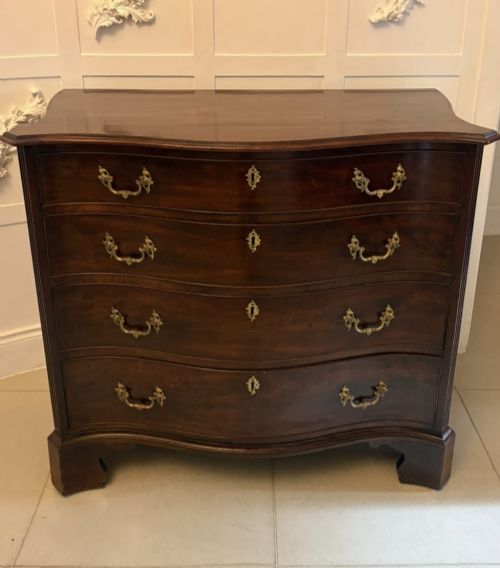
The specimens met on this page showcase distinct regional and period interpretations, spanning from late eighteenth century George III designs to later nineteenth century examples. Cabinetmakers constructed these tall storage units to hold linens and garments, utilising the vertical space effectively.
The curved facades define the category, manifesting as sweeping bowfronts, concave profiles, or serpentine outlines. Buyers encounter both single tall chests and two-part chest on chest configurations rendered in rich timber.
How they were made
Cabinetmakers built these case pieces using solid mahogany and supportive secondary timbers like oak, applying figured flame mahogany veneers to the primary surfaces for visual depth. The curved fronts required specialist woodworking techniques to shape solid timber or bend laminated veneers successfully.
Craftsmen enhanced the rich grain of the mahogany with contrasting details, incorporating boxwood and ebony inlay along drawer edges or top borders. Satinwood details and original cast brass hardware completed the construction, securing functional longevity through traditional joinery.
Curved Mahogany Tallboy Retail Price Guide 2026
Typical asking prices for curved mahogany tallboy among the pieces listed under this phrase on Sellingantiques today, from the lower quarter to the upper quarter. They describe what is for sale here now, not the wider market.
Craftsmen occasionally hid secret compartments inside the upper cornices of tall storage chests for securing private documents.
What varies in quality
The caliber of a piece rests heavily on the selection of the mahogany veneer, where highly figured flame patterns and balanced grain matching elevate the visual impact. Superior examples display meticulous attention to internal construction, including hand-cut dovetails on the drawer sides and solid oak drawer linings.
Proportion and execution of the curved facade dictate the distinction between standard production and master cabinetwork. Pieces retaining crisp inlay work, original brass handles, and harmonious scaling demonstrate the highest standard of period craftsmanship.
The Curved Mahogany Tallboy Glossary
- Bowfront
- A convex curved front profile that projects outward in an arc, softening the linear angles of traditional case furniture. This shape dominated many late eighteenth and nineteenth century chest designs.
- Tallboy
- A tall chest of drawers, often constructed as a chest on chest where a smaller upper section sits upon a wider base. It provides substantial vertical storage.
- Serpentine
- A front outline shaped with a central convex curve flanked by two concave curves, creating an undulating wave effect. This complex form appears on high-status Georgian case pieces.
- Flame mahogany
- A veneer cut from the fork of the mahogany tree where the branch meets the trunk, producing a distinctive flickering flame pattern. Cabinetmakers prized this figure for principal drawer fronts.
- Dovetail
- An interlocking joint formed by interlocking wedge-shaped fingers, used extensively in period drawer construction. Tight, hand-cut dovetails indicate quality and age.
Curved Mahogany Tallboy: Frequently Asked Questions
How do I date a curved mahogany tallboy?
Dating relies on examining construction methods, timber choices, and hardware styles across the piece. Earlier eighteenth century examples feature hand-cut dovetails and subtle proportions, whereas Victorian pieces often display heavier framing and distinct secondary woods.
Secondary characteristics like brass handle styles, foot configurations, and inlay types further help narrow down the decade of manufacture between the Georgian and Victorian eras.
What is the difference between a tallboy and a chest on chest?
A chest on chest consists of two distinct cabinet sections stacked vertically, typically offering more total storage capacity than a standard chest of drawers. The term tallboy historically encompasses these double-section pieces as well as tall single-carcase chests.
Both forms utilise vertical wall space effectively while introducing elegant curved lines to domestic interiors.
How do I care for mahogany veneer?
Protect antique mahogany surfaces by placing them away from direct sunlight and maintaining stable room humidity to prevent veneer lifting. Regular dusting with a soft, dry cloth preserves the finish without requiring heavy polishes.
Applying a traditional beeswax periodically nourishes the wood and maintains the natural lustre of the figured grain.
Where should I place a tallboy in my home?
These tall storage units suit bedrooms, dressing rooms, or generous hallways where their vertical presence balances the room proportions. Ensure adequate wall clearance and flat flooring to support the heavy timber construction safely.
Their curved facades soften corners and provide a striking focal point against plain walls.